
For decades, certain investment opportunities—like premium commercial real estate, high-grade corporate bonds, or fine art—were reserved almost exclusively for institutions and ultra-high-net-worth individuals. The barrier to entry was simply too high, requiring massive upfront capital and navigating complex legal processes.
The emergence of blockchain technology and the concept of Tokenized Real-World Assets (RWA) is fundamentally changing this dynamic. RWA represents a powerful nexus where the stability and value of traditional finance meet the efficiency and accessibility of decentralized technology. By converting tangible assets into digital tokens on a blockchain, RWA offers everyday consumers the unprecedented ability to access fractional ownership of previously exclusive markets.
This guide provides a comprehensive, step-by-step introduction to RWA. We will explain how these tokens work, detail the immense benefits they offer to retail investors, and outline the practical steps needed to integrate these stable, yield-bearing assets into your digital financial portfolio. If you are seeking ways to diversify your crypto holdings with assets linked to proven economic value, understanding RWA is the essential next step in becoming a crypto power user.
Understanding Tokenized Real-World Assets (RWA)
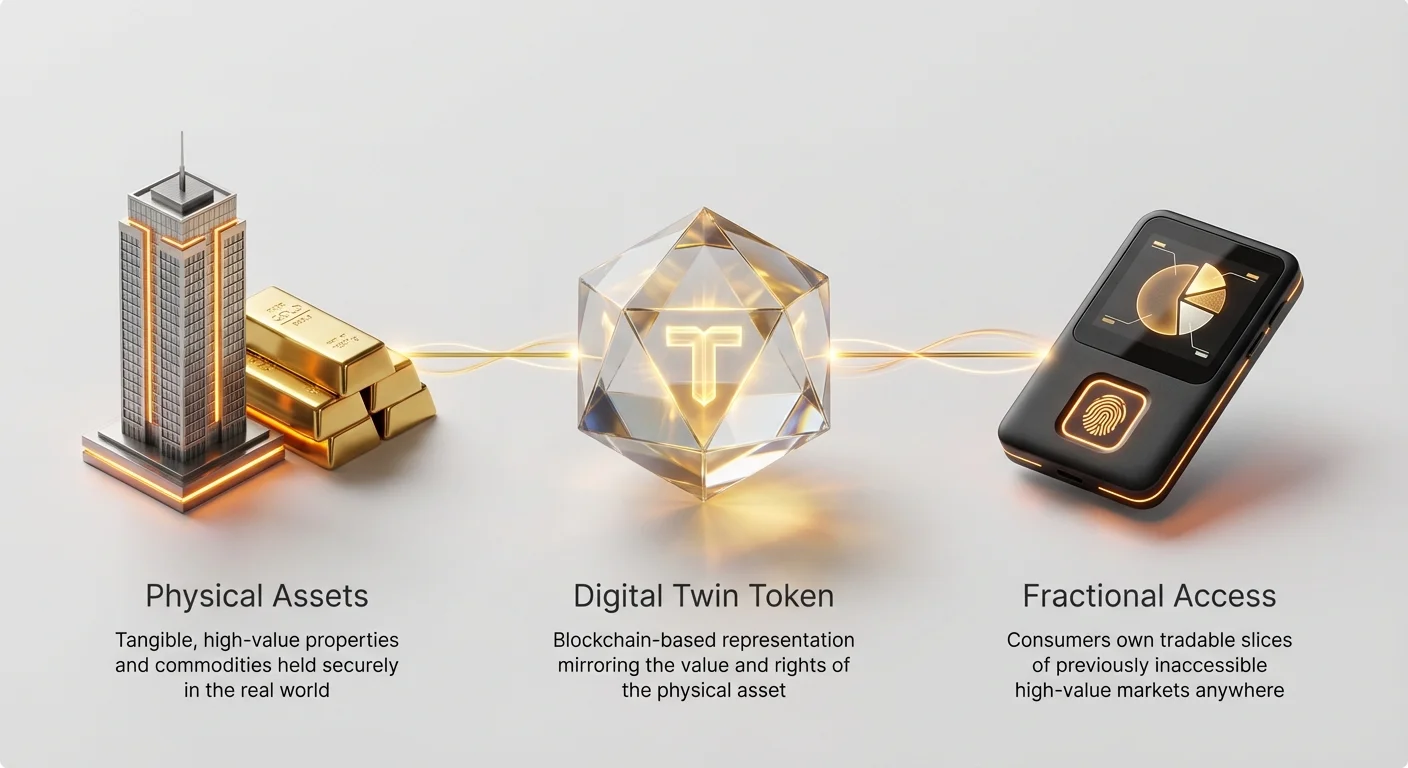
At its core, tokenization is the process of converting ownership rights of a physical or traditional financial asset into a digital token on a blockchain. This token, governed by a smart contract, represents a verifiable, secure, and often fractional stake in the underlying asset.
Imagine taking a million-dollar commercial building and dividing its ownership into one million digital tokens, each valued at $1. Owning one token grants you a tiny, auditable slice of ownership, entitling you to a corresponding percentage of the asset’s rent or appreciation.
What Exactly Gets Tokenized?
While virtually any asset can theoretically be tokenized, the RWA movement currently focuses on asset classes that benefit most from increased liquidity and fractionalization.
Real Estate and Property
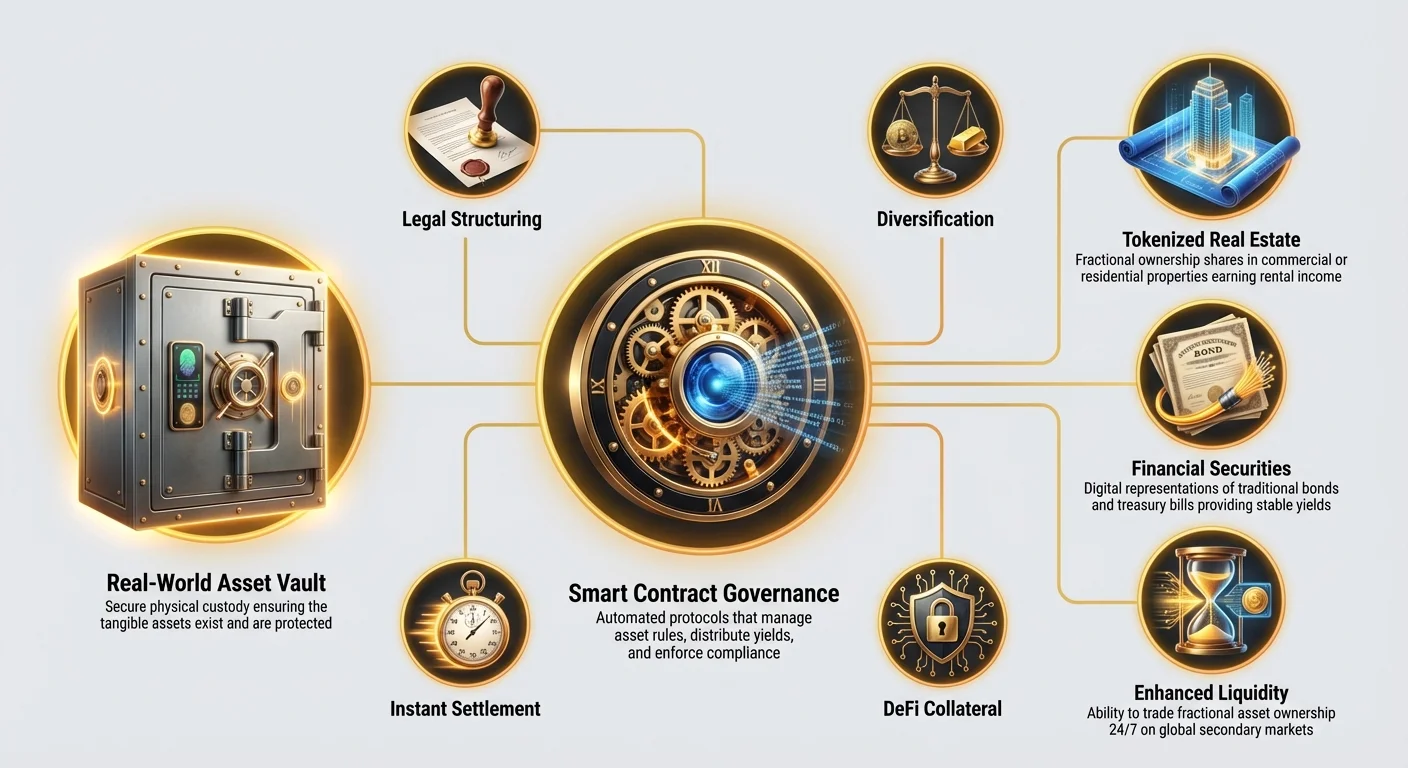
Real estate is the most obvious candidate for tokenization because it is famously illiquid—selling a building takes months. Tokenization allows developers to raise capital quickly and allows small investors to participate in global real estate markets without needing a mortgage or extensive legal fees. Investors can now own fractions of major global properties, earning yield from rental income distributed directly via smart contracts.
Traditional Financial Securities (Bonds and T-Bills)
Tokenizing government bonds (like US Treasury Bills) and corporate bonds has become a key driver of RWA growth. These are highly secure assets known for stable returns. Tokenizing them allows these assets to be accessed 24/7, settled instantly, and used within DeFi protocols as collateral. For a consumer, this means potentially earning a stable, low-risk yield that is tethered to the traditional, regulated economy, but accessible through a crypto wallet.
Commodities and Precious Metals
While buying physical gold or silver can be cumbersome due to storage and insurance costs, tokenized precious metals provide digital representations backed 1:1 by the actual asset held in a vault. This allows for easy transfer and trading while providing the consumer with exposure to traditional stores of value.
The Mechanics of Tokenization: Digital Twins and Smart Contracts
The process of turning a physical asset into a digital token involves three core steps, all relying on the blockchain’s secure ledger.
- Legal Structuring and On-Chain Proof: A legal entity (often a Special Purpose Vehicle, or SPV) is established to legally hold the underlying physical asset. The token issuer must then verify the asset’s existence, value, and legal ownership.
- Creation of the Digital Twin (The Token): A smart contract is deployed on a blockchain (like Ethereum or Solana). This contract governs the rules of the token—how it’s distributed, how yield is paid, and any restrictions on who can hold it. The resulting token is the digital twin of the real-world asset.
- Asset Servicing: The smart contract handles administrative tasks automatically. For a tokenized bond, the contract pays out interest automatically on the payment date. For real estate, rental income is collected, converted into the token’s payout currency (often a stablecoin), and distributed proportionally to all token holders.
The Core Benefits of RWA for the Everyday Consumer
The primary value proposition of RWA is its ability to democratize investment and maximize capital efficiency. For the consumer who may have limited capital but wants exposure to stable, proven assets, RWA provides several powerful advantages over traditional investing.
Lowering the Barrier to Entry (Fractional Ownership)
Historically, investing in a corporate bond required tens of thousands of dollars, and commercial real estate required millions. RWA fractionalizes these high-value assets into tiny, accessible units.
Practical Example: Instead of needing $100,000 minimum to invest in a specific private equity fund, an RWA platform might allow you to purchase tokens representing that fund for as little as $100. This opens up elite investment opportunities to a broad retail audience, allowing novice investors to build a diversified portfolio that was previously unattainable.
Enhancing Liquidity and Accessibility
Traditional assets suffer from poor liquidity—they are hard to sell quickly. Because RWA tokens trade on blockchain infrastructure, they benefit from near-instant settlement and 24/7 trading availability.
If you own a token representing a fractional share of real estate, you don’t need to wait six months for a buyer to close escrow on the physical property. You can sell your token to another investor on a secondary market within minutes. This shift from months of waiting to near-instantaneous transactions unlocks capital, allowing consumers to react to market changes and manage their cash flow more efficiently.
Diversification Opportunities Beyond Traditional Crypto
For many retail investors, their crypto portfolio consists largely of highly volatile digital native assets (Bitcoin, Ethereum, meme coins). While these offer high growth potential, they also carry significant risk.
RWA introduces stability. By adding tokenized bonds or tokenized real estate, consumers can anchor a portion of their digital wealth to assets that correlate directly with the stability of the global economy. This blend allows users to seek high DeFi yield on secure collateral, minimizing overall portfolio volatility without leaving the crypto ecosystem.
Accessing Tokenized Assets: Platforms and Pathways
For a beginner, accessing RWA can happen through two main pathways: utilizing established centralized platforms or engaging directly with native DeFi protocols. The right choice depends on your comfort level with decentralized technology and your willingness to complete stringent identity verification (KYC).
Centralized RWA Platforms (CEX Integration)
The simplest way for a novice investor to gain exposure to RWA is often through platforms or centralized exchanges (CEXs) that are integrating RWA products.
These platforms handle much of the complexity, including compliance, legal custody, and the direct purchasing of the underlying assets. Consumers typically deposit stablecoins (like USDC or USDT) and purchase the corresponding RWA token directly on the platform, much like buying a stock on a traditional brokerage app.
Key Features of CEX-based RWA:
- Ease of Use: Familiar interface, robust customer support.
- Built-in Compliance: The platform manages all KYC/AML requirements, streamlining the investment process while ensuring regulatory adherence.
- Security: Assets are typically held in secure, institutional-grade custody.
For consumers prioritizing security and simplicity, CEX-integrated RWA offerings are the ideal starting point.
Decentralized Finance (DeFi) Protocols for RWA
For the more experienced crypto user looking for higher potential utility and composability, RWA protocols built natively in DeFi offer direct access. These protocols fall into two categories:
1. Permissioned DeFi Protocols
Most high-value RWA (especially tokenized securities and real estate) operates on a permissioned basis. This means the smart contract restricts who can hold or trade the tokens. Even if the protocol is decentralized, individual users must be whitelisted after completing rigorous KYC/AML checks. This ensures the protocol remains compliant with global securities laws.
2. Permissionless (Commodity-Linked) Protocols
Some RWA tokens, particularly those linked to physical commodities (like tokenized gold or timber), may be more permissionless, trading freely across major decentralized exchanges (DEXs). These are generally simpler to access but may not offer the same yield opportunities as tokenized debt instruments.
Strategic Integration Tip: If you intend to use RWA tokens as collateral for lending or borrowing within the DeFi ecosystem (e.g., locking tokenized bonds into a protocol to borrow stablecoins), you must use the DeFi pathways. This is how you unlock the maximum utility and yield potential of RWA.
Essential Setup: Wallets and KYC Requirements
Unlike anonymous trading of native cryptocurrencies, investing in RWA typically requires establishing a clear legal identity.
- Digital Wallet: You will need a secure, non-custodial wallet (like MetaMask or Trust Wallet) that supports the blockchain hosting the RWA tokens (often Ethereum or Polygon).
- KYC/AML (Know Your Customer/Anti-Money Laundering): Due to their status as digital securities, most RWA providers must verify your identity. Prepare to provide government IDs and proof of address. This mandatory step is non-negotiable for most regulated RWA products and helps protect the integrity of the market.
- Stablecoin Access: Ensure you have access to stablecoins (USDC is a common currency used for RWA purchases) to execute your investment.
Navigating the Complexities: Regulation and Risk
While RWA offers stability derived from traditional assets, it introduces unique challenges where digital assets intersect with existing financial regulations. Consumers must understand these complexities to invest strategically.
The Regulatory Hurdles (Securities Law and Jurisdiction)
The single largest challenge for RWA is regulatory ambiguity. In most major jurisdictions (US, EU), when you tokenize a financial asset—be it a bond, a share in a company, or a limited partnership in a real estate fund—that resulting token is almost certainly classified as a security.
This classification forces RWA platforms to comply with the same rigorous requirements as traditional brokerages: disclosure, investor protection, and licensing.
- Impact on the Consumer: This is why RWA platforms often restrict access based on geographic location (jurisdiction) and require strict KYC. A US-based investor may not be legally allowed to access a tokenized European real estate fund due to differing securities laws. Always verify the regulatory status and compliance of any RWA platform before depositing capital.
- The Power of Whitelisting: The requirement for RWA platforms to track and restrict who can hold their tokens leads to the use of whitelisting. Only addresses that have successfully passed KYC checks are permitted to interact with the token’s smart contract. This contrasts sharply with the open, permissionless nature of Bitcoin or Ethereum.
Understanding Liquidity and Redemption Risks
The appeal of RWA is its combination of physical value with digital liquidity, but liquidity is not guaranteed and requires scrutiny.
True Liquidity
The ability to quickly sell your RWA token depends on the activity of the secondary market (i.e., other investors buying the tokens). If an RWA token representing a niche asset or a small project has few buyers, you might struggle to sell your fraction quickly, even if the underlying asset is sound. Best Practice: Focus on RWA tokens linked to deep, highly liquid markets, such as US Treasury Bills or large, centrally managed real estate portfolios.
The Redemption Process
A token’s value is only as strong as the issuer's ability to redeem the token for the value of the underlying physical asset. If you hold a tokenized gold certificate, there must be a clear, legally defined, and audited process for exchanging that token for the physical gold.
Key Risk Check: Before investing, investigate the "off-ramp."
- Who is the custodian of the physical asset?
- How often are the physical assets audited?
- What are the legal steps required to redeem the physical asset if the token issuer goes bankrupt?
If the redemption process is unclear or complex, the token holds significant counterparty risk, regardless of the quality of the underlying asset.
Strategic Integration: RWA in Your Financial Portfolio
For the forward-thinking consumer, RWA tokens are not just passive holdings; they are powerful building blocks that can enhance the stability and yield of an overall crypto portfolio.
Balancing Yield Generation with Stability
The greatest strategic advantage of RWA is its ability to introduce predictable, external yield into the DeFi ecosystem.
Traditional crypto lending often involves high volatility risks (lending Bitcoin or volatile tokens). By using tokenized bonds or highly stable collateral as the base asset, consumers can leverage DeFi tools while minimizing exposure to digital market swings.
Scenario: Collateralized Lending Optimization
- Acquisition: You purchase $10,000 worth of RWA tokens backed by tokenized short-term US Treasury Bills (yielding 5%).
- Deployment: You lock these highly stable RWA tokens into a reputable DeFi lending protocol (acting as collateral).
- Borrowing: You borrow stablecoins against this collateral (e.g., $7,000 worth).
- Action: You can then use the borrowed stablecoins for operational cash flow, to earn yield elsewhere, or to purchase slightly more volatile assets.
In this scenario, your collateral is inherently stable, linked to government debt, yet you can utilize the liquidity of DeFi. This strategy allows consumers to earn the 5% traditional yield from the T-Bills plus any additional yield generated by the borrowed stablecoins, effectively maximizing capital efficiency while maintaining a stable asset base.
Maximizing Utility: Composability and Future Applications
As the RWA market matures, tokens will become increasingly composable—meaning they can be seamlessly used across various DeFi applications. Consumers should look for tokens that are widely accepted as collateral across different platforms.
Future consumer utility will likely include:
- Tokenized Wages: Receiving fractionalized income streams from major companies (e.g., fractional ownership of Netflix royalty streams).
- Decentralized Insurance: Using RWA tokens as capital to back decentralized insurance pools, earning fees in exchange for providing stability.
- Micro-Mortgages: Using fractionalized real estate tokens as down payments for digital-native mortgage products.
Conclusion
Tokenized Real-World Assets represent the most significant bridge yet between traditional, multi-trillion-dollar financial markets and the digital economy. For the consumer, RWA offers a compelling pathway to access assets that were previously inaccessible, providing opportunities for fractional ownership, enhanced liquidity, and stable, diversified yield.
While the current landscape requires careful attention to regulatory requirements and KYC procedures, RWA is future-proofing the definition of digital wealth. By strategically integrating tokenized bonds and property into a diversified portfolio, consumers can move beyond basic crypto investing and begin maximizing the utility and stability offered by digital assets linked to the tangible world. As regulatory clarity improves, RWA is set to become an essential component of every consumer’s digital financial strategy.