
The evolution of digital finance has fundamentally changed how value moves across the globe. Unlike traditional banking systems that rely on centralized intermediaries to clear and settle transactions, cryptocurrency networks enable peer-to-peer transfers. This architecture removes the need for permission from third parties, allowing users to send assets directly to one another. However, this freedom comes with the responsibility of managing transaction details accurately.
For years, the standard method of moving digital assets involved complex alphanumeric strings known as addresses. While secure, this method presents a steep learning curve for newcomers. The anxiety of making a mistake often deters adoption. In response to these usability challenges, developers have introduced shareable links. This innovation simplifies the process by allowing users to send value through common messaging platforms.
Understanding the differences between these two methods is essential for any digital asset user. While standard wallet transfers offer precision and control, shareable links prioritize ease of use and accessibility. Both mechanisms rely on the underlying security of blockchain technology but approach the user experience from different angles. Choosing the right method depends on the context of the transaction, the technical proficiency of the recipient, and the specific security requirements of the transfer.
The Mechanics of Standard Wallet Transfers
At the core of every standard cryptocurrency transaction is the digital wallet. This software interacts with the blockchain to manage balances and authorize transfers. When a user initiates a standard transfer, they are essentially broadcasting a message to the network. This message instructs the ledger to debit a specific amount from their balance and credit it to another location.
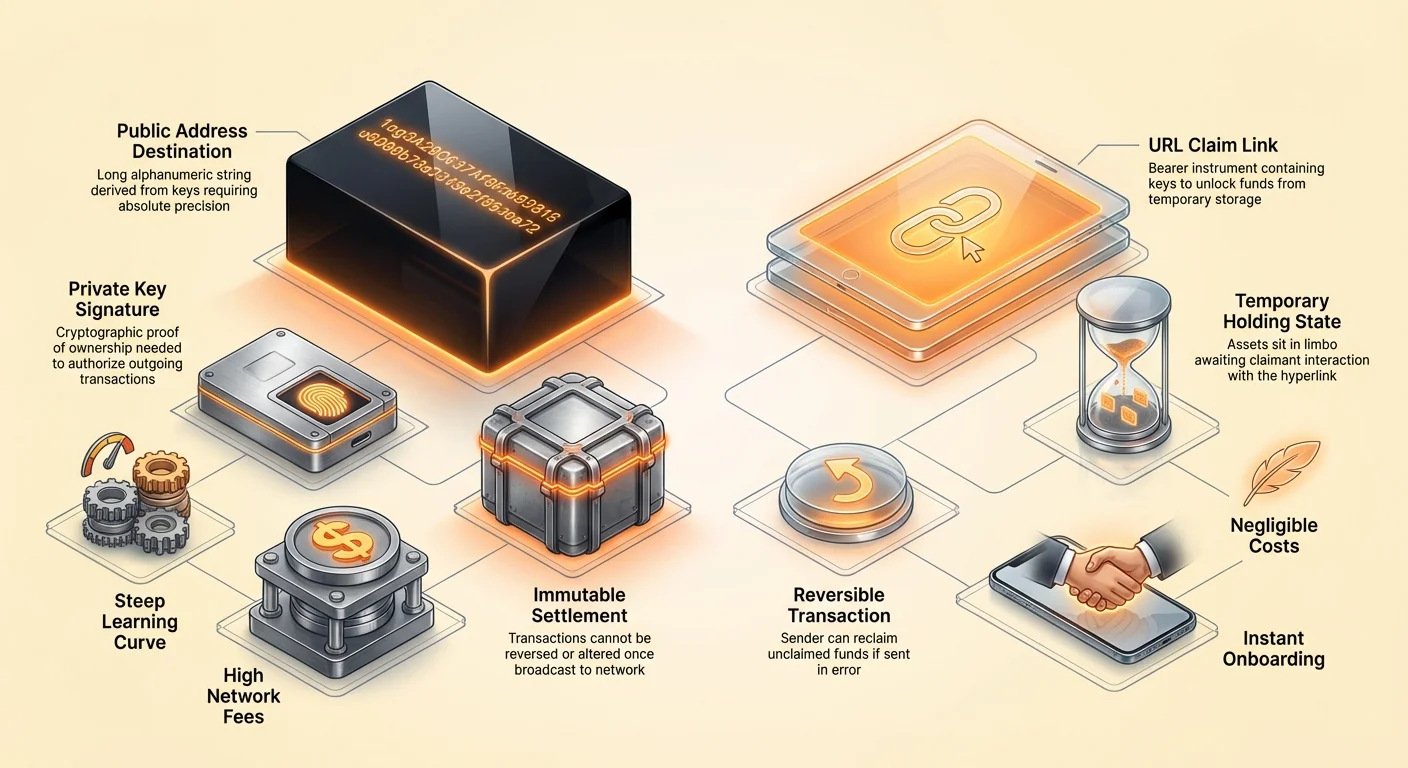
To execute this, the sender must possess the recipient's unique public address. This address acts like a digital mailbox. It is a long string of letters and numbers derived from the recipient's public key. The precision required here is absolute. If a sender alters a single character in this string, the funds may be sent to a non-existent location or, worse, an accessible wallet controlled by a stranger.
Once the destination is defined, the sender signs the transaction with their private key. This cryptographic signature proves ownership of the funds without revealing the key itself. The network's validators or miners then verify the signature and the availability of funds before adding the transaction to a block. This process ensures that standard wallet transfers are secure, immutable, and trustless.
Decoding Cryptocurrency Addresses
A cryptocurrency address is the fundamental destination identifier in the blockchain ecosystem. Depending on the specific network, these addresses vary in format and length. For example, a Bitcoin address might start with a specific number or letter sequence, while an Ethereum address typically begins with "0x". These formats help wallets identify whether an address is valid for a specific chain, preventing some cross-chain errors.
Despite these safeguards, the complexity of addresses remains a friction point. A typical address is difficult to memorize and impossible to type manually without high risk of error. To mitigate this, most wallet applications integrate copy-and-paste functionality or QR code scanning. Scanning a QR code eliminates typing errors entirely by visually encoding the alphanumeric string.
However, users must still verify the data. Malware exists that can swap addresses in a device's clipboard. This means a user might copy the correct address, but paste a hacker's address. Consequently, best practices dictate that users always double-check the first and last few characters of an address before confirming a standard transfer. This vigilance is the price of the high security and control that standard transfers offer.
The rigid nature of addresses also means they are publicly visible on the blockchain. Anyone who knows a user's address can view their entire transaction history and current balance. To maintain privacy, advanced users often generate a fresh address for every transaction. This prevents outside observers from easily clustering transactions to build a profile of the user's financial activity.
Network Fees and Transaction prioritization
Every standard transfer incurs a cost known as a network fee. This fee is not paid to the wallet provider but to the miners or validators who secure the network. The fee acts as an incentive for these participants to include the transaction in the next block. Without this economic incentive, the network would be vulnerable to spam attacks that could clog the system with frivolous data.
Fees are generally determined by the data size of the transaction rather than the monetary value being sent. A transaction involving many small inputs—like digital change from previous purchases—occupies more block space than a simple transfer from a single source. Consequently, sending a small amount of value can sometimes cost as much as sending millions of dollars if the data footprint is the same.
Users often have the ability to customize these fees based on urgency. Wallet interfaces typically offer options ranging from "Eco" to "Fastest." A higher fee increases the likelihood that miners will prioritize the transaction. Conversely, setting a fee too low may result in the transaction remaining unconfirmed for hours or even days until network congestion eases.
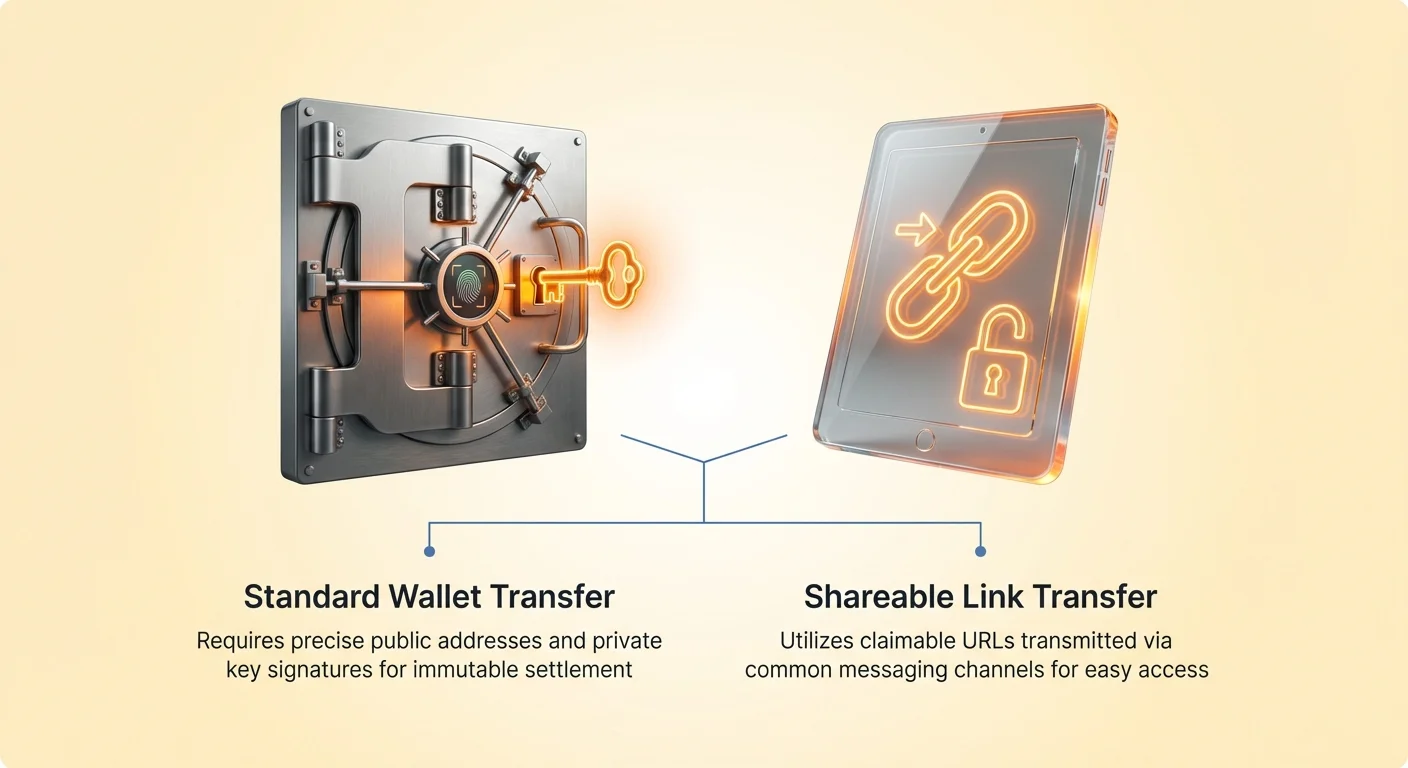
The Innovation of Shareable Links
Shareable links represent a paradigm shift in how digital assets are transmitted. This method abstracts away the complexity of addresses and network fees from the immediate user experience. Instead of requesting a destination address, the sender creates a URL that contains the keys to claim a specific amount of value. This link can be transmitted through any communication channel, such as email, SMS, or social media apps.
This approach mimics the ease of sending a text message. The sender does not need to know if the recipient has a wallet installed or what their address is. When the link is generated, the funds are effectively moved into a temporary holding state. The link serves as a bearer instrument; whoever possesses the link can claim the funds.
If the recipient already has a compatible wallet, clicking the link instantly deposits the funds into their account. If they do not, the link typically directs them to an app store to download the necessary software. Once the wallet is installed, the funds are claimed automatically. This creates a seamless onboarding ramp for individuals who are new to the cryptocurrency ecosystem.
Technical Underpinnings of Link Transfers
While the user interface appears simple, the technology behind shareable links is robust. When a sender creates a link, the wallet creates a temporary, intermediate transaction. The funds are moved from the sender's primary balance to a temporary location or smart contract governed by the parameters of the link.
This temporary state is crucial for the functionality of the system. It allows the funds to sit in limbo, waiting for a claimant. The link itself contains the necessary cryptographic information to unlock these funds. When the recipient's wallet interacts with the link, it broadcasts a claim transaction to the network, moving the assets from the temporary location to the recipient's personal wallet.
Because these links often utilize specific low-fee blockchains, the cost of creating and claiming them is usually negligible. This economic efficiency makes shareable links ideal for micro-transactions, tips, or splitting bills. It avoids the scenario where the network fee consumes a significant portion of the value being transferred, which often happens with standard transfers on congested networks.
Security Dynamics: Endpoints vs. Channels
Security models differ significantly between standard transfers and shareable links. In a standard transfer, security is focused on the endpoint. As long as the recipient's address is correct and their private keys are secure, the funds are safe. Even if the communication channel used to send the address is compromised, an attacker cannot steal funds just by knowing a public address.
Shareable links, however, rely on the security of the communication channel. Because the link itself grants access to the funds, it must be treated like cash. If a user sends a shareable link via an unencrypted messaging app and that app is compromised, an attacker could intercept the link and claim the funds.
Therefore, users must exercise caution regarding where they post these links. Posting a claimable link on a public social media feed allows anyone who sees it to take the money. Users should only send these links through private, trusted channels. Despite this risk, the model offers a unique safety net: reversibility.
Reclaiming Funds and Error Correction
One of the most unforgiving aspects of standard cryptocurrency transfers is their irreversibility. Once a user broadcasts a transaction to a valid address, it cannot be undone. If funds are sent to the wrong person, the only way to retrieve them is to ask the recipient to send them back. If the address belongs to a scammer or is a dormant wallet, the assets are effectively burned.
Shareable links introduce a layer of forgiveness. Because the funds are held in a temporary state until claimed, the sender retains a degree of control. If a sender generates a link and realizes they sent it to the wrong person, or if the recipient fails to claim it within a certain timeframe, the sender can reclaim the funds.
This reclamation process simply moves the assets back from the temporary holding location to the sender's primary wallet. This feature provides peace of mind, especially for new users who are nervous about making mistakes. It changes the transfer model from a "fire and forget" system to one that allows for correction up until the moment of final receipt.
Comparing Use Cases and Efficiency
The choice between using a standard transfer or a shareable link often comes down to the specific requirements of the transaction. Standard transfers are the industry standard for business-to-business settlements, exchange deposits, and large-value movements. They provide a clear, immutable record on the blockchain that links a specific sender to a specific recipient address.
Shareable links shine in social and casual contexts. They are superior for onboarding friends to crypto, paying back a colleague for lunch, or distributing small rewards to a community. The friction of asking for an address, waiting for a reply, and then copying it is removed. The transaction speed is limited only by how fast the user can send a text message.
Furthermore, shareable links can function across different operating systems and devices seamlessly. A link generated on an Android device can be claimed on an iOS device without compatibility issues. This interoperability fosters a more inclusive network, where the technical specifications of the user's hardware become irrelevant to the transfer of value.
| Feature | Standard Wallet Transfer | Shareable Link |
|---|---|---|
| Destination | Public Address | URL / Hyperlink |
| Reversibility | Impossible once sent | Possible until claimed |
| Setup | Recipient needs wallet first | Recipient can install later |
Privacy and On-Chain Visibility
Privacy advocates often prefer standard transfers where they can control the generation of new addresses. By generating a fresh address for every receive transaction, a user can obfuscate their total holdings. While the ledger is public, linking the different addresses to a single identity requires sophisticated chain analysis.
Shareable links may operate differently depending on the implementation. Some link systems might reuse temporary addresses or leave a distinct on-chain footprint that identifies the transaction as a link claim. Users concerned with maximum anonymity should investigate the specific mechanics of the wallet they are using.
However, for the average user, the privacy implications are often negligible compared to the convenience. The ability to send value without exchanging banking details or static crypto addresses actually enhances privacy in a social context. The sender does not need to see the recipient's permanent wallet address to complete the transfer, decoupling the social interaction from long-term financial tracking.
The Role of Custody and Control
Both methods discussed here assume the user is operating within a self-custodial environment. Self-custody means the user holds the private keys to their assets. In this model, the user has total authority over their funds. They do not need to request permission from a bank or an exchange to generate a link or send a transaction.
This contrasts with custodial exchanges. When sending from a centralized exchange, the user is technically asking the exchange to move funds on their behalf. Exchanges rarely offer shareable link functionality because they manage assets in pooled wallets. Therefore, the innovation of shareable links is largely a benefit of the decentralized, self-custodial ecosystem.
True ownership of assets is what makes both standard transfers and shareable links possible. Without self-custody, a user is merely updating a database entry on a company's server. With self-custody, they are interacting directly with a global monetary protocol. This distinction is vital for understanding why certain features, like reclaiming a link, are available in personal wallets but not typically in exchange accounts.
Cost Considerations for Users
Cost efficiency is a major factor in crypto adoption. Standard transfers on high-traffic networks like Bitcoin (BTC) or Ethereum (ETH) can sometimes incur fees that make small payments impractical. If the network is congested, a simple $5 transfer might cost $10 in fees. This economic reality forces users to consider the timing and necessity of their transactions.
Shareable links are predominantly deployed on networks optimized for low fees and high throughput, such as Bitcoin Cash (BCH) or sidechains. This ensures that the value sent is the value received. If a user sends $5 via a link, the recipient should receive virtually the entire $5.
This efficiency opens up new economic behaviors. It makes micro-tipping viable and encourages the circulation of assets rather than just holding. As wallet technology evolves, multi-chain support for links is expanding, allowing users to choose the most cost-effective network for their specific transfer needs.
Conclusion
The ecosystem of digital asset transfers has grown to accommodate a wide variety of user needs. Standard wallet transfers remain the bedrock of the industry, offering high security, precision, and immutability for significant transactions. They are the preferred method for interacting with exchanges, smart contracts, and merchants who require a fixed audit trail. The discipline required to manage addresses and keys ensures that these transfers remain secure against censorship and theft.
Conversely, shareable links represent the democratization of cryptocurrency. By removing the technical barriers of addresses and leveraging familiar communication channels, they make digital assets accessible to everyone. They offer a forgiving user experience with reversible transactions and simplified onboarding. This method bridges the gap between complex blockchain technology and everyday social interaction, proving that crypto can be as easy to use as a messaging app.
The best transfer method depends entirely on whether you prioritize absolute control and permanence or speed, ease of use, and reversibility.