
డిజిటల్ ఆర్థిక వ్యవస్థలో స్వీయ-కస్టడీ మరియు చురుకైన పాల్గొనడం వైపు మార్పు భారీ శక్తిని తీసుకురాస్తుంది, కానీ అది పునాది నెట్వర్క్ యాంత్రికీకరణల లోతైన అవగాహనను కూడా డిమాండ్ చేస్తుంది. చాలా పరిచయ మార్గదర్శకాలు కేవలం ఒక లావాదేవీని అమలు చేయడంపై దృష్టి పెడతాయి, ప్రయోగాత్మక వాస్తవికత decentralized నెట్వర్క్లను ఉపయోగించడంలో తరచుగా congestion, అనిశ్చితి మరియు "stuck" అయ్యే లావాదేవీలను కలిగి ఉంటుంది.
ఒక క్రిప్టోకరెన్సీ నెట్వర్క్ అధిక డిమాండ్ అనుభవిస్తున్నప్పుడు, తక్కువ-ప్రాధాన్యత లావాదేవీలు—కనీస ఫీజులు చెల్లించే వాటి—గంటలు లేదా రోజుల తప్పకుండా unconfirmedగా ఉండవచ్చు. ఈ limbo స్థితి frustratingగా ఉంటుంది మరియు arbitrage, urgent payments, లేదా critical smart contract interactions వంటి time-sensitive operationsను ప్రభావితం చేయవచ్చు.
ఈ మార్గదర్శకం basic executionకు మించి మధ్యస్థ ప్రాక్టీషనర్లకు తమ నెట్వర్క్ కదలికలను నిర్వహించడానికి, వేగవంతం చేయడానికి మరియు ప్రాధాన్యత ఇవ్వడానికి అవసరమైన tactical toolsను అందిస్తుంది. మేము Bitcoin-like chainsకు Replace-by-Fee (RBF) మరియు Child-Pays-For-Parent (CPFP) వంటి trustless, native acceleration methodsను అన్వేషిస్తాము, మరియు Ethereum Virtual Machine (EVM) ecosystemలో dynamic priority fee management intricaciesలోకి దూకుతాము. ఈ techniquesను master చేయడం strategic efficiency మరియు true transactional self-sovereignty సాధించడానికి అత్యవసరం.
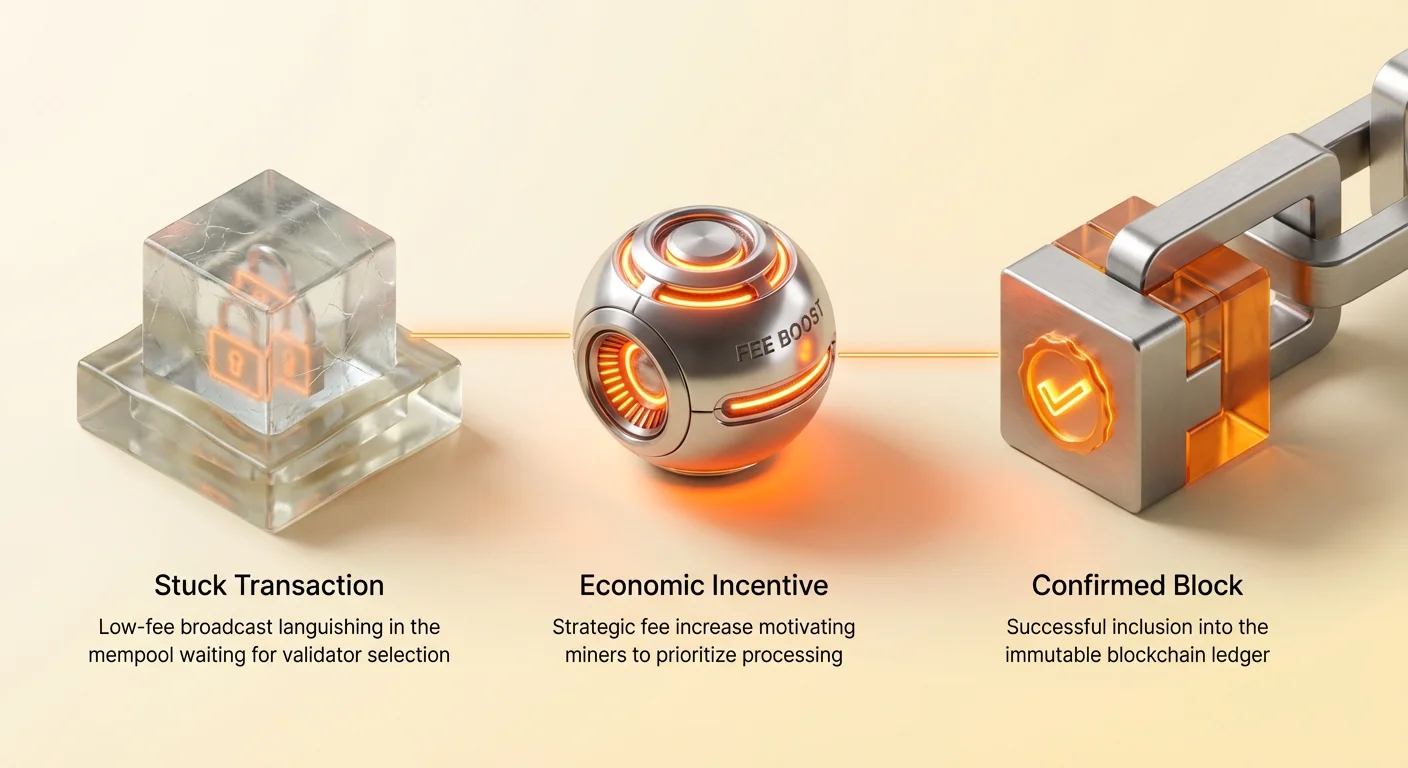
పెండింగ్ లావాదేవీ యొక్క Anatomy
ఒక లావాదేవీని వేగవంతం చేయడానికి ముందు, అది మొదట ఎందుకు stall అయిందో అర్థం చేసుకోవాలి. ప్రతి లావాదేవీ miner లేదా validatorచే validate చేయబడి blockలో include చేయబడాలి.
Mempool మరియు పెండింగ్ Queue
mempool (Memory Pool) అనేది unconfirmed Bitcoin transactionsకు waiting area, లేకపోతే EVM chains దీన్ని తరచుగా pending transaction pool అని పిలుస్తాయి. మీరు ఒక లావాదేవీని broadcast చేసినప్పుడు, అది ఈ poolలో కూర్చుంటుంది, validator లేదా miner దాన్ని select చేయడాని వేచి ఉంటుంది.
అధిక congested periodsలో, ఈ pool swells. Block space finiteగా ఉన్నందున, miners fee rate ప్రకారం transactionsను prioritize చేస్తారు—transaction data unit (vByte లేదా Gas unit)కు చెల్లించిన cryptocurrency మొత్తం (Sats లేదా Gwei). మీ fee rate ప్రస్తుత market clearing rate కంటే తక్కువగా ఉంటే, మీ లావాదేవీ చాలా లాంగ్ queue చివరలో place అవుతుంది.
Immutability మరియు Stuck Transactions సమస్య
ఒక లావాదేవీని వేగవంతం చేయడానికి core dilemma blockchain యొక్క immutability నుండి వస్తుంది. ఒకసారి transaction signed మరియు broadcast అయిన తర్వాత, అది సింపుల్గా edit చేయలేము. నెట్వర్క్ దాన్ని specific instructionగా చూస్తుంది. Fee మార్చాలనుకుంటే, మీరు minersను original one confirm చేయడానికి incentivize చేసే కొత్త, related transaction create చేయాలి లేదా మొత్తం కొత్త, superseding transaction create చేయాలి. క్రింది methods ఈ goalsను trustless, built-in network features ఉపయోగించి సాధిస్తాయి.
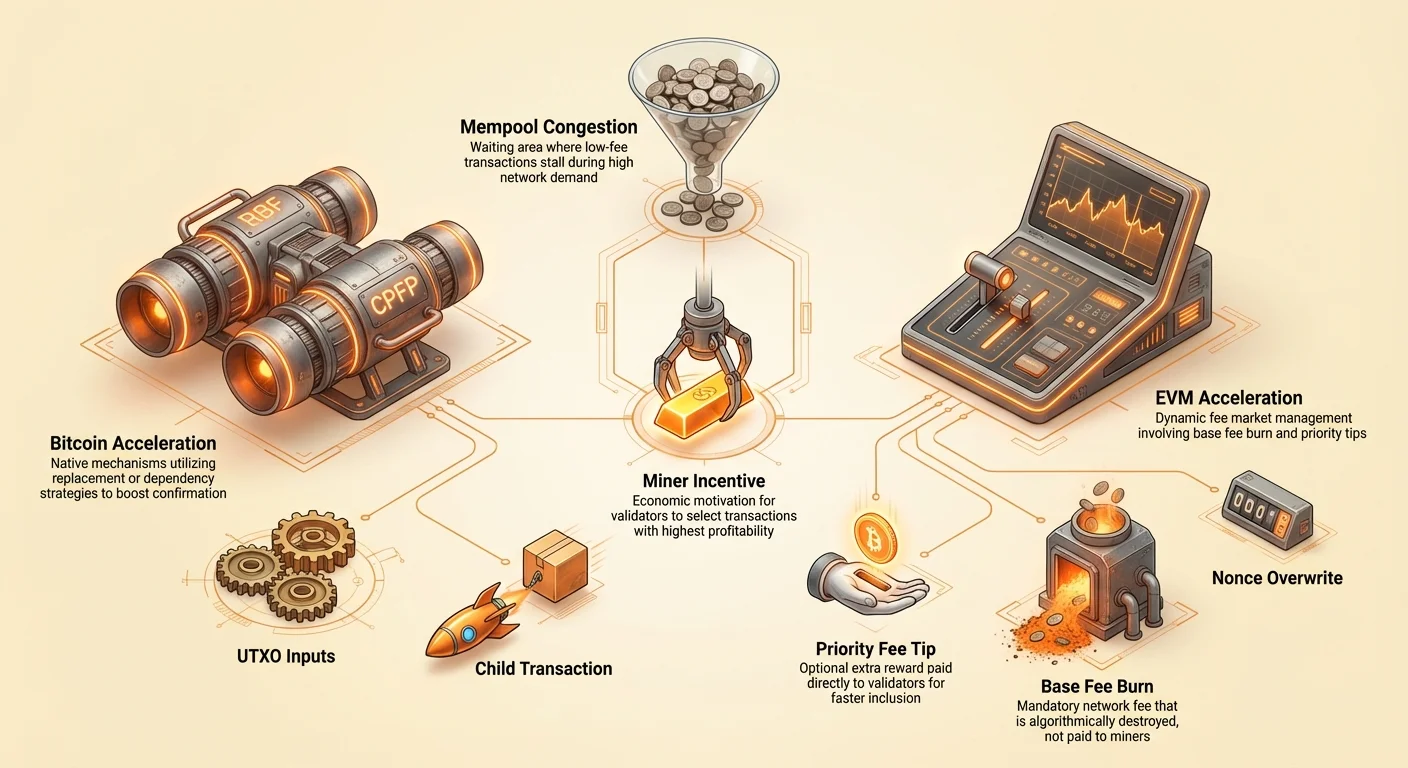
Bitcoin Acceleration Techniques: RBF మరియు CPFP
Bitcoin నెట్వర్క్ stuck transactionsతో deal చేయడానికి రెండు ప్రాధానమైన, native mechanismsను ఉపయోగిస్తుంది, వీటికి strategic intervention అవసరం. రెండు methods miner యొక్క immediate profit maximize చేయడానికి economic incentiveపై rely చేస్తాయి.
Replace-by-Fee (RBF): Mechanics మరియు Implementation
Replace-by-Fee (RBF) అనేది protocol feature, అది senderకు original యొక్క same inputs (UTXOs) ఉపయోగించి unconfirmed transaction యొక్క కొత్త version create చేయడానికి అనుమతిస్తుంది, కానీ significantly higher fee అందిస్తుంది. Original transaction నెట్వర్క్ mempool నుండి drop అవుతుంది మరియు కొత్త, higher-fee versionతో replace అవుతుంది.
RBF ఎలా పని చేస్తుంది
- RBF Enable చేయడం: Crucially, RBF original transaction first broadcast అయినప్పుడు enable చేయబడాలి. ఈ flagging (usually specific sequence number setting ద్వారా) నెట్వర్క్కు sender potentially replace చేయాలని intend చేస్తున్నాడని signal చేస్తుంది. Original transaction flagged కాకపోతే, చాలా nodes replacement attemptను reject చేస్తాయి, దాన్ని double-spendగా చూస్తాయి.
- Replacement Create చేయడం: User stuck transaction యొక్క exact same Unspent Transaction Outputs (UTXOs) consume చేసే కొత్త transaction create చేస్తాడు.
- Fee Rule: Replacement transaction original transaction total fee plus small premium pay చేయాలి, minersకు replacement handle చేయడానికి bandwidth cost compensate చేయడానికి. ఈ premium usually కొత్త fee rate ప్రస్తుత mempool ratesతో competitiveగా ఉండేలా చేస్తుంది.
- Broadcasting: Wallet కొత్త, higher-fee transactionను broadcast చేస్తుంది. RBF support చేసే nodes flag recognize చేసి, higher fee చూసి, original transaction drop చేసి, replacement relay చేస్తాయి.
Use Case: RBF senderగా మీరు మరియు inputs control చేస్తున్నప్పుడు transaction accelerate చేయడానికి cleanest method. Low-fee transactionను త్వరగా fix చేయడానికి ideal.
Practical Implementation: Wallet Support
RBF ఉపయోగించడానికి, feature explicitly support చేసే wallet ఉపయోగించాలి. Electrum, Ledger Live (certain chainsకు), Trezor Suite వంటి popular self-custody wallets తరచుగా pending transactions పక్కన simple "Bump Fee" లేదా "RBF" option అందిస్తాయి. Wallet replacement transaction generate చేయడానికి technical process handle చేస్తుంది.
Child-Pays-For-Parent (CPFP): The Bribe Strategy
Child-Pays-For-Parent (CPFP) అనేది original transaction RBF-enabled అవ్వాల్సిన అవసరం లేని technique. అది low-fee, stuck transaction (Parent)ను కొత్త, high-fee transaction (Child)తో bundle చేసే economic strategy, minersకు రెండింటినీ simultaneously confirm చేయడానికి strong economic incentive create చేస్తుంది.
Dependency Chain
- Parent (Stuck Tx): మీ original low-fee transaction stuck. అది transaction confirm కాకపోవడంతో new UTXOs create చేస్తుంది, ఇంకా exist కాకపోవడంతో.
- Child (Accelerator Tx): మీరు stuck Parent transaction outputను spend చేసే కొత్త transaction create చేస్తారు. Child transaction Parent outputపై rely చేస్తుంది కాబట్టి, Parent first confirm అవ్వాలని fundamentally dependent.
- Massive Fee: Child transaction extremely high feeతో crafted, తన data sizeకు మాత్రమే కాక, Parent చెల్లించిన low feeకు కూడా economically cover చేస్తుంది.
- Miner Incentive: Miners Parent-Child package యొక్క combined fee rate evaluate చేస్తారు. Combined rate profitableగా ఉంటే, miner రెండు transactionsను same blockలో include చేసి Childకు attached large fee collect చేస్తాడు.
Use Case: CPFP typically stuck transaction recipientగా మీరు, కానీ funds immediately spend చేయాలని అవసరమైతే ఉపయోగిస్తారు. Original sender RBF flag చేయకపోతే కూడా ఉపయోగిస్తారు.
RBF vs. CPFP ఎప్పుడు ఉపయోగించాలి
| ప్రణాళిక | అవసర పరిస్థితి | ఎవరు ప్రారంభిస్తారు | ప్రాధాన లాభం |
|---|---|---|---|
| RBF | Sender original transactionపై RBF enable చేయాలి. | Sender (input private key control చేయాలి). | Cleanest, original transaction entirely replace చేస్తుంది. |
| CPFP | Stuck transaction usable output (UTXO) కలిగి ఉండాలి. | Recipient లేదా Sender (Child input control చేసేవారు). | RBF enable కాకపోయినా పని చేస్తుంది; chain spendingకు useful. |
Expert Tip: RBF possibleగా ఉన్నప్పుడు generally preferred ఎందుకంటే అది original transaction remove చేసి mempool clean చేస్తుంది. RBF unavailable లేదా recipient incoming funds confirmation force చేయాలనుకుంటే CPFP necessary tool.
EVM Chainsలో Priority Fee Management (EIP-1559)
Ethereum మరియు ఇతర EVM-compatible chains (Polygon, Avalanche, BNB Chain, etc.) EIP-1559 చేత define చేయబడిన highly sophisticated, dynamic fee market ఉపయోగిస్తాయి. ఈ mechanism Bitcoin చేత historically used simple "first-price auction" systemతో పోల్చితే acceleration ఎలా పని చేస్తుందో fundamentally మార్చి ఉంచుతుంది.
EIP-1559 transaction feeను రెండు componentsలుగా splits చేస్తుంది: Base Fee మరియు Priority Fee (Tip), usersకు transaction inclusionపై మరింత predictable control ఇస్తుంది.
EIP-1559 అర్థం చేసుకోవడం: Base Fees మరియు Priority Fees
1. Base Fee (Burned)
Base Fee అనేది current blockలో transaction include చేయడానికి mandatory, algorithmic fee.
- Fixed: Base Fee network చేత dynamically set, block utilization (previous blocks ఎంత fullగా ఉన్నాయి) ప్రకారం.
- Predictability: ఈ fee automatically up లేదా down adjust అవుతుంది, gas costs stabilize చేస్తుంది.
- Burning: Crucially, Base Fee burned (circulation నుండి remove), validators manipulate చేయడం అసాధ్యం చేస్తుంది.
2. Priority Fee (Tip)
Priority Fee (తరచుగా "Tip" లేదా "Inclusion Fee" అని పిలుస్తారు) EIP-1559 కింద acceleration mechanism.
- Optional: ఈ fee extra amount, transaction blockలో include చేసే validatorకు directly పంపబడుతుంది.
- Auction Component: Priority Fee true competitive element. Network congestedగా ఉన్నప్పుడు, validators highest Priority Fees offer చేసే transactions మొదట select చేస్తారు profit maximize చేయడానికి.
- Acceleration: Stuck transaction accelerate చేయడానికి, pending queueలో ఇతరుల కంటే మరింత attractive చేయడానికి Priority Fee increase చేయాలి.
Max Fee Set చేయడం: Users Max Fee (లేదా Fee Cap) కూడా set చేయాలి, అది వారు pay చేయడానికి willing absolute maximum (Base Fee + Priority Fee). Base Fee suddenly ఈ cap మింత spike అయితే, transaction execute కాదు. Transaction execute అయినప్పుడు, user (Base Fee + Actual Priority Fee) pay చేస్తాడు, Max Fee limit వరకు.
Dynamic Gas Auctions: Validators ఎలా Choose చేస్తారు
EVM validators pending transactions మధ్య continuous internal auction నడుపుతారు. వారు చూసేది:
- Gas Limit: Transaction require చేసే maximum computation (Gas).
- Priority Fee: Validatorకు offer చేసే extra reward.
Block space constrainedగా ఉన్నప్పుడు, higher Priority Feeతో transaction lower Priority Feeతో transaction ముందు jump అవుతుంది, transaction broadcast అయిన సమయం ఏమైనా.
Tactical EVM Acceleration: Re-broadcasting మరియు Overwriting
Bitcoin RBF specific flagging require చేసినట్టు కాకుండా, EVM chains senderకు certain conditions meet అయితే pending transaction simply "overwrite" చేయడానికి అనుమతిస్తాయి.
1. Nonce Management ద్వారా Overwriting
EVM transactionsకు fundamental identification method Nonce—wallet addressతో associated sequential counter.
- Pending transaction specific Nonce కలిగి ఉంటుంది (ఉదా., Nonce 10).
- Accelerate లేదా replace చేయడానికి, same wallet address నుండి new transaction submit చేయాలి exact same Nonce (10)తో.
Network same Nonceతో రెండు transactions చూస్తే, higher effective fee rate (Max Fee / Priority Fee) offer చేసేది accept చేస్తుంది. Original transaction pending poolలో effectively replaced అవుతుంది.
2. Stuck Transaction Accelerate చేయడం
మీ transaction Priority Fee చాలా lowగా ఉండటంతో stuck అయితే, wallet interface (MetaMask, Rainbow, etc.) ఉపయోగించి same Nonceతో కానీ significantly higher Max Fee మరియు Priority Feeతో rebroadcast చేయండి.
- Step 1: Stuck transaction Nonce identify చేయండి.
- Step 2: Identical transaction (same recipient, same amount) లేదా cancellation transaction (0 ETH yourselfకు send) create చేయండి.
- Step 3: New transaction Nonce manually stuck one match అయ్యేలా set చేయండి.
- Step 4: Priority Fee (Tip) substantially increase చేయండి (తరచుగా current market rate కంటే 15-25% higher) మరియు Max Fee highest possible Base Fee cover చేసేలా ensure చేయండి.
- Step 5: New transaction broadcast చేయండి.
Cancellation Strategy: Stuck EVM transaction cancel చేయాలనుకుంటే, stuck transaction Nonce ఉపయోగించి own addressకు 0 ETH transaction send చేయండి, very high Priority Fee attach చేయండి. ఇది zero-value transaction quickly confirm అవడం ensure చేస్తుంది, Nonce consume చేసి original instruction effectively void చేస్తుంది.
Specialized Acceleration Services
Extreme network congestion scenariosలో, లేదా RBF/CPFP వంటి native methods feasible కాకపోతే, specialized third-party services కొన్నిసార్లు utilize చేయవచ్చు. ఈ services typically Bitcoin transactionsకు మాత్రమే ఉపయోగిస్తారు.
Third-Party Accelerators ఎలా పని చేస్తాయి
Bitcoin transaction accelerators తరచుగా mining pools చేత run అవుతాయి. వారు paid service (లేదా restrictionsతో free service) offer చేస్తారు, మీ transaction ID mempool monitor చేస్తారు. అది కనుక్కుంటే, మీరు వారి required fee pay చేస్తే (usually transaction size ప్రకారం), వారు next block వారు successfully mine చేసినప్పుడు transaction include చేయడానికి guarantee ఇస్తారు.
Essenceలో, మీరు standard fee auction process bypass చేయడానికి mining poolకు directly pay చేస్తున్నారు. Time criticalగా ఉంటే మరియు native RBF/CPFP failed లేదా unavailableగా ఉంటే effective.
Risks మరియు Centralization Concerns
Effectiveగా ఉన్నప్పటికీ, third-party accelerators ఉపయోగించడం inherent risks మరియు strategic drawbacksతో వస్తుంది:
- Trust Requirement: Paid తర్వాత third party promise fulfill చేస్తుందని trust చేయాలి.
- Privacy Concerns: Transaction ID (మరియు activity) publicly centralized entityకు link చేస్తారు.
- Cost: ఈ services తరచుగా high premium charge చేస్తాయి, మొదట competitive fee rate pay చేయడం cost మింత.
- Centralization: Poolsపై manually transactions push చేయడం rely చేయడం decentralized, fee-based market principles undermine చేస్తుంది. Native acceleration tools master చేయడం purpose defeat అవుతుంది.
Recommendation: Specialized accelerators last resortగా చూడాలి, primarily emergency situationsకు ఇక్కడ time-sensitivity cost మరియు centralization risk మింత.
Proactive Fee Managementకు Best Practices
Stuck transactionకు best defense good offense: initially optimal fees set చేయడం. Acceleration techniques mastery powerful troubleshooting skill, కానీ strategic fee management emergency intervention అవసరం prevent చేస్తుంది.
Network Health Monitor చేయడం
Non-urgent transaction send చేయడానికి ముందు mempool లేదా pending gas prices current state check చేయండి.
- Bitcoinకు: Block explorers లేదా mempool visualization sites (mempool.space వంటివి) ఉపయోగించి next 1-3 blocksకు required fee rate (Sats/vByte) determine చేయండి.
- EVM Chainsకు: Gas tracking sites (Etherscan gas tracker వంటివి) ఉపయోగించి current Base Fee మరియు rapid inclusionకు required competitive Priority Fee (Tip) assess చేయండి.
Network highly congestedగా ఉంటే (ఉదా., major NFT drops లేదా extreme volatility సమయంలో), non-essential transactions delay చేయండి లేదా very high fees proactively set చేయండి.
Fee Underpayment Avoid చేయడం (Fee Buffer)
Fees manually set చేస్తున్నప్పుడు, always small buffer add చేయండి. Next blockకు exact minimum fee target చేయకుండా, second block confirmationకు required fee aim చేయండి. ఈ slight overpayment sudden spikesలో cushionగా పని చేస్తుంది, RBF లేదా Nonce replacement immediate అవసరం లేకుండా transaction quickly confirm అవుతుందని reasonable assurance ఇస్తుంది.
Security మరియు Self-Custody Considerations
Acceleration methods same inputs spend చేసే లేదా same Nonce use చేసే కొత్త transactions generate require చేస్తాయి. దీనికి మీ private keysకు full access మరియు capable self-custody wallet అవసరం.
మీ private keys లేదా seed phraseను ఎట్టి third-party "accelerator service"తో share చేయకండి, అది transaction manually fix చేస్తానని claim చేస్తుంది. Trustless RBF మరియు CPFP మీ secure wallet environment within execute అవుతాయి.
Conclusion
Transactional flow control చేయడం డిజిటల్ ఆర్థిక వ్యవస్థలో self-sovereignty vital pillar. Network congestion successful public blockchains inevitable reality అయినప్పటికీ, acceleration techniques master చేయడం user experienceను passive frustration నుండి strategic controlకు transform చేస్తుంది.
Bitcoin input replacement (RBF) మరియు dependency strategies (CPFP) మధ్య nuanced differences అర్థం చేసుకోవడం ద్వారా, మరియు EVM frameworkలో Base మరియు Priority Fees efficiently manage చేయడం ద్వారా, practitioners assets move అవ్వాల్సిన చోటికి, అవసరమైన సమయంలో move అవ్వడానికి tactical expertise gain చేస్తారు. Proactive fee setting prioritize చేయడం మరియు native, trustless acceleration methodsపై rely చేయడం network rules compliance మరియు unpredictable market demand ఎదుర్కొన్నప్పుడు strategic efficiency ensure చేస్తుంది.