Digital assets were originally designed to function as peer-to-peer electronic cash. The vision was a financial system where individuals could transact directly without intermediaries. While this technology has revolutionized how value is stored and transferred, using it for daily purchases like morning coffee or groceries presents practical challenges. Most merchants do not accept cryptocurrency directly, and transaction times on major blockchains can be slower than instant credit card swipes.
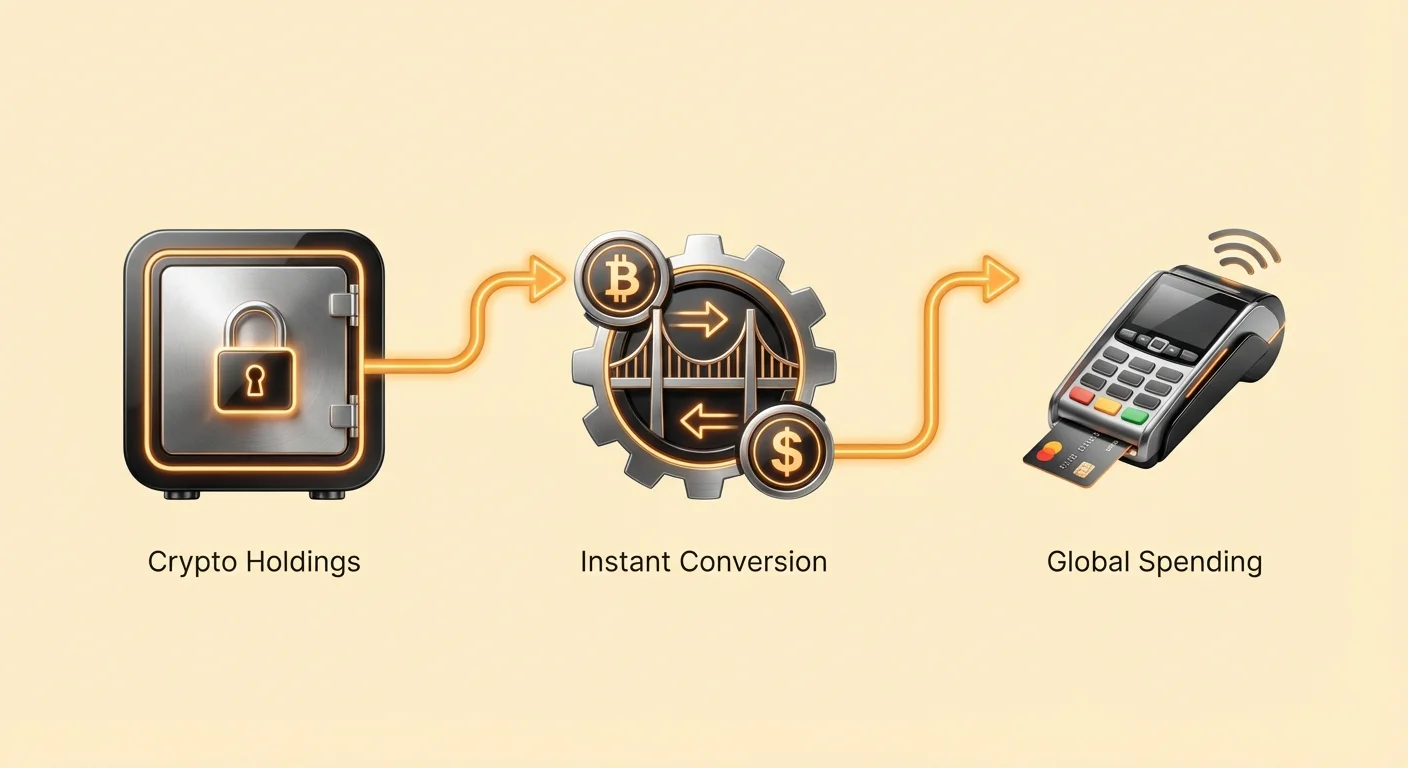
To bridge this gap between decentralized assets and the traditional financial infrastructure, crypto debit cards have emerged as a vital tool. These cards allow users to spend digital assets anywhere that accepts standard credit or debit payments. They function by converting cryptocurrency into local fiat currency, either at the moment of purchase or through a pre-loading process. This conversion happens in the background, allowing the merchant to receive their preferred currency while the user spends their digital balance.
For travelers and daily users, this integration offers significant flexibility. It eliminates the need to manually sell assets on an exchange and withdraw funds to a bank account before spending. Instead, the value held in digital wallets becomes instantly accessible liquidity. Understanding how these cards work, along with the underlying mechanics of exchanges and wallets, is essential for anyone looking to live efficiently on a crypto standard, especially regarding crypto travel hacking.
The Mechanics of Crypto Debit Cards
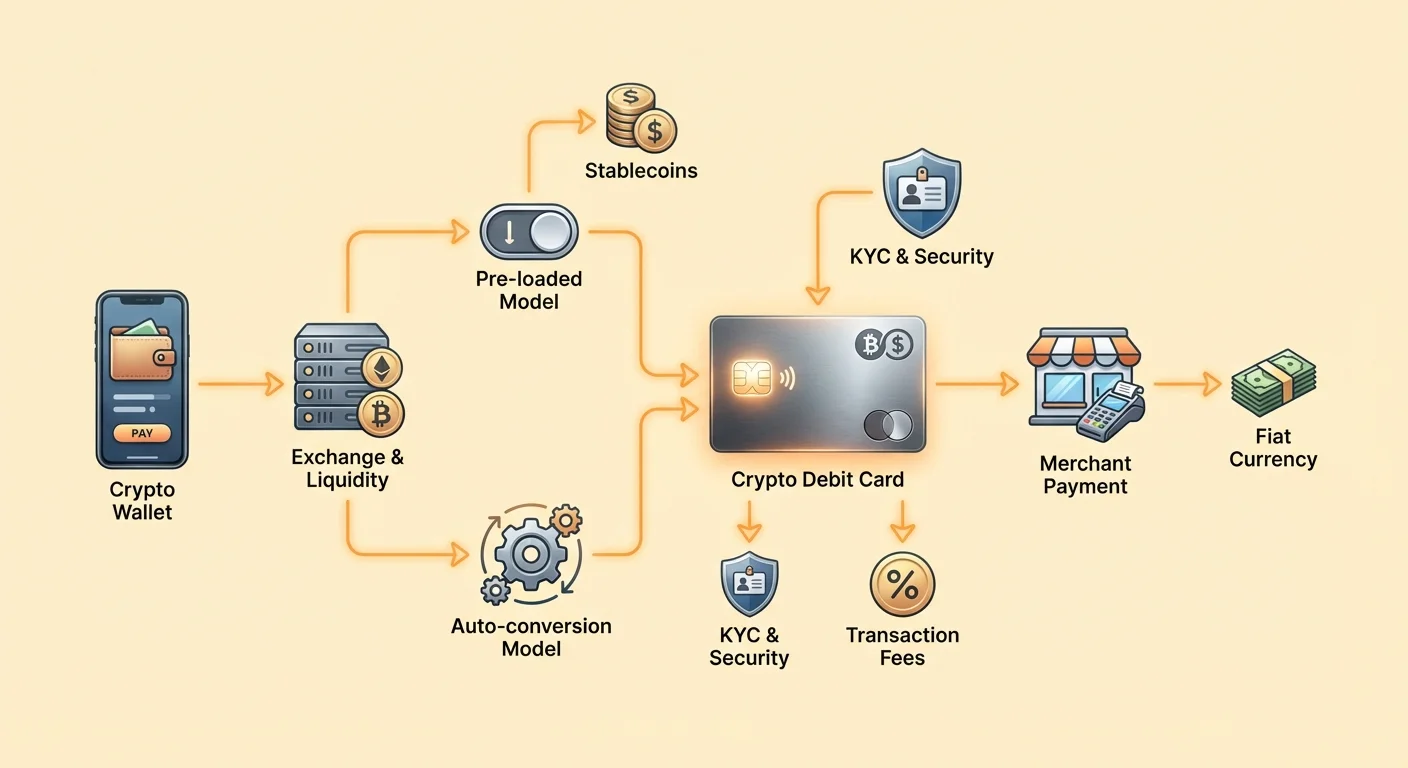
Crypto debit cards operate similarly to traditional prepaid debit cards but are funded by cryptocurrency wallets rather than bank accounts. When a user swipes their card, the payment network communicates with the card provider. The provider then checks the user's crypto balance to ensure sufficient funds exist to cover the transaction. Upon approval, the necessary amount of cryptocurrency is sold or exchanged for fiat currency to settle the payment with the merchant.
There are two primary models for how these funds are managed. The first is the pre-loaded model. In this scenario, the user must manually convert their cryptocurrency into fiat or a stablecoin balance within the card's app before making a purchase. This offers the user precise control over when they sell their assets, allowing them to time the market or lock in a specific exchange rate before traveling.
The second model is auto-conversion. With auto-conversion cards, the cryptocurrency remains in its original form until the exact moment of purchase. When the card is used, the provider automatically sells the exact amount of crypto needed to cover the cost. This is convenient as it removes the need for active management. However, it exposes the spender to potential price volatility right up until the transaction occurs.
Virtual Versus Physical Spending Solutions
The form factor of these cards varies to meet different user needs. Virtual cards are digital-only versions that are generated instantly within an app. They come with a card number, expiration date, and security code. These are ideal for online shopping or adding to mobile payment wallets for contactless in-store payments. Virtual cards are often available immediately after account verification, making them a fast solution for immediate spending needs.
Physical cards are traditional plastic or metal cards sent to the user's address. These are necessary for merchants who do not accept contactless payments or for withdrawing local currency from ATMs. For travelers, having a physical card is a crucial backup in regions where digital payment infrastructure is less developed. Both types typically utilize major global payment networks, ensuring acceptance at millions of locations worldwide.
The Role of Exchanges in Enabling Spending
At the heart of every crypto debit card transaction is an exchange mechanism. Since most merchants cannot accept Bitcoin or Ethereum directly, an intermediary must facilitate the swap from crypto to cash. This is typically handled by centralized exchanges (CEXs). These platforms act as the bridge, holding the user's assets in custody and executing the sell orders required to fund card transactions, making custody and security features critical.
Centralized exchanges provide the liquidity necessary for instant spending. Liquidity refers to the ease with which an asset can be converted into cash without impacting its price. High liquidity ensures that when a user buys a dinner or books a flight, the conversion happens instantly at a fair market rate. Without deep liquidity, transactions could fail, or the exchange rate could be unfavorable for the user.
Users must understand that using a card issued by a centralized exchange involves a custodial relationship. The user trusts the exchange to secure their funds. This differs from self-custody, where the user holds their own private keys. For spending purposes, users often keep a portion of their funds on the exchange-linked card wallet while keeping their long-term savings in a secure, private wallet.
Verification and Security Requirements
Because these cards interact with the traditional banking system, they are subject to financial regulations. Users cannot typically obtain a crypto debit card anonymously. Providers must comply with Know Your Customer (KYC) and Anti-Money Laundering (AML) laws. This means users must verify their identity by providing government-issued ID and sometimes proof of address before they can activate a card, navigating the complex regulatory landscape deep dive.
This verification process protects the ecosystem from illicit activity but also links the user's crypto spending to their real-world identity. For travelers, this can actually be a benefit in terms of security. If a card is lost or stolen, the verified identity allows the provider to freeze the account and issue a replacement, similar to a traditional bank.
Security features on these platforms often include two-factor authentication (2FA) and the ability to freeze the card instantly via a mobile app. Some providers offer "vault" or "savings" wallets separate from the spending wallet. This ensures that even if the card details are compromised, the main balance remains untouched in a separate, secure partition of the account.
Funding Your Spending Account
To use a crypto debit card, users must first acquire digital assets and move them to the card's funding wallet. There are several ways to obtain crypto. Users can buy directly on the exchange platform using bank transfers or credit cards. Alternatively, they might earn crypto through work or mining and transfer it to the card account.
Transferring funds involves sending assets from one wallet address to another. A wallet address functions like a bank account number for the blockchain. It is an alphanumeric string that identifies the destination. When funding a card from an external wallet, users must copy this address carefully. Blockchain transactions are irreversible, so sending funds to the wrong address usually results in permanent loss.
Users should be aware of network fees when funding their cards. Every transaction on a blockchain requires a fee to pay the miners or validators who secure the network. During times of high congestion, these fees can rise significantly. Funding a card with small amounts frequently can be inefficient due to these costs, making it essential to optimize transaction costs. It is often more economical to transfer larger lump sums to cover spending needs for a longer period.
Managing Volatility with Stablecoins
One of the biggest challenges of spending crypto is volatility. The purchasing power of assets like Bitcoin can fluctuate significantly within a single day. For a traveler on a budget, this creates uncertainty. A hotel room that costs 0.05 BTC today might cost 0.06 BTC tomorrow if the price drops.
To mitigate this, many users swap their volatile assets into stablecoins before spending. Stablecoins are digital assets pegged to a stable currency, usually the US Dollar. By converting Bitcoin or Ethereum into a stablecoin like USDT or USDC, users lock in their purchasing power. They can then spend from this stable balance without worrying about market crashes affecting their ability to pay bills, but should be aware of the stablecoin risk matrix.
Swapping is a taxable event in many jurisdictions, and it also incurs trading fees. Users should calculate these costs when planning their spending strategy. However, the peace of mind provided by a stable balance often outweighs the small conversion costs for daily spenders and travelers.
Cost Analysis: Fees and Economics
Using crypto debit cards involves various fees that can impact the overall cost of spending. It is important to read the fee schedule of any card provider. Common fees include issuance fees for physical cards, monthly maintenance fees, and ATM withdrawal fees. However, the most significant costs often come from the trading or conversion side of the transaction.
When a card automatically converts crypto to fiat, it performs a trade on the exchange. This trade may incur a "taker" fee, which is the fee charged for removing liquidity from the order book. Additionally, there may be a "spread," which is the difference between the market price and the price offered for the conversion. A wide spread effectively acts as a hidden fee, reducing the amount of fiat currency the user gets for their crypto.
| Fee Type | Description | Impact on User |
|---|---|---|
| Issuance Fee | One-time cost for physical card | Low impact |
| Conversion Fee | % charged when swapping to fiat | High impact on frequent use |
| Foreign Transaction | Fee for non-native currency use | Important for travelers |
| ATM Fee | Cost to withdraw cash | Variable by provider/ATM |
Travelers should pay special attention to foreign transaction fees. While some crypto cards offer competitive exchange rates that rival traditional travel cards, others may charge a percentage on top of the conversion for international purchases. Comparing these rates against standard credit cards is wise for international trips.
Rewards and Incentives
To attract users, many crypto card providers offer rewards programs. These typically function like cashback but are paid out in cryptocurrency. For example, a user might earn a percentage of their purchase value back in Bitcoin or the platform's native token. These rewards can offset conversion fees and effectively provide a discount on spending.
Reward tiers are often tied to the amount of cryptocurrency a user holds or "stakes" on the platform. Staking involves locking up a certain amount of tokens for a period of time. Higher staking tiers usually unlock higher reward percentages and additional perks, such as rebates on subscription services or airport lounge access.
While rewards are attractive, users should evaluate the volatility of the reward token. Earning 5% back in a token that loses 50% of its value is less beneficial than earning 1% in a stable asset. Some platforms allow users to choose which asset they earn rewards in, providing greater flexibility and control over their accumulation strategy.
Alternative Transfer and Spending Methods
While debit cards are the most familiar tool for spending, the crypto ecosystem offers other ways to transfer value and pay for services. Peer-to-peer (P2P) trading platforms allow users to sell crypto directly to other individuals in exchange for local cash or bank transfers. This can be useful in countries where banking infrastructure is limited or where exchange restrictions exist.
P2P marketplaces function by locking the crypto in an escrow service while the buyer sends the fiat payment. Once the seller confirms receipt, the crypto is released. This method is generally slower than using a card but offers more privacy and flexibility regarding payment methods. It connects buyers and sellers directly, allowing them to negotiate rates.
Another innovation is the use of shareable links for transfers. This feature, available in some non-custodial wallets, allows a user to send funds via a simple URL sent through text or email. The recipient clicks the link to claim the funds. While not a direct merchant payment method, it is highly effective for splitting bills, tipping, or sending emergency funds to friends and family without needing to know their complex wallet address.
Direct Merchant Acceptance and Layer 2
The ultimate goal for many crypto enthusiasts is direct merchant acceptance, bypassing the need for fiat conversion entirely. Some businesses accept payments directly to their wallet addresses. However, base-layer blockchains can be slow and expensive for small retail transactions.
Layer 2 solutions, such as the Lightning Network for Bitcoin, address this issue. They enable off-chain transactions that are instant and cost a fraction of a penny. While adoption is still growing, specialized cards and apps are beginning to integrate Lightning Network wallets and spending. This allows users to spend directly from their crypto balance with instant settlement, reducing the reliance on the traditional Visa or Mastercard networks over time.
Until direct acceptance becomes ubiquitous, crypto debit cards remain the primary bridge. They allow users to remain invested in the digital asset ecosystem while interacting seamlessly with the legacy financial world. This hybrid approach provides the utility of cash with the potential upside and self-sovereignty of cryptocurrency.
Managing Wallets for Travel Security
Travel involves unique security risks, and managing digital assets requires a strategic approach. It is generally not recommended to carry a hardware wallet or main savings device while traveling. Losing the physical device or the recovery phrase could result in the total loss of funds. Instead, a "hot wallet" approach is often safer for daily spending.
A hot wallet is connected to the internet, usually via a mobile app. Travelers should load only the amount of funds needed for the trip onto their mobile wallet or exchange account connected to their debit card. This limits potential losses if a phone is stolen or an account is compromised. The bulk of the user's portfolio should remain in cold storage, which is offline and secure from remote hacks.
Users should also ensure they have access to account recovery methods. If a phone is lost, two-factor authentication (2FA) codes generated by an authenticator app may be inaccessible. having a backup of the 2FA setup keys or using a hardware security key (YubiKey) stored separately from the phone ensures that account access can be restored on a new device.
Exchange Types and Liquidity Access
The type of exchange backing a card influences the spending experience. Most cards are backed by centralized entities because they require legal compliance and banking partnerships. However, the rise of decentralized finance (DeFi) has introduced concepts like decentralized exchanges (DEXs). While DEXs do not issue debit cards directly in the same way, they are crucial for swapping assets before loading a card.
DEXs allow users to trade peer-to-peer without an intermediary. A user might swap a speculative altcoin for a stablecoin on a DEX to avoid the higher fees or spreads sometimes found on the centralized app connected to their card. Once the swap is complete, the user sends the stablecoin to their card account for spending. This hybrid usage allows savvy users to minimize costs.
Liquidity on the exchange is also vital. In times of extreme market volatility, liquidity can dry up, leading to "slippage," where the final sale price is worse than the expected price. Major centralized exchanges typically maintain deep order books to prevent this, ensuring that card swipes work reliably even during market turbulence.
Conclusion
Crypto debit cards have successfully bridged the divide between the digital asset economy and traditional commerce. They solve the fundamental problem of usability, allowing Bitcoin, Ethereum, and stablecoins to function as efficient mediums of exchange in a world dominated by fiat currency. By converting assets instantly or on-demand, these tools provide flexibility for travelers and daily spenders who wish to leverage their digital wealth without complex hurdles.
However, effective use requires an understanding of the underlying infrastructure. From managing wallet security and navigating exchange fees to utilizing stablecoins for volatility protection, the informed user can maximize the benefits while minimizing costs. As the ecosystem evolves with Layer 2 solutions and direct acceptance, the friction of spending digital assets will continue to decrease.
Integrating crypto spending tools requires balancing convenience with security and cost management.