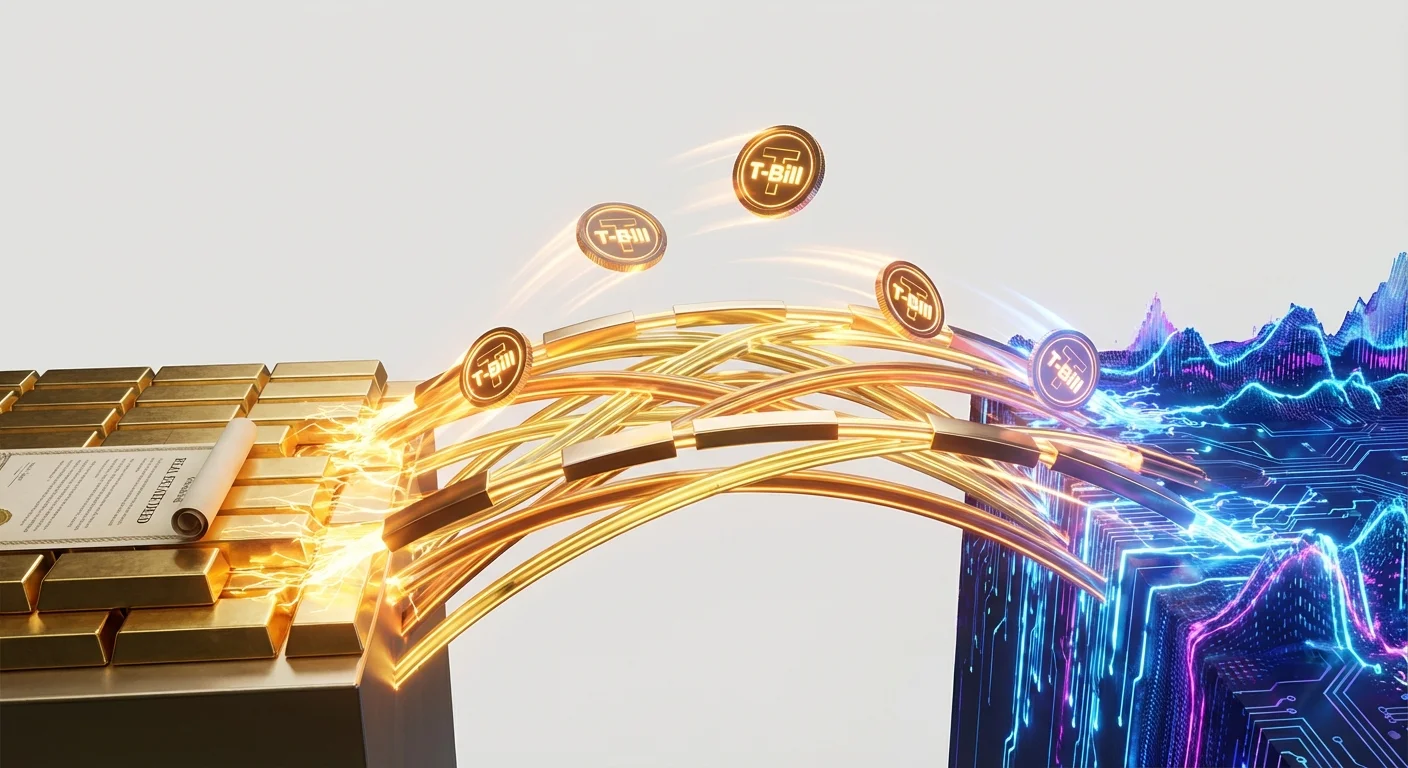
When most people think of crypto yield, they imagine the roller coaster of decentralized finance (DeFi)—huge returns one week, market crashes the next. While the potential for high returns is real, it often comes hand-in-hand with high volatility and dependency on the health of the crypto market itself. For investors seeking true resilience and stability, relying solely on speculative crypto assets is not a sustainable long-term strategy.
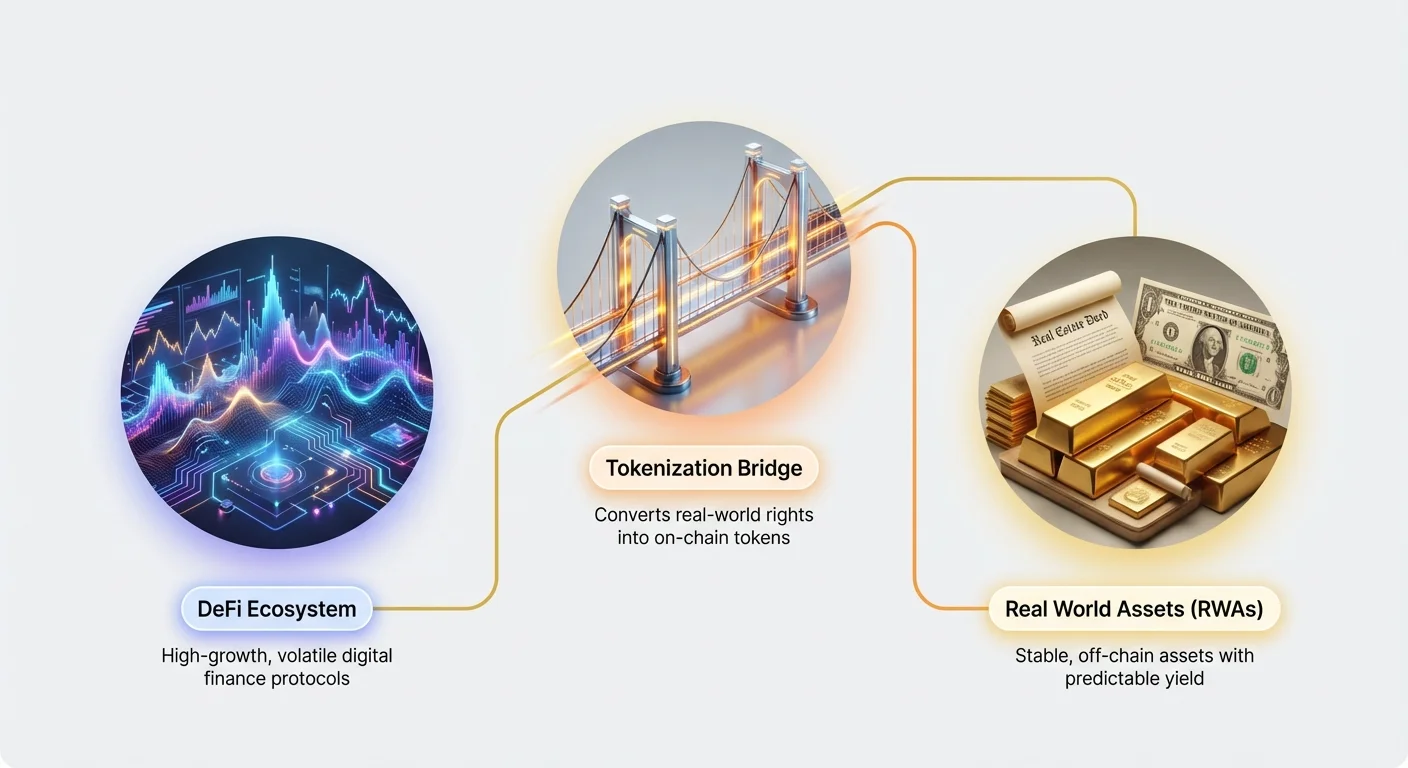
This is where Real World Assets (RWAs) enter the picture. RWAs are tangible or intangible assets that exist outside the blockchain—things like real estate, corporate debt, commodities, or, most popularly, U.S. Treasury bills. By tokenizing these assets, blockchain technology can port the stable, predictable income streams of traditional finance (TradFi) directly onto the decentralized rails of DeFi.
This shift isn't just about adding new assets; it's about fundamentally changing how we approach portfolio construction in crypto. Instead of defining what RWAs are, this guide focuses on the strategic benefit: how to use tokenized RWAs as a sophisticated tool to generate high-quality, non-crypto-correlated yield, providing an essential "safe harbor" in any decentralized portfolio.
The Strategic Case for Integrating RWAs into DeFi
The primary challenge for any yield-seeking investor in crypto is correlation risk. When the price of Bitcoin or Ethereum drops sharply, nearly all related assets—from altcoins to liquidity provider (LP) tokens—tend to fall with it. This means diversification within crypto often fails during a widespread panic. RWAs solve this by importing yields that are governed by external factors, such as central bank interest rates or rental agreements, rather than crypto market sentiment.
Stability in a Volatile Market (The Counter-Cyclical Benefit)
The core value proposition of tokenized RWAs, particularly those based on high-grade government or corporate debt, is their stability.
Traditional finance assets like U.S. Treasury bonds offer a yield (an interest rate) that is fixed or highly predictable. This yield continues regardless of whether Bitcoin is trading at $10,000 or $100,000. For a DeFi user, this means you can allocate a portion of your stablecoins or digital capital to a source of yield that is completely decoupled from the market cycle.
This counter-cyclical benefit makes RWAs a strategic hedging tool. When the crypto market is crashing, the steady interest payments from your tokenized T-Bills act as an anchor, helping mitigate overall portfolio losses and providing liquidity when other assets are frozen or illiquid.
Non-Crypto-Correlated Returns (Diversification)
True diversification means combining investments whose returns move independently of each other. Most DeFi yield sources—staking rewards, lending protocols, and liquidity mining—are highly correlated because they are denominated in crypto tokens and rely on crypto-native collateral.
RWAs allow investors to earn yield derived from traditional credit markets. For instance, the yield on a tokenized T-Bill is determined by the Federal Reserve's monetary policy, not by the number of transactions on a blockchain or the trading volume of a specific exchange. By incorporating these off-chain yields, an investor drastically reduces systematic risk exposure to the cryptocurrency sector, making the overall portfolio more resilient.
Bridging Traditional Finance and Decentralized Finance
RWAs serve as the crucial infrastructure bridge between TradFi and DeFi. Historically, the hundreds of trillions of dollars sitting in traditional assets have been inaccessible to decentralized protocols. Tokenization allows these assets to be fractionalized, collateralized, and traded using the efficiency and transparency of the blockchain.
For the investor, this means access to institutional-grade products—which were previously reserved for large banks or sophisticated funds—are now available globally 24/7 with low minimum investment thresholds. This fusion of blockchain efficiency with traditional asset quality marks a major milestone in financial inclusivity.
Understanding Tokenization: How Off-Chain Assets Go On-Chain
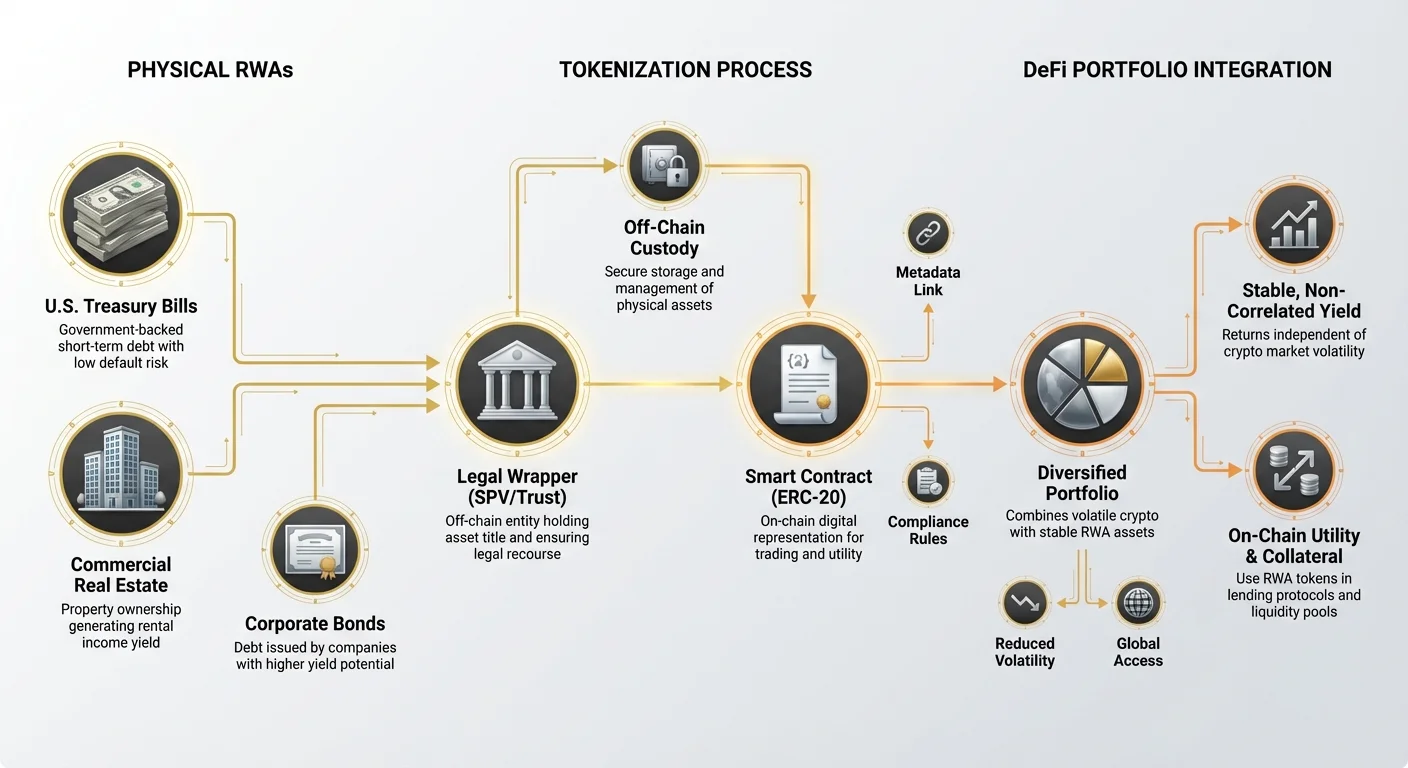
The process of tokenization is the mechanism that converts a legal, real-world claim into a digital, blockchain-native token. Since the asset itself (e.g., a physical building) cannot simply be placed on a ledger, tokenization involves creating a digital representation linked to the underlying legal ownership structure.
The Role of the Token Wrapper (Legal and Technological Bridge)
A tokenized RWA is essentially a digital receipt or a "wrapper" that represents ownership of the underlying asset. This wrapper serves two essential functions:
- Technological Bridge: The token (usually an ERC-20 standard token on Ethereum) allows the asset to be traded, used as collateral, and managed by smart contracts, instantly integrating it into the DeFi ecosystem.
- Legal Bridge: This is the most crucial part. The token's issuer (the tokenization platform) must establish a clear, legally sound structure—often through special purpose vehicles (SPVs) or trusts—that guarantees the token holder has a verifiable claim on the real-world asset or its associated cash flows. Without this clear legal backing, the token is worthless paper.
Comparison of Tokenization Models
RWAs are tokenized using various models, each presenting different risk profiles regarding custody and legal recourse:
1. Direct Ownership (Single-Asset Tokenization)
In this model, a single, discrete asset (e.g., a specific piece of real estate or a specific bond) is tokenized. If you buy 100 tokens, you legally own a 1% share of that specific property or bond. This model offers high transparency but potentially lower liquidity, as the asset is specific and less fungible.
2. Basket/Pool Shares (Fund Tokenization)
The most common model for liquid assets like Treasury bills. An organization pools capital and purchases a large basket of similar assets (e.g., short-term T-Bills). The investor buys a token representing a share of that entire pool. This model offers higher liquidity and diversification (if one bond defaults, the impact on the pool is minimal), but the investor relies on the pool manager to execute trades and maintain the fund’s integrity.
Key RWA Categories for Yield
While virtually anything can be tokenized, the most strategically valuable categories for generating stable DeFi yield currently include:
- Tokenized Treasury Bills/Bonds: Government debt instruments (often short-term U.S. Treasuries) known for extremely low default risk and predictable, often floating-rate, yield. They are the ideal RWA for stable yield generation.
- Tokenized Private Credit: Loans made to specific businesses or institutions, typically offering higher yields than government debt but involving higher risk. These often target sophisticated investors.
- Tokenized Real Estate: Tokens representing fractional ownership of commercial or residential properties. The yield comes from rental income. While highly stable, these tokens are often less liquid due to the difficulty of selling physical property quickly.
Case Study: Tokenized Treasury Bills (The Gold Standard of RWA Yield)
Tokenized Treasury Bills (T-Bills) have emerged as the dominant and most accessible form of RWA for DeFi investors seeking stability. T-Bills are short-term debt instruments backed by the full faith and credit of the issuing government (typically the U.S.). They are considered one of the safest investments globally.
Why T-Bills Offer Attractive On-Chain Yield
In traditional finance, T-Bills are stable but often inaccessible to small retail investors globally due to complex brokerage requirements. Tokenization solves this while maintaining the yield’s integrity:
- Sovereign Backing, Low Risk: The risk of the U.S. government defaulting is considered negligible. This low credit risk translates into low volatility, making it an excellent collateral asset or "store of value" within DeFi, yielding returns far superior to standard crypto lending on stablecoins.
- Monetary Policy Alignment: The yield you receive from a tokenized T-Bill fund moves in lockstep with the Federal Reserve's interest rate hikes. When the Fed raises rates, these RWA yields rise, providing a genuine hedge against inflation and a predictable stream of income that is entirely independent of whether the crypto bull market is running or not.
- On-Chain Utility: Once tokenized, these low-risk yield streams become composable. They can be used as collateral in lending protocols, paired in decentralized exchange (DEX) liquidity pools, or even integrated into new DeFi instruments, unlocking capital efficiency that traditional finance cannot match.
The Liquidity and Redemption Process
Unlike traditional bonds, which require trading through institutional brokers, tokenized T-Bills are designed for seamless entry and exit.
- Buying: An investor sends stablecoins to the tokenization platform. The platform issues the corresponding RWA token, which represents ownership of the underlying T-Bill fund.
- Yield Generation: The yield accrues directly to the token holder. This yield is often paid out daily or automatically reflected in the token’s price appreciation (as the principal plus interest value increases over time).
- Redemption: When the investor wishes to exit, they burn the RWA tokens, and the platform returns the stablecoin equivalent, having liquidated the corresponding assets in the underlying fund.
This process simplifies institutional-grade investment to a few clicks on a web application, removing geographical barriers and cumbersome paperwork.
Strategic Allocation: Integrating RWA Yield into a Portfolio
Successfully implementing RWAs requires treating them as a distinct asset class within your digital portfolio, akin to the role that bonds or cash equivalents play in a traditional investment strategy.
RWA as the Portfolio’s "Safe Harbor"
The strategic benefit of RWAs is maximized when they are allocated as the low-risk, high-quality component of your overall crypto holdings.
Allocation Guidance: For a novice or risk-averse investor, RWAs should form the bedrock of the stable portion of the portfolio. If you define your DeFi passive income strategy as:
- High Risk (30%): Liquidity mining/Farming on new or volatile protocols.
- Medium Risk (40%): Blue-chip protocol lending (e.g., Aave, Compound).
- Low Risk (30%): RWAs (e.g., tokenized T-Bills) and single-asset stablecoin staking.
By allocating 20-30% of your capital to RWAs, you guarantee a baseline rate of return that persists regardless of market conditions, significantly lowering the overall portfolio’s volatility profile. This "safe harbor" capital is always available for opportunistic redeployment if a severe market crash creates attractive buying opportunities for speculative assets.
Combining RWA and Crypto Yields (The Hybrid Strategy)
The most advanced strategic use of RWAs involves leveraging them to enhance other DeFi activities while maintaining low risk.
- Stable Collateral: RWA tokens can be used as superior collateral in over-collateralized lending. Since the underlying asset is highly stable, you can often borrow against RWA tokens more safely and efficiently than against volatile crypto assets like ETH or BTC.
- Yield Stacking: Some protocols allow users to stake their RWA tokens to earn additional yield on top of the underlying asset's interest. This is crucial for maximizing capital efficiency, allowing one asset to generate two streams of income (the interest from the T-Bill, plus a protocol fee or token emission).
Calculating True Yield vs. APY
When evaluating RWA opportunities, it is vital to distinguish the quality of the yield from the percentage.
- Crypto APY: Often represents Annual Percentage Yield derived from highly inflationary token rewards, volatile trading fees, or unsustainable lending practices. High APYs (e.g., 50%) come with a massive risk of capital impairment.
- RWA Yield: Represents the yield of the underlying asset (e.g., 5.0% APY on a T-Bill). This yield is low-inflationary, real-world derived, and backed by legal structures. While the percentage might be lower than DeFi farming (e.g., 5% vs. 15%), the risk-adjusted return is substantially higher, as the risk of losing the principal is minimized.
Strategic investors prioritize high-quality, sustainable yield (like RWAs) over chasing ephemeral, high-percentage returns.
Analyzing the Risks of RWA Investment
While RWAs dramatically lower crypto-native risk, they introduce complex, non-crypto risks that investors must understand. The strategic investor understands that risk is simply transferred from the blockchain to the legal system.
Legal and Regulatory Risk (The Off-Chain Constraint)
The biggest challenge for RWAs is that their value and recourse are tied to traditional legal and regulatory frameworks.
- Jurisdictional Risk: The legal enforceability of your token ownership claim depends entirely on the jurisdiction where the asset is held and where the tokenization entity (SPV/Trust) is established. If the legal structure is flawed or non-compliant, the token may become valueless, even if the underlying asset is sound.
- Evolving Regulations: As governments globally struggle to define how digital tokens relate to traditional property rights, regulatory changes could suddenly require token holders to "on-ramp" through cumbersome Know Your Customer (KYC) processes or face restrictions on trading.
Custodial and Counterparty Risk
Tokenizing an RWA requires a centralized entity to acquire, hold, and manage the physical asset. This creates custody risk.
- Custodian Failure: If the traditional custodian holding the actual bonds or deeds fails, or if the tokenization platform itself is negligent or fraudulent, the link between the token and the real asset is broken, regardless of the smart contract's security.
- Mismanagement: In pool-based models, the management team must accurately track the assets, execute trades efficiently, and maintain appropriate collateral ratios. Poor operational management can erode the yield or the principal value of the fund.
Smart Contract and De-Pegging Risk
While RWAs reduce systemic crypto risk, they remain dependent on blockchain security for their on-chain functionality.
- Smart Contract Exploits: The token wrapper, redemption protocol, and staking mechanisms are governed by smart contracts. A bug or exploit in this code could result in the freezing or loss of the tokenized assets.
- Liquidity and De-Pegging: RWA tokens must maintain a stable value relative to their underlying asset (e.g., a tokenized T-Bill share must trade close to its Net Asset Value or NAV). If liquidity dries up, or if regulatory uncertainty causes a sudden mass exodus, the token could temporarily "de-peg" from its true value, creating short-term capital losses.
Conclusion
Real World Assets are not merely a passing trend; they represent a fundamental maturation of the DeFi ecosystem. By strategically incorporating high-quality, tokenized off-chain assets like Treasury bills, investors can achieve something previously impossible in crypto: reliable, counter-cyclical yield that drastically lowers the overall risk profile of their portfolio.
For the beginner investor, the lesson is clear: true resilience is built on diversification that extends beyond the digital realm. RWAs provide the essential financial bridge, allowing decentralized strategies to tap into the stability and depth of traditional markets. By carefully assessing the legal and custodial risks associated with tokenization and prioritizing quality yield over speculative percentages, RWAs become the ultimate tool for constructing a sophisticated and resilient passive income portfolio in the world of decentralized finance.