Digitālo finanšu ainava ir ievērojami attīstījusies no vienīgās tīkla dominances agrīnajām dienām. Tā kā kriptovalūtu ekosistēma paplašinās, lietotāji vairs nav ierobežoti ar vienu blokķēdi. Spēja mijiedarboties ar vairākiem tīkliem, kas pazīstama kā starpķēžu funkcionalitāte, ir kļuvusi par modernās decentralizētās finanses (DeFi) pamatakmeni. Šī maiņa ļauj dalībniekiem piekļūt plašākam aktīvu, lietotņu un finanšu instrumentu klāstam, kas iepriekš bija izolēti savās ekosistēmās.
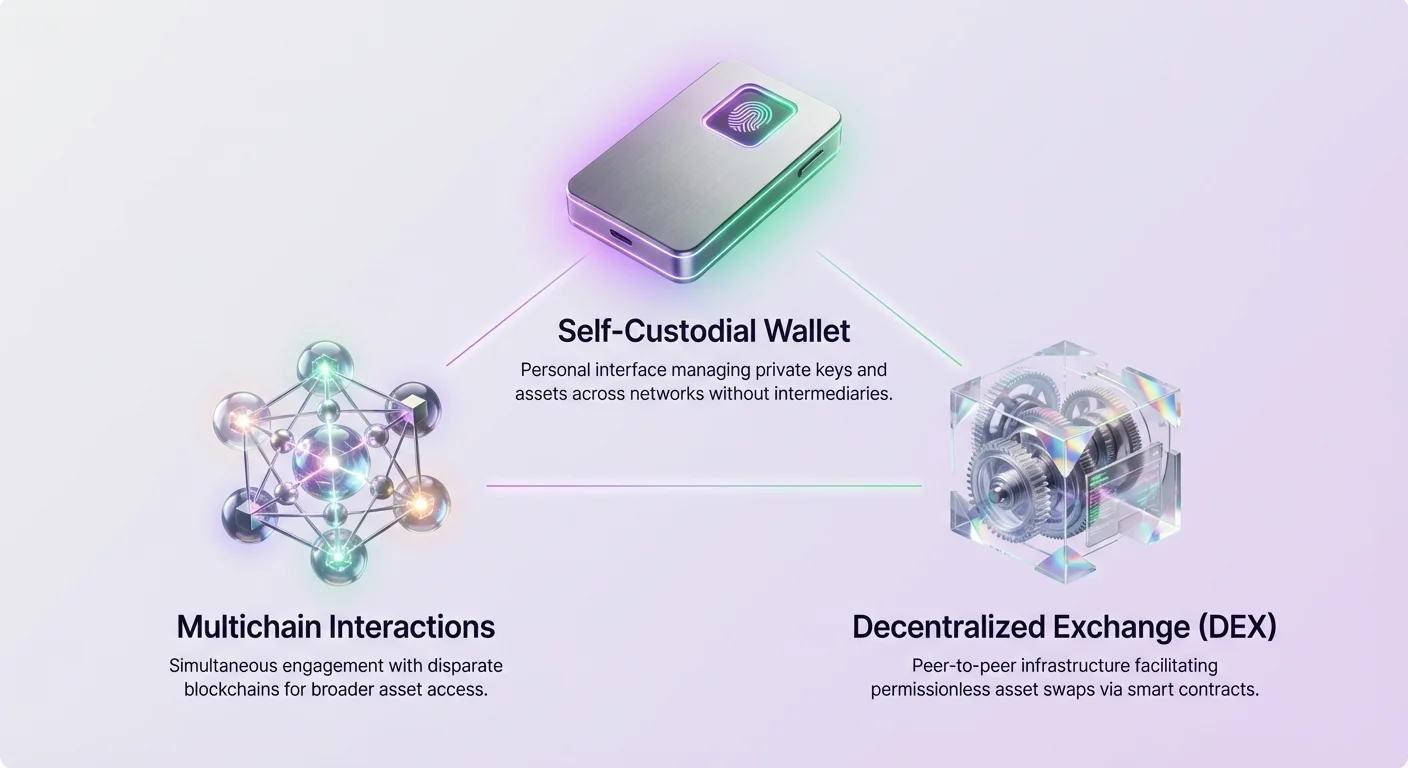
Pārejot ārpus vienas ķēdes, atveras plašas iespējas tirgotājiem, investoriem un digitālajiem kolekcionāriem. Tas nodrošina vērtības brīvu plūsmu pāri dažādiem infrastruktūras slāņiem, piemēram, Ethereum, Bitcoin, Polygon un citiem. Tomēr šīs daudzkķēžu vides navigēšana prasa stingru iesaistīto rīku izpratni. Primārie vārti šīm mijiedarbībām ir decentralizētas biržas (DEX) un daudzkķēžu maciņi. Šie rīki atvieglo pamata darbību — aktīvu apmaiņu un portfeļu pārvaldību bez centralizētu starpnieku iesaistes.
Lai efektīvi darbotos daudzkķēžu pasaulē, ir jāizprot mehānismi, kas nodrošina šīs mijiedarbības. Tas ietver jēdzienu izpratni, piemēram, likviditātes baseinus, automatizētus tirgus veidotājus un bez glabātāja tirdzniecības nianses. Tas arī prasa izpratni par to, kā dažādi tīkli apstrādā darījumu maksas un norēķinus. Apgūstot šos pamatus, lietotāji var droši izpētīt dažādo žetonu un digitālo kolekcionāru klāstu, kas pieejams globālajā kripto ekonomikā.
Daudzkķēžu piekļuves pamats
Jebkura starpķēžu ceļojuma sākumpunkts ir digitālais maciņš. To bieži dēvē par kripto maciņiem vai web3 maciņiem, šīs lietotnes kalpo kā personīgais blokķēdes saskarne. Daudzkķēžu kontekstā maciņš darbojas kā vienots panelis, kas var pārvaldīt aktīvus pāri atšķirīgiem tīkliem vienlaikus. Atšķirībā no tradicionālajām bankas kontiem, kas glabā fiat valūtu centralizētā virsgrāmatā, šie maciņi glabā privātās atslēgas, kas nepieciešamas, lai piekļūtu un kontrolētu digitālos aktīvus blokķēdē.
Šajā jomā svarīga atšķirība ir starp glabātāja un pašglabātāja maciņiem. Robustākās opcijas starpķēžu mijiedarbībai ir pašglabātāja. Šī modelis nodrošina, ka lietotājs saglabā pilnīgu kontroli pār maciņa saturu. Nav trešās puses bankas vai biržas, kas darbojas kā vārtsargs. Šī autonomija ir būtiska mijiedarbībai ar decentralizētām lietotnēm (DApps), kas pastāv dažādās ķēdēs, jo tā ļauj tiešu, bezatļauju savienojamību.
Maciņa savietojamība un tīkli
Mūsdienu maciņi pēc noklusējuma ir izstrādāti kā daudzkķēžu. Tas nozīmē, ka viena lietotne var glabāt Bitcoin (BTC), Ethereum (ETH), Solana (SOL) un žetonus no dažādām citām ekosistēmām, piemēram, Avalanche, Cardano vai Polygon. Kad lietotājs gatavojas veikt tiltu vai apmainīt aktīvus, maciņš automātiski apstrādā adresēšanas un tīkla izvēles sarežģītības.
Piemēram, visaptverošs maciņš var atbalstīt vairāk nekā 38 miljonus atsevišķu maciņu savā infrastruktūrā, apkalpojot globālu lietotāju bāzi. Šī plašā savietojamība nodrošina, ka lietotāji nav iesprostoti vienā ekosistēmā. Viņi var glabāt Ethereum NFT darījumiem, Bitcoin kā vērtības uzglabātāju un citus žetonus DeFi ienesuma audzēšanai, visu tajā pašā saskarnē. Šī konsolidācija ir vitāla fragmentēta kripto portfeļa organizēšanai.
Vietējo valūtu loma
Daudzkķēžu navigēšana prasa glabāt specifiskus aktīvus tīkla pakalpojumu apmaksai. Katrai blokķēdei ir nepieciešama darījuma maksa, lai apstrādātu izmaiņas tās virsgrāmatā. Šīs maksas vienmēr tiek maksātas ķēdes vietējā valūtā. Ja lietotājs vēlas darboties Ethereum tīklā, viņam jāglabā ETH. Ja viņš pāriet uz Polygon tīklu, parasti nepieciešams MATIC (vai POL).
Šī prasība ietekmē, kā lietotāji plāno savas starpķēžu aktivitātes. Pirms uzsākt apmaiņu vai tilta darījumu, jāpārliecinās, ka maciņā ir pietiekami daudz mērķa ķēdes vietējās valūtas, lai segtu gāzes maksas. Bez tā aktīvi var kļūt efektīvi iesprostoti — redzami maciņā, bet neizkustami, līdz maksa ir papildināta. Šī dinamika ir blokķēdes arhitektūras pamatierobežojums, ko daudzkķēžu maciņi palīdz pārvaldīt, skaidri parādot bilances pāri tīkliem.
Decentralized Exchanges Explained
Decentralized Exchanges (DEXs) serve as the trading infrastructure for the multichain world. Unlike centralized exchanges (CEXs) which act as trusted intermediaries holding user funds, DEXs facilitate peer-to-peer transactions directly between participants. This architecture aligns with the non-custodial nature of web3 wallets, allowing users to trade without ever handing over control of their private keys to a third party.
The primary function of a DEX is to enable permissionless swaps between cryptoassets. In a cross-chain context, advanced DEXs allow for trading between major assets like BTC, BCH, and ETH without a central authority. This capability is essential for moving value between ecosystems. The mechanism does not rely on an order book maintained by a company but rather on smart contracts and liquidity provided by the community.
Automated Market Makers (AMMs)
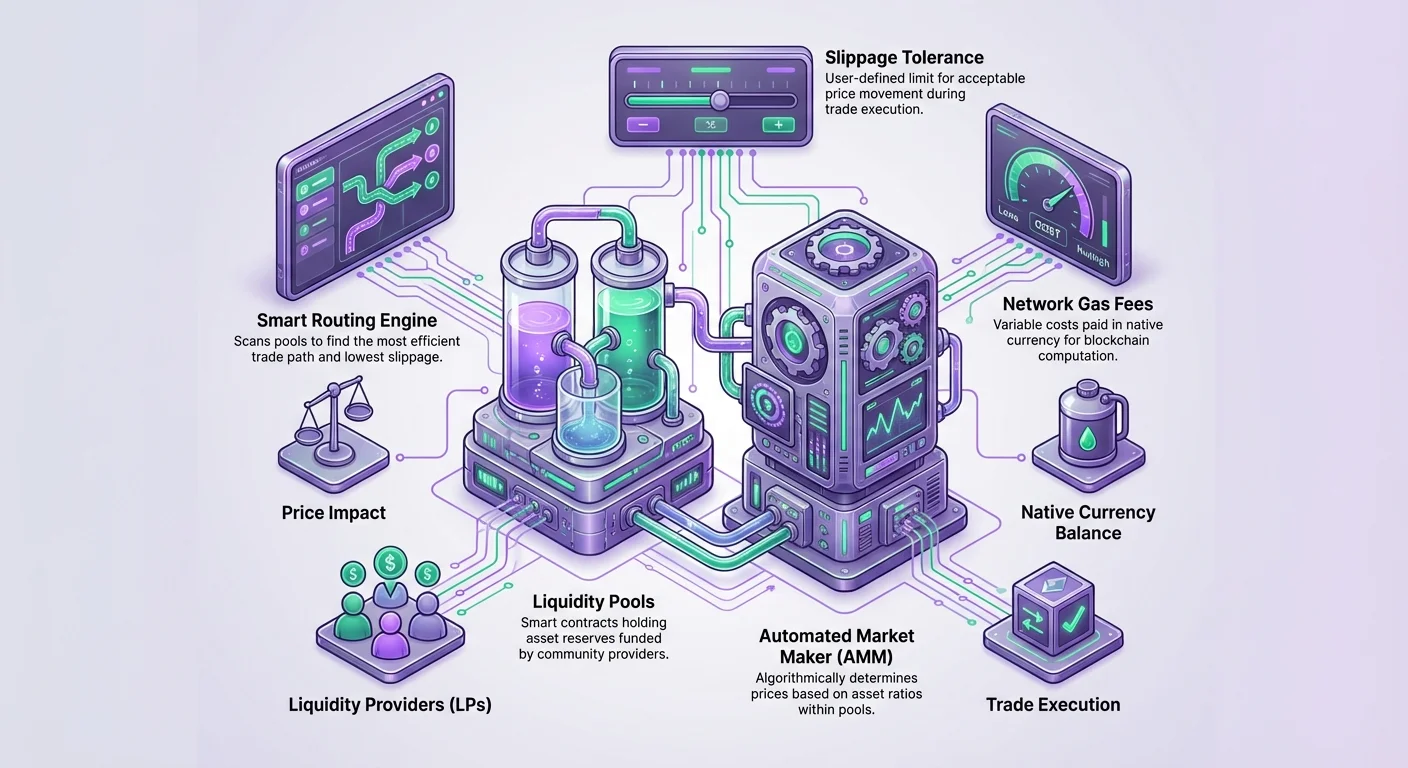
Most DEXs operate using a model known as an Automated Market Maker (AMM). This system replaces the traditional buyer-and-seller matching process with liquidity pools. An AMM allows digital assets to be traded in a permissionless and automatic way by using liquidity pools rather than a traditional market of buyers and sellers.
When a user wants to swap Token A for Token B, they are not buying from a specific person. Instead, they are trading against a smart contract that holds reserves of both tokens. Prices are determined algorithmically based on the ratio of assets in the pool. This ensures that trades can always be executed as long as there is sufficient liquidity, regardless of whether another human trader is currently online to take the other side of the trade.
Permissionless Trading
One of the defining features of DEXs is their open nature. Anyone with a wallet can interact with the contract. There are no sign-up forms, identity verification hurdles, or geographic restrictions imposed by the protocol itself. This openness extends to asset listing as well. Unlike centralized exchanges where a listing team decides which tokens are available, DEXs often allow anyone to create a trading pair.
If a user wants to trade a new token, they can simply create a liquidity pool for it. This permissionless structure is what allows new projects and cross-chain assets to gain immediate market access. It fosters a rapid pace of innovation where the market decides the value of an asset rather than a central gatekeeper. This freedom is a primary driver behind the explosive growth of decentralized finance.
The Mechanics of Liquidity Pools
All activity on a decentralized exchange is powered by liquidity. Without it, the AMM model cannot function. A liquidity pool is essentially a smart contract that contains funds for a specific trading pair, such as VERSE-WETH. These pools are not funded by the exchange owners but by community members known as liquidity providers (LPs).
When users provide liquidity to a pool, they deposit an equal value of both tokens in the pair. In return, they earn a share of the trading fees generated by the pool. For example, a DEX might charge a 0.3% fee on every trade. A significant portion of this fee, often around 83.3%, is distributed directly to the liquidity providers proportional to their share of the pool. This incentivizes users to park their assets in the DEX, ensuring there is enough depth for traders to execute swaps efficiently.
The Importance of Deep Liquidity
Liquidity is arguably the most critical metric for the health of any market. In the context of a DEX, it measures how easily two assets can be exchanged without causing drastic price shifts. Deep liquidity acts as a buffer against volatility. It allows for larger trades to occur with minimal impact on the current market price.
Consider a scenario where a pool has very low liquidity. If a trader attempts to swap a large amount of Ethereum for USDC, the pool's ratio changes significantly, causing the price of ETH to crash within that specific pool. Conversely, in a pool with millions of dollars in liquidity, the same trade would move the needle barely a fraction of a percent. Therefore, when evaluating which cross-chain bridge or DEX to use, checking the liquidity depth of the target pair is a vital safety step.
Understanding Exchange Paths
In a fragmented multichain ecosystem, there isn't always a direct market for every possible pair of assets. A user might want to trade a niche token on one chain for a popular token on another, or swap between two less common assets. Decentralized exchanges solve this through a mechanism called exchange paths, or routing.
The DEX algorithm automatically scans available liquidity pools to find the most efficient route for a trade. It looks for the path that offers the best price and lowest slippage. This often involves moving through an intermediary token.
For example, if a user wants to trade ETH for SHIB, but the direct ETH-SHIB pool is small or non-existent, the DEX might route the trade through a more liquid token like VERSE. The path would effectively be ETH -> VERSE -> SHIB. This happens instantaneously in the background. The user simply inputs the input and output tokens, and the protocol handles the complex routing to ensure the trade executes at the best possible market rate.
Slippage and Price Tolerance
Slippage is a concept that every DeFi user encounters. It refers to the difference between the expected price of a trade and the price at which the trade is actually executed. This phenomenon occurs primarily due to market volatility and the mechanics of AMMs. Between the moment a user submits a transaction and the moment it is confirmed on the blockchain, prices can shift.
Furthermore, the act of trading itself changes the ratio of assets in a liquidity pool, which adjusts the price. Larger trades relative to the pool size create higher slippage. If a buy order is large enough, it pushes the price up as it is being filled, meaning the average price paid per token is higher than the initial quote.
| Component | Definition | Impact on User |
|---|---|---|
| Slippage | Price difference between order and execution | potential for receiving fewer tokens than expected |
| Tolerance | User-defined limit for acceptable price change | Prevents bad trades but risks failed transactions |
| Liquidity | Depth of assets in the pool | Higher liquidity reduces slippage risk |
Managing Slippage Tolerance
DEX interfaces allow users to manage this risk by setting a "Slippage Tolerance." This is a percentage value that dictates the maximum price movement the user is willing to accept. Common settings might range from 0.1% to 1% for stable pairs, or higher for volatile assets.
If the market price moves beyond this tolerance during the transaction process, the trade will fail (revert) to protect the user from a bad deal. While it might be tempting to increase slippage tolerance to ensure a trade goes through during busy periods, this is generally inadvisable. A high tolerance, such as 10%, gives the protocol permission to execute the trade even if the price worsens by that amount. In a trade of 1 ETH quoted at 1500 USDC, a 10% slippage could result in receiving significantly less value, effectively losing 150 USDC in the process.
Analyzing DEX Metrics
Successful trading requires data. DEXs provide analytics dashboards that offer transparency into the state of the market. Unlike centralized exchanges where data can be opaque, on-chain analytics are verifiable. Users can access detailed information about total volume, fees generated, and liquidity across different time frames.
A typical analytics interface allows users to drill down into specific pairs. By selecting a pair like VERSE-WETH, a trader can see the number of transactions in the last 24 hours, the average trade size, and the fee revenue accumulated. This data helps in assessing the activity level of a token. High volume usually indicates strong interest and better price discovery, while low volume might suggest a stagnant market with higher slippage risks. Reviewing these metrics is a best practice before committing capital to a swap or a liquidity pool.
Transaction Fees and Costs
Operating on blockchains incurs costs that are distinct from the trading fees charged by the exchange. These are network fees, often referred to as gas. Gas fees are used to pay for the computational resources required to process actions and record changes on the blockchain. Every swap, approval, or transfer requires a gas payment.
Crucially, these fees fluctuate based on network congestion. On popular networks like Ethereum, gas fees can become significant during periods of high demand. Cross-chain solutions often aim to mitigate this by utilizing networks with lower fees or higher throughput.
Protocol Fees vs. Network Fees
It is important to distinguish between the network fee and the exchange fee. The network fee goes to the miners or validators securing the blockchain. The exchange fee is a separate charge collected by the DEX protocol.
For instance, a swap might incur a 0.3% exchange fee based on the trade volume. This fee is split between the liquidity providers and the protocol treasury. If a user swaps $1000 worth of tokens, $3 goes to the exchange ecosystem. However, the network gas fee might be $5 or $50, completely independent of the trade size. Users must factor in both costs to calculate the true expense of a transaction.
Navigating NFT Marketplaces
The expansion of cross-chain activity is not limited to fungible tokens. Non-Fungible Tokens (NFTs) have become a major sector of the digital economy, and they too live across multiple networks. Buying an NFT is different from swapping tokens; it typically involves interacting with specialized decentralized marketplaces.
Marketplaces can be categorized into centralized and decentralized platforms. Decentralized marketplaces, such as Rarible, function similarly to DEXs. They connect buyers and sellers peer-to-peer without taking custody of the assets. This reduces the risk of losing assets if a platform goes insolvent. These marketplaces are often multichain, supporting NFTs on Ethereum, Polygon, and other networks within a single interface.
Governance and Decentralization
Some decentralized marketplaces integrate governance tokens, allowing the community to shape the platform's future. For example, holders of a governance token like RARI can participate in decision-making processes regarding fees or feature development. This contrasts with centralized competitors where decisions are driven solely by corporate interests and shareholders. This community-centric model aligns with the broader ethos of web3 and cross-chain cooperation.
The Buying Process for NFTs
Acquiring an NFT involves distinct mechanisms compared to instant token swaps. While some items are available for immediate purchase, others are sold through auction formats. Understanding these methods is necessary for securing desired digital collectibles.
Fixed Price and Offers
The "Buy Now" option is the most straightforward method. A seller lists an item for a specific price, usually in ETH, MATIC, or another native currency. Any buyer who agrees to the price can execute the transaction immediately. However, marketplaces also allow for "Offers." A potential buyer can propose a lower price to the seller. The seller can choose to accept this offer at any time, adding a negotiation layer to the process.
Auction Dynamics
Auctions are common for high-value or unique items. The "English auction" is the standard format, where an item has a minimum price and a set duration. Bidders compete by placing progressively higher offers. Once the timer expires, the highest bidder automatically wins the item, provided the reserve price is met. This format is often used for 1-of-1 art pieces or rare collectibles where the market value is subjective and best determined by competitive bidding.
Evaluating NFT Attributes
When exploring NFT collections, specifically across different chains, understanding value drivers is key. Unlike fungible tokens where one coin is identical to another, NFTs often possess unique "properties" or "traits." These are metadata characteristics defined by the creator.
In a collection of 10,000 avatars, certain traits—like a specific hat, background color, or accessory—will be statistically rarer than others. Marketplaces aggregate this data to show the percentage of items in the collection that share a specific trait. Generally, higher rarity correlates with higher market value.
Badges and Verification
Due to the open nature of decentralized networks, copycats and fake collections can appear. Reputable marketplaces implement verification systems to protect buyers. A badge or checkmark next to a creator's name signals that the marketplace has vetted the account. This is particularly important for high-profile projects. Before buying, checking for verified badges helps ensure that the asset is authentic and not a fraudulent duplicate created to deceive unsuspecting buyers.
Managing Digital Collections
Once an NFT is purchased, it resides in the user's self-custodial wallet. However, wallets act primarily as storage for keys; they need a way to visualize the visual data of the NFT. Marketplaces often serve as the gallery for the wallet. By connecting the wallet to the marketplace, users can view their collected items in a grid layout, sort them by purchase date or price, and manage their portfolio.
This view is essential for tracking the value of a collection across different chains. A user might have items on Polygon and Ethereum. A robust multichain marketplace interface aggregates these holdings, allowing the user to toggle between networks and see their full inventory in one place. This unifies the fragmented experience of holding assets on multiple ledgers.
Advanced DeFi Concepts
Beyond simple swaps and holding NFTs, the cross-chain ecosystem offers advanced financial products. These are often grouped under the umbrella of Decentralized Finance (DeFi). Two prominent concepts in this arena are yield farming and derivatives.
Yield Farming
Yield farming is a strategy where users actively move assets to generate returns. This often involves providing liquidity to DEXs as described earlier. When users deposit their LP tokens (receipts for providing liquidity) into specific "farms," they can earn additional rewards, often in the form of the protocol's governance token. This "farming" of yield incentivizes liquidity provision and can offer significant returns compared to passive holding, though it comes with risks like impermanent loss.
Crypto Derivatives
Derivatives are financial contracts that derive their value from an underlying asset. In the crypto space, perpetual futures and options are widely used. These allow traders to speculate on the future price of an asset without necessarily owning it. Decentralized derivatives platforms enable users to open long or short positions, hedge their portfolios, or use leverage. Unlike centralized exchanges, DeFi derivatives platforms are non-custodial, meaning traders retain control of their collateral funds in smart contracts rather than depositing them into a centralized exchange account.
Drošība daudzkķēžu pasaulē
Ar lielu brīvību nāk liela atbildība. Starpķēžu rīku bez glabātāja daba nozīmē, ka drošība pilnībā gulstas uz lietotāju. Nav paroles atjaunošanas pogas vai krāpšanas atcelšanas nodaļas. Privāto atslēgu vai maciņa „sēklas frāzes” aizsardzība ir svarīgākais uzdevums jebkuram kripto dalībniekam.
Lietotājiem jābūt modriem pret pikšķerēšanas vietnēm, kas imitē populāras DEX vai tirgus. Ir vitāli verificēt URL un savienot maciņus tikai ar uzticamām lietotnēm. Turklāt, mijiedarbojoties ar viediem līgumiem, lietotājiem jāapzinās piešķirtās atļaujas. Vecu vai neizmantotu līgumu atļauju atsaukšana ir laba higiēnas prakse, lai novērstu potenciālus ekspluatācijas gadījumus.
Zinātņu balstītas izvēles
Pareizo rīku izvēle ir kritiska procesa daļa. Vai izvēloties maciņu, DEX vai NFT tirgu, lietotājiem jāpriorizē platformas ar spēcīgu uzticamības vēsturi, verificētiem drošības auditēm un veselīgu likviditāti. Daudzkķēžu maciņš, kas atbalsta plašu tīklu klāstu, piedāvā vislielāko elastību, samazinot vajadzību pārvaldīt vairākas programmatūras lietotnes.
Līdzīgi, izmantojot agregatorus vai DEX ar gudru maršrutizāciju, nodrošina efektīvu darījumu izpildi. Analītikas pārbaude apjomam un likviditātes dziļumam novērš iestrēgšanu nelikvidās pozīcijās. Ekosistēma nodrošina visus nepieciešamos datus; lietotāja loma ir tos interpretēt un rīkoties ar piesardzību un stratēģiju.
Secinājums
Pāreja no vienas ķēdes operācijām uz daudzkķēžu realitāti pārstāv nozīmīgu kripto telpas briedumu. Izmantojot decentralizētas biržas, pašglabātāja maciņus un starpķēžu tirgus, indivīdi iegūst nepiedienīgu kontroli pār savām finanšu dzīvēm. Spēja bezatļauju apmainīt aktīvus, nodrošināt likviditāti un tirgot unikālus digitālos priekšmetus pāri tīkliem rada robustu un savstarpēji saistītu globālu ekonomiku.
Lai gan tehniskie mehānismi, piemēram, AMM, biržas ceļi un gāzes maksas, sākotnēji var šķist sarežģīti, tie seko loģiskiem modeļiem, kas kļūst intuitīvi ar pieredzi. Uzsvars uz pašglabāšanu nodrošina, ka šī jaunā finanšu sistēma paliek atvērta un pieejama visiem, brīva no centralizētiem vārtsargiem. Tā kā infrastruktūra turpina uzlaboties, berze starp ķēdēm, visticamāk, samazināsies, padarot šos spēcīgos rīkus vēl lietotājam draudzīgākus.
Apņemieties daudzkķēžu nākotni, apgūstot pašglabāšanu un decentralizētus rīkus, lai atbloķētu digitālās īpašumtiesības pilnu potenciālu.