
Kad maksa tiek veikta, izmantojot tradicionālo banku, maksa parasti ir statiska un nosaka iestāde vai regulators. Tomēr decentralizētajā Bitcoin pasaulē darījuma maksas jēdziens ir daudz sarežģītāks un dinamiskāks. Tā nav fiksēta nodokļa, ko uzliek centrālā iestāde; tā ir ļoti svārstīga cena, ko minūti pēc minūtes nosaka tīrā piedāvājuma un pieprasījuma.
Lai patiesi izprastu Bitcoin drošības modeli un decentralizēto finanšu konkurences ainavu, jāanalizē maksas tirgus. Šis mehānisms darbojas kā kritisks ekonomisks dzinējs tīklam, nodrošinot, ka tikai visjutīgākās laika ziņā un ekonomiski nozīmīgākās darījumi tiek apstrādāti ātri augsta stresa periodos.
Šī analīze uzskata Bitcoin maksas struktūru par sastrēguma cenu noteikšanas mehānismu. Līdzīgi kā pieauguma cenas braukšanas koplietošanas servisam pieaugošā pieprasījuma laikā, maksas pieaug, kad sistēma ir pilna, efektīvi racionējot ierobežoto bloku telpu. Analizējot, kā šis konkurences tirgus darbojas tīkla gaidīšanas zonā — mempool —, mēs iegūstam praktiskas zināšanas sistēmas efektīvai navigācijai un izpratnei par kodola stimuliem, kas nodrošina Bitcoin blokķēdi.
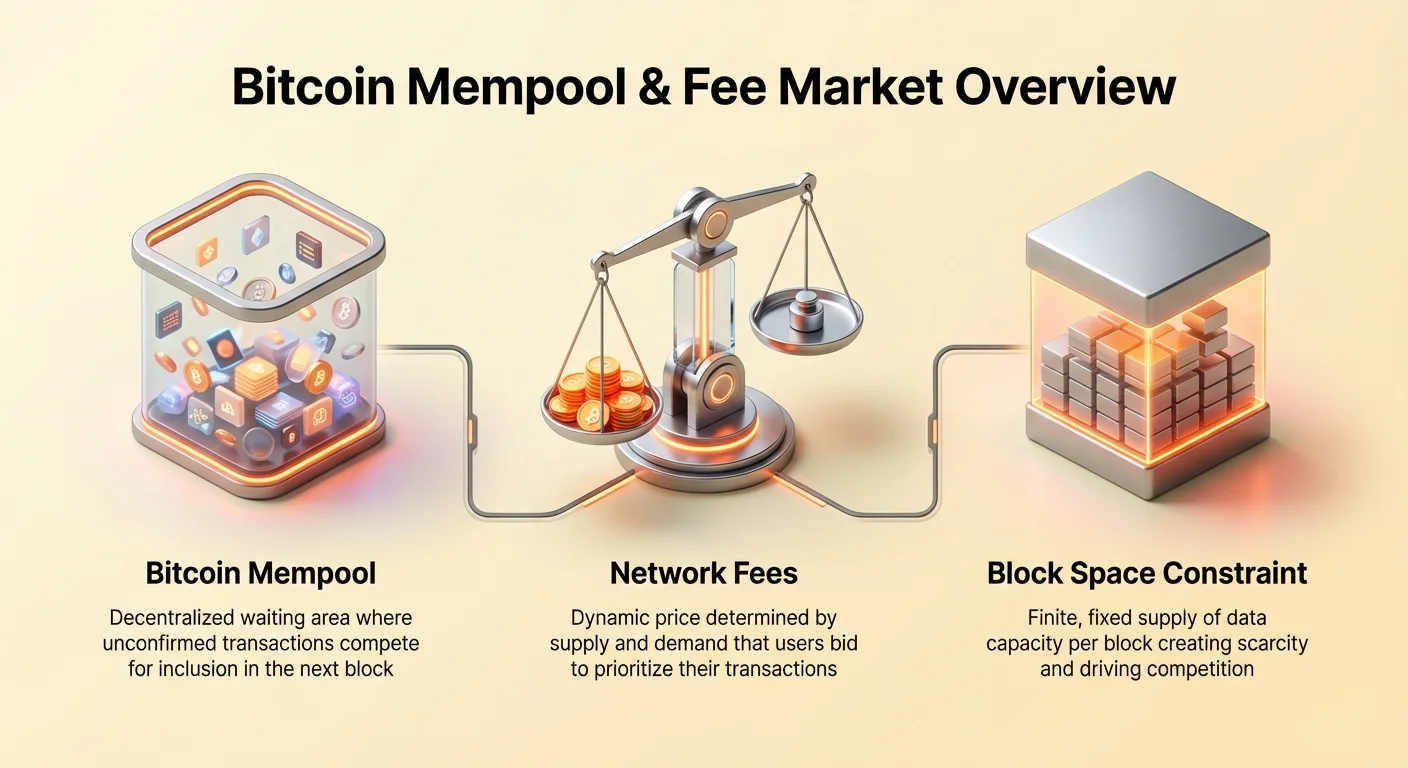
The Mempool: Bitcoin’s Waiting Room
Before any transaction is finalized on the Bitcoin blockchain, it must pass through a crucial staging area known as the memory pool, or mempool. The mempool is, quite simply, a collection of all valid, unconfirmed transactions floating across the decentralized network.
Imagine the mempool as a digital waiting room or a temporary parking lot. When you broadcast a transaction from your wallet, it doesn't immediately enter the blockchain; it first goes into the mempool of every node (computer) that heard the broadcast. It waits there, competing with every other pending transaction for the right to be included in the next valid block.
Visualizing the Mempool: The High-Stakes Auction
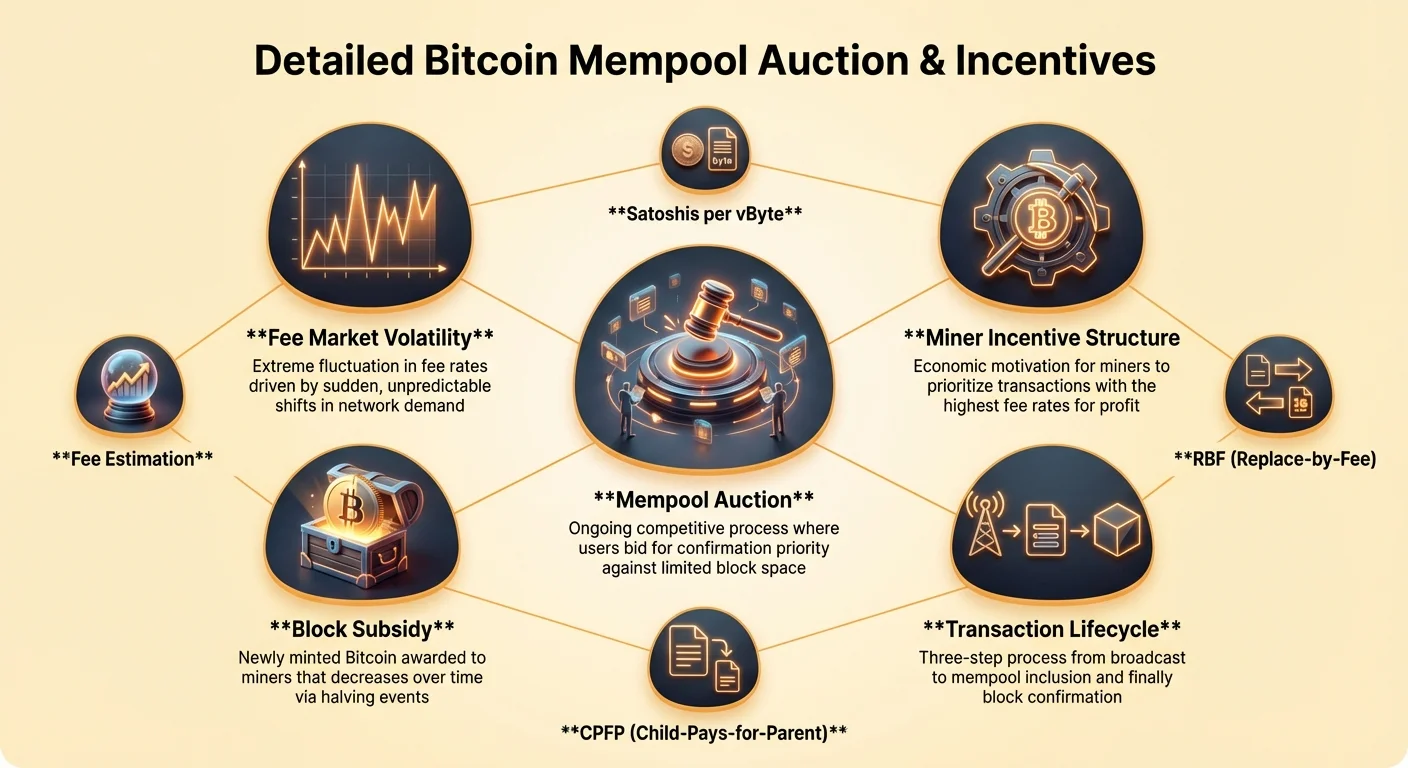
The mempool is best understood as a constant, ongoing auction house where users bid for confirmation priority.
Every transaction in the mempool is stamped with a fee rate, defining how much the sender is willing to pay per unit of data used. Since block space is limited (supply is fixed), miners—the entities responsible for creating the next block—naturally prioritize the transactions that offer the highest fees, maximizing their immediate profit.
This visualization clarifies why transactions can sometimes sit unconfirmed for hours or days: if the current demand for space is higher than the fee you offered, your bid is simply too low to win the auction.
The Transaction Lifecycle: From Broadcast to Confirmation
A Bitcoin transaction follows a standard, three-step lifecycle:
- Broadcast: The sender’s wallet creates a cryptographically signed transaction and sends it out to the nearest connected network nodes.
- Mempool Inclusion: Participating nodes validate the signature and format of the transaction. If valid, they add it to their local copy of the mempool and relay it to other nodes. This is where the waiting begins.
- Block Confirmation: A miner selects a batch of high-fee transactions from the mempool (enough to fill a block, generally limited to 1-4 megabytes of data), calculates the Proof of Work solution for that batch, and broadcasts the confirmed block to the network. Once the transaction is included in this block, it is considered confirmed.
Every transaction must eventually be selected by a miner, and that selection is governed almost exclusively by the fee rate relative to the existing mempool backlog.
Network Fees as Congestion Pricing
The defining characteristic of the Bitcoin network is its fixed supply of new blocks. On average, a new block is generated roughly every ten minutes. This creates a finite, predictable supply of "block space." When this fixed supply encounters variable demand, the price (the fee) becomes the mechanism for rationing.
The Block Space Constraint: The Supply Side
The fundamental constraint driving the fee market is the block size limit, which restricts how much data (how many transactions) can be included in any single block. This limit is essential for network stability and decentralization, ensuring that average users can still run a full node without excessive storage or bandwidth demands.
Since the supply of block space is rigidly constrained, high demand cannot be met by simply producing more space. Instead, users must compete using fees.
Analogy: Consider a popular one-lane toll bridge open only at peak hours. If a thousand cars (transactions) want to cross in a single minute, but the bridge can only handle fifty, the toll authority (the miners) will simply raise the price until only the fifty cars most desperate to cross are willing to pay. The fee acts as a filter.
Fee Rates vs. Transaction Value: Understanding Satoshis per vByte
When assessing fees, the dollar value of the transaction is irrelevant. A transfer of $1 million requires the same amount of physical space in a block as a transfer of $10, assuming both have the same number of inputs and outputs (governed by the UTXO model).
Therefore, the key metric for determining competitiveness is the fee rate, measured in:
- Satoshis (sats): The smallest unit of Bitcoin (1 BTC = 100,000,000 sats).
- Virtual Byte (vByte): A standardized unit representing the weight or size of the transaction data.
Miners look at the number of satoshis paid for every byte of data space used. If Transaction A pays 50 sat/vB and Transaction B pays 10 sat/vB, a miner will prioritize Transaction A, regardless of the USD value of the BTC being moved. This ensures the market is fair and focused purely on maximizing the miner's return on their limited resource: block space.
The Miner’s Incentive Structure: Profit Maximization
Miners are highly competitive, economically rational actors. Their goal is to maximize the revenue derived from confirming a block. This revenue comes from two sources:
- The Block Subsidy: Newly minted BTC (currently 6.25 BTC, which halves approximately every four years).
- Transaction Fees: The sum of all fees from the selected transactions.
As the block subsidy consistently decreases over time due to the Halving mechanism, transaction fees become an increasingly vital component of the miner's revenue stream. Therefore, miners have a powerful economic incentive to:
- Select the highest-paying transactions: Miners are constantly optimizing their block templates to include the set of transactions that yield the absolute highest
sat/vBratio. - Keep the network secure: High fees reinforce the economic security of the network, ensuring that miners continue to dedicate substantial energy and hardware (hashpower) to validating the chain, thereby preventing attacks.
Maksas tirgus svārstību un aplēžu dekodēšana
Bitcoin maksas tirgus ir slavens ar savu ekstremālo svārstīgumu. Maksas var svārstīties no mazāk nekā 5 sat/vB klusos periodos līdz simtiem sat/vB, kad tīkls ir noslogots. Šo lēcienu cēloņu un aplēšu rīku darbības principu izpratne ir izšķiroša efektīvai pašuzglabāšanai.
Faktori, kas veicina maksas lēcienus
Maksas svārstīgums ir tieši saistīts ar pēkšņām, neprognozējamām tīkla pieprasījuma izmaiņām. Vairāki izplatīti notikumi izraisa lielu sastrēgumu:
1. Spekulatīvie trakojumi un tirgus notikumi
Kad kripto tirgos valda liela svārstīgums (straujas kustības uz augšu vai leju), tirgotāji steidzas pārvietot līdzekļus starp biržām vai maciņiem. Tas rada masīvu, koordinētu apstiprinājumu pieprasījumu, kas pārpludina mempool un strauji paaugstina maksas likmes.
2. Tīkla inovācijas un jauni lietošanas gadījumi
Jaunu protokolu ieviešana, kas radoši izmanto blokšķēdes vietu, piemēram, Ordinals un Inscriptions uzplaukums, var ievērojami palielināt pamata pieprasījumu. Šie mehānismi ietver nefunkcionālu datu uzglabāšanu tieši blokķēdē, uzskatot blokšķēdes vietu par uzglabāšanas līdzekli, nevis tikai pārskaitījumu reģistru, kas noved pie ilgstošas augstākas konkurences periodiem.
3. Lieli darījumu aizkaves
Ja maksas ir zemas ilgstoši, daudzi lietotāji var mēģināt apstrādāt lielus grupētus darījumus vai zemākas prioritātes maksājumus. Ja rodas pēkšņs pieprasījuma lēciens, visi iepriekšējie "lētie" darījumi paliek mempool, veidojot lielu aizkavi. Šīs aizkaves novēršanai nepieciešamas vēl augstākas maksas, radot sastrēguma atgriezeniskās saites cilpu.
Kā darbojas maksas aplēse: robežcenas prognozēšana
Vidējam lietotājam pareizas maksas noteikšana var šķist minēšana. Par laimi, maciņi un servisi izmanto sarežģītus algoritmus, lai aplēstu konkurētspējīgo likmi.
Maksas aplēzes algoritmi reāllaikā analizē mempool stāvokli. Tie novērtē aizkaves apjomu (cik baitu gaida rindā) un pašreizējo piedāvāto maksas likmju sadalījumu. Tie aprēķina zemāko pieņemto maksas likmi pēdējos apstiprinātajos blokos ("robežcenu") un prognozē, kāda maksa, visticamāk, būs nepieciešama darījuma apstiprināšanai nākamajos 1, 3 vai 6 blokos.
- Ātra apstiprināšana (1–3 bloki): Nepieciešams solīt virs visa mempool mediānas likmes, lai nodrošinātu tūlītēju izvēli.
- Ekonomiska apstiprināšana (6+ bloki): Nepieciešams solīt nedaudz virs vecāko darījumu likmes, pieņemot, ka nākotnes pieprasījums dramatiski nepalielināsies.
Nepietiekamas apmaksas risks: novecojuma izmaksas
Ja lietotājs nepietiekami samaksā maksu, darījums paliek mempool. Ja sastrēgums turpinās, darījums riskē tikt pilnībā izmests.
Mezgli ir programmēti ievērot atmiņas ierobežojumus un bieži atmest darījumus, kas vecāki par 72 stundām, ja tie nav apstiprināti, efektīvi iztīrot zemāko solītāju "novecojušos" darījumus. Izmests darījums nav zaudēts; līdzekļi atgriežas sūtītāja maciņā atkārtotai izmantošanai, bet lietotājam jāatkārtoti raidī darījumu ar augstāku, pašreizējo maksu, tērējot laiku un pūles.
Advanced Fee Strategies for the Self-Sovereign User
One of the benefits of self-custody is having full control over transaction creation. If you find your transaction stuck in the mempool, you have active strategies available to accelerate its confirmation, treating the fee market as a dynamic variable rather than a static cost.
RBF (Replace-by-Fee): Speeding Up Transactions
Replace-by-Fee (RBF) is a crucial mechanism that allows a user to replace an unconfirmed, low-fee transaction with a new transaction that pays a higher fee.
How it Works:
- You send Transaction A with a low fee (e.g., 5 sat/vB).
- The mempool becomes congested, and Transaction A stalls.
- You create Transaction B, which is structurally identical to A (same sender, same recipient, same amount) but includes a significantly higher fee (e.g., 50 sat/vB).
- Transaction B is broadcast. Miners see that Transaction B pays them more than Transaction A and, by economic self-interest, they will select B and discard A.
RBF is a highly effective way to mitigate the risk of underpaying during volatile periods. However, the original transaction must have been broadcast with the RBF flag enabled, otherwise, many nodes will reject the replacement attempt, viewing it as a double-spend.
CPFP (Child-Pays-for-Parent): Bumping Fees Collaboratively
Child-Pays-for-Parent (CPFP) is an advanced strategy used when the original sender cannot or will not bump the fee. This strategy is possible because Bitcoin transactions use the UTXO (Unspent Transaction Output) model.
How it Works:
- The Parent Transaction (A) is sent with a low fee and is unconfirmed. The recipient receives the output (the change of ownership) but cannot spend the funds until A confirms.
- The Recipient (now the owner of the unconfirmed UTXO) creates a Child Transaction (B) where they immediately spend the funds received in A.
- The recipient sets an extremely high fee on Transaction B.
- Miners recognize that to validate Transaction B (the high-fee Child), they must first include Transaction A (the low-fee Parent) in the block. Miners are incentivized to include both transactions together to claim the high fee of the child.
CPFP shifts the responsibility for accelerating confirmation to the recipient, turning a stuck transaction into a mutual opportunity for confirmation.
Actionable Tips for Optimal Fee Selection
For users practicing self-custody, navigating the fee market requires vigilance:
| Strategy | When to Use It | Actionable Tip |
|---|---|---|
| Batching | Sending funds to multiple recipients. | Combine multiple outputs into a single transaction to save on fees, as you only pay for one set of inputs. |
| Time Preference | Sending high-priority vs. low-priority payments. | Always estimate fees based on your urgency. If confirmation in 24 hours is acceptable, use a low fee; check the mempool depth first. |
| Enable RBF | Preparing for potential congestion. | Always enable the RBF feature in your wallet settings for any non-final transaction (like payments to exchanges), giving you an escape route if your transaction stalls. |
| Monitoring | Sending any time-sensitive transaction. | Use a reliable third-party mempool visualization tool before broadcasting to assess current congestion levels and median fee requirements. |
Augsto maksu ekonomiskā nepieciešamība
Lai gan augstas maksas bieži tiek uzskatītas par kairinājumu vai ieejas barjeru, tās ir absolūti kritiska Bitcoin ilgtermiņa ekonomiskās ilgtspējas un drošības modeļa sastāvdaļa.
Tīkla drošināšana pēc Halving
Kā noteica Satoshi Nakamoto, jaunu Bitcoin izdošana (bloka subsīdija) tiek uz pusi samazināta aptuveni ik pēc četriem gadiem. Galu galā subsīdija nokritīsies līdz nullei, un jauni Bitcoin vairs netiks radīti. Tajā brīdī vienīgais kalnraca ieņēmumu avots būs darījuma maksas.
Ja darījuma maksas būtu konsekventi tuvu nullei, kalnračiem trūktu stimulējuma tērēt miljardus dolāru aparatūrai un elektrībai, kas nepieciešama tīkla drošināšanai. Rezultējošais zems hashrate padarītu tīklu ievainojamu pret 51% uzbrukumu.
Tāpēc konkurētspējīga maksas tirgus esamība, kas var ģenerēt ievērojamus ieņēmumus (pat ja svārstīgus), ir fundamentāls ilgtermiņa kriptoekonomiskais mehānisms, kas nodrošina Bitcoin drošību pēc subsīdijas beigām. Augstas maksas nav tikai tirgus funkcija; tās ir cena par decentralizētu, nemaināmu drošību. Sastrēguma cenu noteikšanas modelis nodrošina, ka tie, kas izmanto un augsti vērtē tīklu, maksā par tā uzturēšanu un aizsardzību.
Secinājumi
Bitcoin maksas tirgus ir tīrs decentralizētas ekonomiskās pārvaldības piemērs. Tas ir reāllaika, globāla izsole, kas dinamiski nosaka cenu ierobežotam, neizgatavojamam resursam: blokķēdes telpai. Izprotot mempool kā gaidīšanas telpu, atpazīstot maksas kā sastrēguma cenu noteikšanu un apgūstot stratēģijas kā RBF un CPFP, lietotāji var pāriet no vienkāršas maksu maksāšanas uz aktīvu dalību un navigāciju stimulēšanas struktūrās, kas pamato pasaules drošāko digitālo valūtu.