
Lielākajai daļai iesācēju Bitcoin ir tikai aktīvs cenu diagrammā — svārstīgs ieguldījums, kas sola augstu atdevi. Tomēr Bitcoin ilgtermiņa potenciāla izpratnei jāmaina skatupunkts no īstermiņa tirgus kustībām uz dziļu ekonomisko teoriju. Bitcoin galvenais redzējums pārsniedz tā pašreizējo izmantošanu kā spekulācijas aktīvu; tas ietver globālās finanšu fundamentālu pārstrukturēšanu.
Šī lapa izpēta vadošos ilgtermiņa naratīvus ap Bitcoin pieņemšanu un nākotnes vērtību. Mēs pārejam pāri Bitcoin pamatiem un analizējam spekulācijas scenārijus — no radikālā Hyperbitcoinization jēdziena līdz 2. slāņa risinājumu tehnoloģiskajai ietekmei —, kas zīmē ainu, kā šī digitālā valūta varētu integrēties ikdienas dzīvē un starptautiskajā tirdzniecībā nākamajā desmitgadē.
Šo vīziju izanalizējot, jāatceras, ka tās nav garantijas, bet potenciālie ceļi, balstīti uz Bitcoin inherento dizainu, īpaši tā fiksēto piedāvājumu un decentralizēto dabu. Šo naratīvu analīze palīdz izveidot visaptverošu ieguldījumu tēzi par tā lomu nākotnes digitālajā ekonomikā.
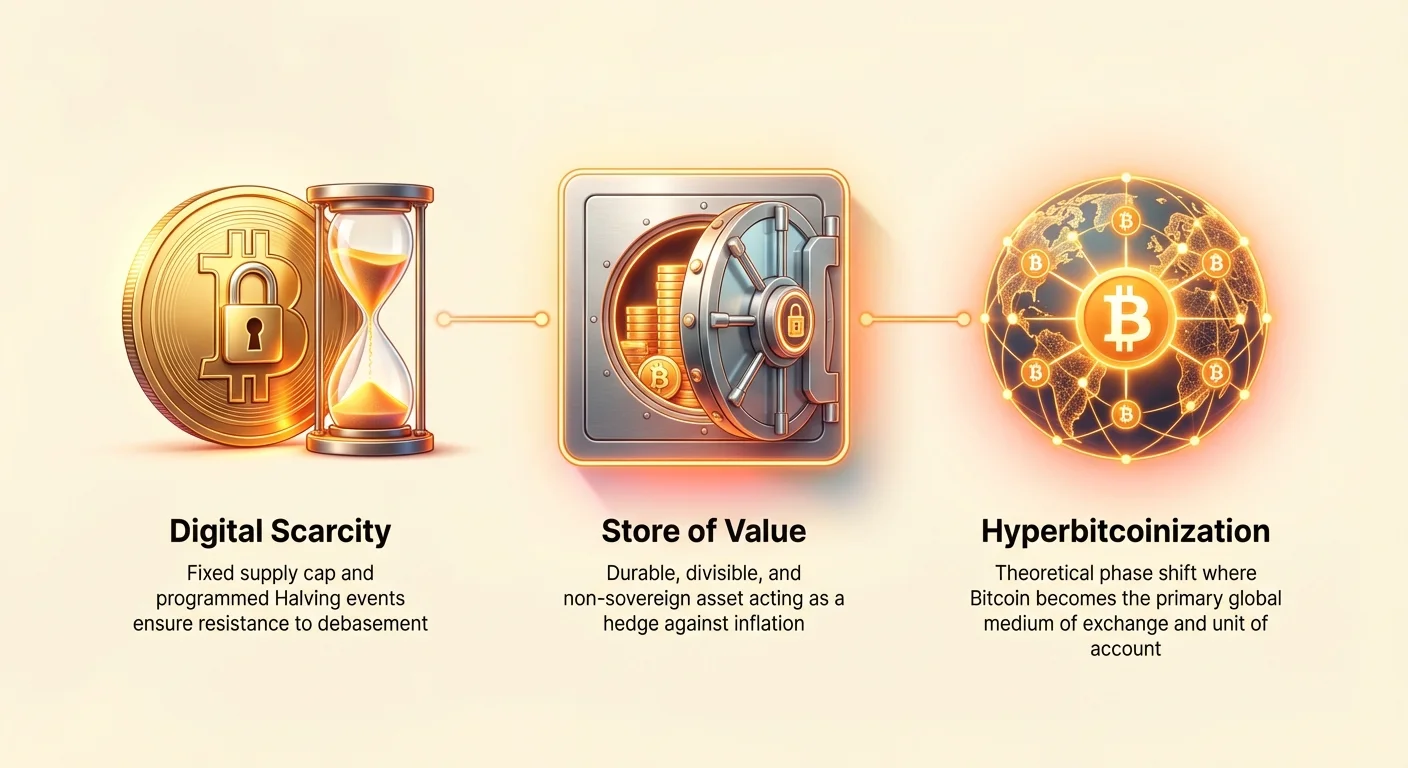
The Foundation of Future Value: Scarcity and Monetary Policy
Any projection about Bitcoin's future must begin with its foundational economic policy. Bitcoin is often described as "digital scarcity," defined by two non-negotiable rules: a hard cap of 21 million coins and a predictable reduction in supply issuance known as the Halving.
This fixed, programmatic supply schedule makes Bitcoin fundamentally different from fiat currencies, which can be inflated arbitrarily by central banks. This difference is the core reason why proponents believe Bitcoin will continue to accrue a "monetary premium"—value beyond its utility, simply because it cannot be debased.
The Halving Cycle as a Predictor
The Bitcoin protocol is designed to cut the reward miners receive for validating transactions in half approximately every four years. This event, known as the Halving, results in a sudden, predictable reduction in the new supply entering the market.
Historically, the Halving has been a major factor driving price appreciation and market enthusiasm. While past performance does not guarantee future results, this programmed supply shock fundamentally influences future pricing models. The recurring supply reduction acts as a continuous stress test on demand, forcing the market to reprice the asset based on ever-increasing scarcity relative to demand.
Bitcoin as a Non-Sovereign Store of Value
The current primary narrative for Bitcoin is its role as a superior Store of Value (SoV), often benchmarked against assets like gold. A successful store of value must meet three criteria: it must be durable, divisible, and, most importantly, possess salability across time—meaning it holds purchasing power reliably for years or decades.
Bitcoin’s digital nature makes it durable (non-perishable) and highly divisible (down to eight decimal places, called satoshis). Its programmable scarcity addresses the primary failing of modern fiat currencies: inflation risk. The belief that Bitcoin provides an "exit path" from inflationary fiat systems underpins its current market capitalization and forms the necessary stepping stone toward broader adoption.
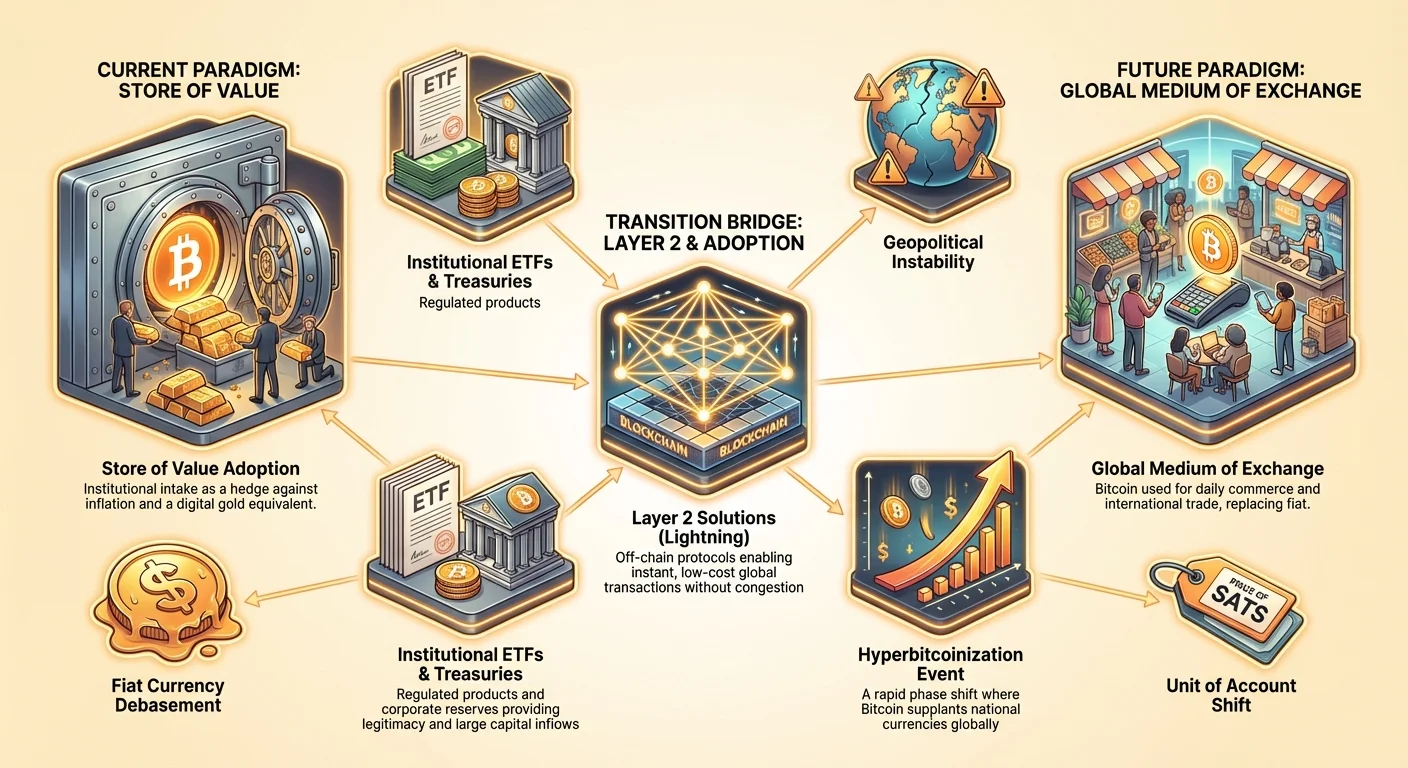
Galvenā spekulatīvā teze: Hiperbitcoinizācija izskaidrota
Radikālākais ilgtermiņa naratīvs Bitcoin ir Hiperbitcoinizācija. Šī teorija apgalvo, ka Bitcoin galu galā pāries no spekulatīva Vērtības uzglabātāja tikai uz pasaules galveno apmaiņas līdzekli un galu galā globālo uzskaites vienību.
Ja veiksmīga, Hiperbitcoinizācija nozīmē pilnīgu posmu maiņu globālajā ekonomikā, kur nacionālās valūtas kļūst novecojušas vai tiek izmantotas nišas gadījumos, un ekonomiskie aprēķini visā pasaulē tiek denominēti Bitcoin (vai tā mazākajā vienībā, satoshi).
1. posms: Aktīvu demonetizācija (Vērtības uzglabātāja fāze)
Mēs pašlaik piedzīvojam pirmo posmu. Šī fāze ietver Bitcoin pakāpenisku vērtības absorbēšanu, kas iepriekš tika uzglabāta citos aktīvos, kuri tiek uzskatīti par mazāk uzticamiem, piemēram, zeltā, obligācijās vai nekustamajā īpašumā (kad tas tiek izmantots tikai kā bagātības akumulators).
Kad arvien vairāk indivīdu, korporāciju un galu galā valstu sāk turēt Bitcoin, mazinās volatilitāte, ko izraisa mazi apjomi. Šī stabilizācija nostiprina tā uzticamību kā SoV, piesaistot vēl vairāk kapitāla. Šis ir izšķirošais punkts, kur Bitcoin sasniedz dziļu tirgus likviditāti un augstu kapitāla plūsmas ātrumu, pierādot savu izturību ilgtermiņā.
2. posms: Uzskaites vienības maiņa
Patiesais Hiperbitcoinizācijas marķieris ir pāreja uz Bitcoin kā Uzskaites vienību. Pašlaik cenas tiek denominētas fiat valūtās (dolari, eiro, jeni). Ja notiek Hiperbitcoinizācija, preču, algas un pakalpojumu cenas tiktu norādītas tieši satoshi.
Piemēram, maizes klaips, kas maksā 3,50 USD, maksātu 10 000 satoshi (Sats). Šī pāreja notiek, kad cilvēki uzticas Bitcoin ilgtermiņa stabilitātei un paredzamībai vairāk nekā savai vietējai fiat valūtai. Kad tirgotāji un darbinieki sāk norādīt un pieņemt algas Bitcoin, tā naudas izmantojamība eksponenciāli paplašinās. Šai pārejai nepieciešama stabilitāte un plaša pieejamība, kur 2. līmeņa tehnoloģija kļūst būtiska.
Fiat valūtas sabrukuma loma
Kaut arī daudzi atbalstītāji koncentrējas uz Bitcoin stiprajām pusēm, Hiperbitcoinizāciju bieži katalizē esošās sistēmas uztveramie trūkumi. Teorija iegūst popularitāti galvenokārt augstas ģeopolitiskās nestabilitātes, nekontrolētas fiat inflācijas vai sistēmisku suverēno parādu krīžu periodos.
Valstīs, kas piedzīvo valūtas sabrukumu (piemēram, Venecuēla, Libāna, Argentīna), iedzīvotāji bieži pieņem alternatīvus vērtības pārnesei (USD, zelts vai kripto). Hiperbitcoinizācija apgalvo, ka globāli Bitcoin būs izvēlētā digitālā risinājums, jo tas ir uzticamības minimizēts, bez robežām un nekonfiscējams, kalpojot kā pārāks drošs patvaronis salīdzinājumā ar jebkuras vienas valsts fiat valūtu. Vietējo fiat sistēmu neveiksme darbojas kā paātrinātājs globālai Bitcoin adopcijai.
Solving the Scalability Challenge: The Layer 2 Revolution
One of the biggest obstacles preventing Bitcoin from becoming the global medium of exchange is its capacity. The Bitcoin blockchain (Layer 1) is intentionally slow, processing only about 7 transactions per second, ensuring security and decentralization above all else. Global commerce requires hundreds of thousands of transactions per second.
The future of bitcoin adoption hinges not on making the base layer faster, but on building efficient infrastructure on top of the base layer. This infrastructure is known as Layer 2.
The Need for Off-Chain Solutions
Layer 2 networks operate "off-chain," meaning transactions are conducted almost instantly between participants and are only settled onto the main Bitcoin blockchain periodically. This approach allows the base layer to remain secure and robust (the "settlement layer") while enabling speed and efficiency above it (the "transaction layer").
The most prominent example of a Layer 2 solution is the Lightning Network. Lightning allows for millions of transactions per second at fractions of a penny. This technology fundamentally changes Bitcoin's utility, transforming it from a slow-moving digital asset into a rapid global cash system.
Instant Global Microtransactions (The Killer App)
The Lightning Network facilitates true global microtransactions—tiny payments previously infeasible due to transaction fees on the main chain. This capability unlocks massive potential use cases:
- Peer-to-Peer Payments: Instantaneous transfers across borders without banking intermediaries.
- Streaming Content: Paying per second for videos, music, or articles, replacing subscription models.
- Machine-to-Machine Payments: Automated payments between Internet of Things (IoT) devices, such as a smart car paying a charging station.
The ability to move small amounts of value instantly and cheaply is often cited as the key technological leap necessary to move Bitcoin from the hands of institutional investors and into everyday consumer use, driving the Hyperbitcoinization Unit of Account shift.
Adoption through Gaming and Decentralized Finance (DeFi)
Initial mass adoption of Layer 2 solutions often comes through industries that demand high transaction speed and low fees, such as gaming and light decentralized finance (DeFi).
- Gaming: Using Lightning for in-game purchases, rewards, and tipping creates immediate utility.
- DeFi on Bitcoin: New protocols built on Layer 2 are beginning to replicate simplified financial services (lending, borrowing) in a trust-minimized way, leveraging Bitcoin’s liquidity and security without congesting the main chain.
The proliferation of easy-to-use Lightning wallets and consumer applications is the practical mechanism by which the bitcoin layer 2 impact will be felt by the average user, even if they never interact directly with the underlying blockchain.
Geopolitical and Institutional Adoption Scenarios
The future trajectory of Bitcoin is heavily influenced by how existing powerful entities—governments, corporations, and regulatory bodies—respond to its growth. Large-scale institutional adoption provides the necessary liquidity and legitimization required for Bitcoin to achieve its long-term potential.
The Central Bank vs. Corporate Treasury Race
In recent years, corporate treasuries (like MicroStrategy) have adopted Bitcoin as a reserve asset to hedge against inflation and preserve capital. This strategy reflects a growing acceptance of Bitcoin as a legitimate hedge.
On the other hand, Central Banks (CBs) are developing Central Bank Digital Currencies (CBDCs) as a direct response to the threat posed by decentralized alternatives. The future monetary landscape might be defined by a tension between highly controlled, programmable CBDCs and the permissionless, trust-minimized nature of Bitcoin.
If more nations and global financial institutions see Bitcoin as a neutral, global reserve asset—similar to how gold was treated internationally—its legitimacy grows, leading to more stable pricing and reduced systemic risk perception.
Responses to Global Systemic Risk
Bitcoin's rise coincided with the global financial crisis of 2008, positioning it as an anti-establishment technology designed specifically to function outside the control of fragile legacy systems.
In scenarios of future global systemic risk (e.g., unexpected regional conflicts, massive supply chain breakdowns, or multi-state economic instability), Bitcoin acts as an increasingly attractive, non-confiscatable digital bearer asset. Geopolitical tension drives individuals and hedge funds toward assets that cannot be frozen or controlled by third parties.
This narrative suggests that the greater the instability in the traditional financial system, the faster the adoption curve for Bitcoin will accelerate, driving its transformation into a necessity rather than a novelty.
Regulatory and ETF Maturation
Regulatory clarity is a dual-edged sword. While governments imposing onerous restrictions could slow adoption, the current trend towards regulated products, such as spot Bitcoin Exchange-Traded Funds (ETFs), signifies institutional acceptance.
ETFs provide regulated access for traditional financial players—pension funds, wealth managers, and large endowments—allowing vast amounts of capital to flow into the asset without the need for self-custody or complex crypto exchange accounts. This maturation lowers the barrier to entry for trillions of dollars in assets under management, effectively integrating Bitcoin into the traditional financial ecosystem and accelerating the future of bitcoin adoption among sophisticated investors.
Alternatīvie nākotnes scenāriji: "Moon" scenāriji pret lēnu nobriešanu
Runājot par Bitcoin nākotni, bieži izdalās divi laika grafiki: ātrais "Moon" scenārijs un lēnākais, pragmatiskākais S-līknes adopcija.
Ātrais Moon scenārijs (Hiperbitcoinizācijas laika grafiks)
"Moon" naratīvs bieži prognozē ātru, parabolisku cenu pieaugumu, ko izraisa pēkšņa, katastrofāla uzticības zaudēšana fiat valūtās. Šajā scenārijā Hiperbitcoinizācija notiek vienas dramatiskas desmitgades laikā, spiežot Bitcoin vērtību ekstremālos līmeņos, mēģinot absorbēt visu globālo naudas, vērtības uzglabāšanas un suverēnā parāda tirgu. Šis scenārijs ir ārkārtīgi volatīls un pieņem gandrīz perfekta tehnoloģisko un regulatoro soļu izpildi.
Lēnā S-līknes nobriešana
Sabalansētāka perspektīva liecina, ka Bitcoin adopcija sekos S-līknei, līdzīgi kā iepriekšējām transformējošām tehnoloģijām, piemēram, internetam vai mobilajiem telefoniem. Sākotnējā adopcija ir lēna (S sākotnējā plakstā daļa), seko asam paātrinājumam (starpējā stāvā daļa, ko veicina 2. līmenis un institucionālie ETF) un beigās gandrīz universālas adopcijas plato.
Šis modelis liecina, ka Bitcoin pakāpeniski stabilizēsies 20–30 gadu laikā, kļūstot par globālu monetāro tīklu blakus tradicionālajām sistēmām, pirms galu galā tās apsteidz, nodrošinot daudz vadāmāku un paredzamāku ilgtermiņa izaugsmes trajektoriju investoriem. Šis skatījums prioritizē stabilitāti un drošību pār tūlītēju, radikālu traucējumu.
Secinājumi
Bitcoin nākotne ir sarežģīta tehnoloģijas, makroekonomikas un cilvēka psiholoģijas mijiedarbība. Lai gan pašlaik tas galvenokārt kalpo kā spekulatīvs Vērtības uzglabātājs, 2. līmeņa tīklu, piemēram, Lightning, tehnoloģiskais progress un pieaugošā institucionālā pieņemšana liek pamatu pārejai uz patiesu globālu apmaiņas līdzekli.
Vai nu caur dramatisko sabiedrības pārmaiņu, ko paredz Hiperbitcoinizācija, vai lēno, noturīgo nobriešanu, ko redz S-līknes adopcijas modelī, naratīvi norāda uz Bitcoin kritisko, pamatlikumisko lomu gaidāmajā digitālajā ekonomikā. Šo ilgtermiņa vīziju izpratne ir izšķiroša jebkuram investoram vai analītiķim, kurš vēlas izveidot izturīgu tēzi augsti konkurences pilnajā un ātri evolucionējošajā digitālo aktīvu pasaulē.