The Ethereum network represents one of the most significant experiments in distributed computing history. Since its inception, it has aimed to serve as a world computer that is open to all. However, achieving this vision requires overcoming substantial technical hurdles. The roadmap for Ethereum is not a simple straight line but a series of interconnected upgrades designed to improve specific aspects of the system.
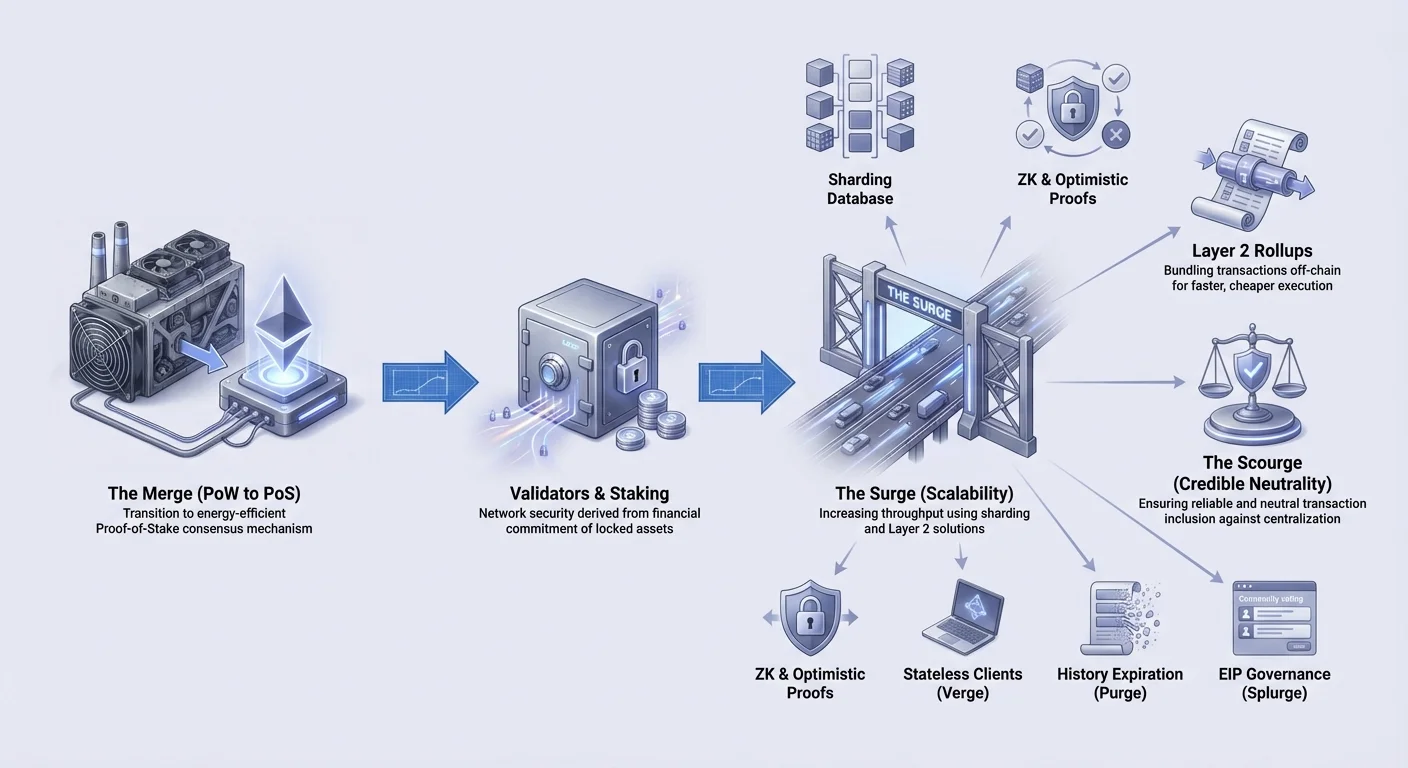
These upgrades are often categorized into distinct phases that rhyme: The Merge, The Surge, The Scourge, The Verge, The Purge, and The Splurge. Each phase addresses a critical component of the network's architecture. The goal is to solve the complex problems associated with decentralized networks while maintaining security.
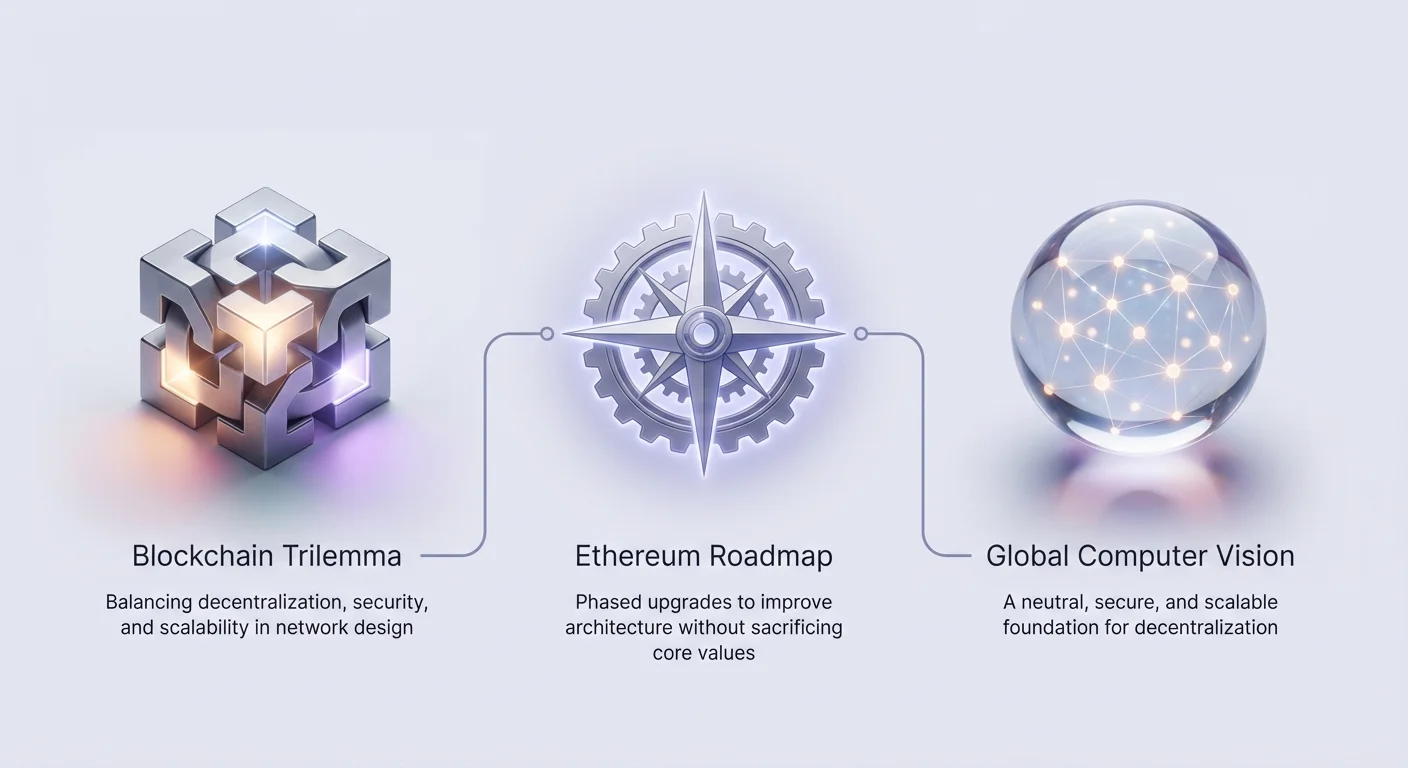
Central to this evolution is the concept of the "blockchain trilemma." This theory suggests that a decentralized network can only optimize for two of three primary features: decentralization, security, and scalability. Ethereum originally prioritized security and decentralization, which often resulted in network congestion and high fees during periods of high demand.
The roadmap is an attempt to solve this trilemma. By implementing these upgrades, the network aims to become scalable enough to handle global demand without sacrificing its core values. The transition involves fundamental changes to both the economic and technical structure of the blockchain.
The Foundation: Understanding The Merge
The most significant upgrade in Ethereum's history was known as The Merge. Completed in September 2022, this event marked the transition from the original Proof-of-Work (PoW) consensus mechanism to Proof-of-Stake (PoS). This shift was necessary to reduce the network's energy consumption and lay the groundwork for future scalability upgrades.
Before The Merge, Ethereum relied on miners to secure the network. These participants operated energy-intensive hardware to solve complex mathematical puzzles. This system, while secure, consumed vast amounts of electricity. The transition to Proof-of-Stake replaced miners with validators, who secure the network by locking up capital rather than burning energy.
Mechanics of Proof-of-Stake
In the Proof-of-Stake system, network security is derived from financial commitment rather than computational power. Participants, known as validators, stake their cryptocurrency by sending it to a specific smart contract. This staked asset acts as a security deposit or collateral that guarantees their honest behavior.
The protocol selects validators at random to propose new blocks. Once a validator proposes a block, other validators verify the data to ensure it adheres to the network rules. If the block is valid, it is added to the chain, and the validators are rewarded with newly minted cryptocurrency and transaction fees. This system aligns the financial incentives of the operators with the health of the network.
Benefits and Security Improvements
The primary advantage of this transition was the dramatic reduction in energy usage. Estimates suggest that the switch to Proof-of-Stake reduced Ethereum's energy consumption by over 99 percent. This removed a major barrier to institutional adoption and environmental sustainability.
Beyond energy efficiency, the new system introduced distinct security properties. In a Proof-of-Work system, attacking the network requires 51 percent of the hashing power. In Proof-of-Stake, an attacker would need to acquire a majority of the staked assets. This creates a high economic barrier to malicious behavior. Additionally, the protocol includes a mechanism called slashing. If a validator acts maliciously or violates protocol rules, their staked assets can be forfeited entirely or in part.
The Surge:大規模スケーラビリティの達成
コンセンサス機構が更新されたことで、焦点は「The Surge」に移ります。このフェーズはスケーラビリティを対象としています。目標は、ネットワークのトランザクションスループットを数千トランザクション/秒に引き上げることです。このフェーズを推進する主な技術は、シャーディングとLayer 2スケーリングソリューションです。
スケーラビリティは重要です。なぜなら、メインネットワーク、つまりLayer 1には容量に制限があるからです。通常、1日あたり特定の数のトランザクションしか処理できません。需要がこの容量を超えると、ユーザーは次のブロックに自分のトランザクションを含めるために競争します。この競争によりガス料金が高騰し、小規模ユーザーを締め出し、非中央集権型アプリケーションの有用性を制限します。
シャーディングの役割
シャーディングは、ネットワークのデータベースをより小さく管理しやすいピースであるシャードに分割する技術です。従来のブロックチェーンでは、すべてのノードがすべてのトランザクションを処理・保存する必要があります。この要件はセキュリティを確保しますが、速度を著しく制限します。シャーディングはこのダイナミクスを変え、データ処理の責任を分散します。
シャード化されたシステムでは、バリデータが特定のシャードに割り当てられます。各シャードは独自の状態とトランザクションヒストリーを持つ独立したブロックチェーンのように動作します。ただし、独立したブロックチェーンとは異なり、シャードはメインチェーンを通じて通信・調整します。これにより、ネットワークはブロックを連続的にではなく同時に多数処理できるようになります。シャーディングの初期実装はデータ可用性に焦点を当て、Layer 2ロールアップの効率を向上させます。
Layer 2ソリューションとロールアップ
Layer 2ソリューションは、Ethereumメインネットの上に構築されたプロトコルです。これらはトランザクション実行をオフチェーンで処理し、セキュリティと最終決済をメインネットワークに依存します。Layer 1から重い処理を移すことで、これらのソリューションはより高速で大幅に低コストを提供します。
ロールアップは現在、最も有望なLayer 2技術です。数百のトランザクションを1つのバッチにバンドルして動作します。このバッチは第2層で処理され、圧縮されたデータのみがメインネットワークのEthereumブロックチェーンに投稿されます。ロールアップには主に2種類あります:OptimisticロールアップとZero-Knowledge(ZK)ロールアップです。
| ロールアップの種類 | 検証方法 | 利点 | 欠点 |
|---|---|---|---|
| Optimistic | デフォルトで有効性を仮定 | EVM互換、構築が容易 | 引き出し時間が長い(7日) |
| ZK Rollup | 数学的有効性証明 | 即時ファイナリティ、高セキュリティ | 高い計算コスト、複雑 |
OptimisticとZero-Knowledgeの比較
Optimisticロールアップは、トランザクションをデフォルトで有効と仮定します。誰かがトランザクションに異議を唱えない限り、メインチェーン上で計算を行いません。異議が発生した場合、ネットワークがデータを検証します。この方法は既存のEthereumスマートコントラクトと互換性がありますが、異議のための時間を確保するために引き出し遅延が必要です。
Zero-Knowledgeロールアップは異なるアプローチを取ります。トランザクションバッチの有効性を検証する暗号学的証明を生成します。この証明はメインチェーンに提出されます。有効性が事前に数学的に証明されるため、異議期間は不要です。これにより高速な引き出しが可能になります。ただし、この技術は実装が複雑で、証明生成に多大な計算リソースを必要とします。
The Scourge:Credible Neutrality の確保
ネットワークがスケールするにつれ、中央集権化と検閲に関する新たなリスクが生じます。「The Scourge」は、信頼性が高く中立的なトランザクションインクルージョンを確保するためのロードマップ項目を指します。このフェーズは、洗練されたアクターがネットワークを過度に制御する可能性への懸念に対処します。
Ethereum ガバナンスの核心原則は「credible neutrality」です。これは、メカニズムが特定の個人を差別しないことを意味します。デザインはすべての人を公平に扱わなければなりません。しかし、Proof-of-Stake システムの経済力は中央集権化を引き起こす可能性があります。批評家は、大規模ステーカーがより多くの報酬を得るため「富める者はますます富む」と主張します。この富の集中は理論上、権力の集中を引き起こす可能性があります。
バリデータ中央集権化への対応
バリデータノードになるための参入障壁はネットワークの分散性に影響します。バリデータノードの運用に高価なハードウェアや大量の ETH が必要であれば、富裕層のみが参加できます。これによりネットワークの多様性が減少します。
さらに、liquid staking pools のような専門サービスの台頭により、少数のエンティティが大量のステークを制御しています。これらのサービスは資本の少ないユーザーにとってステーキングをアクセスしやすくしますが、単一障害点の可能性を導入します。単一エンティティがネットワークステークの大部分を制御する場合、ガバナンスやトランザクション順序に影響を与える可能性があります。
これに対抗するため、ロードマップにはブロック生産が分散されることを保証するアップグレードが含まれます。目標は、ブロック構築の役割を提案の役割から分離することです。この分離により、単一バリデータがトランザクションを検閲したりユーザーから過度な価値を抽出したりするのを防ぎます。
The Verge and The Purge: Managing Data and History
The long-term health of the blockchain depends on its ability to remain accessible to independent operators. "The Verge" and "The Purge" focus on efficiency, specifically regarding node operation and historical data management.
For a blockchain to be truly decentralized, individuals must be able to verify the ledger themselves. This is done by running a "node." A node is a computer that runs the Ethereum software and validates transactions. If the hardware requirements for running a node become too high, fewer people will do it. This leads to reliance on centralized service providers like Infura, which creates vulnerability.
The Verge: Reducing Verification Costs
The Verge aims to introduce "stateless clients" or Verkle trees. Currently, verifying a block requires access to a large portion of the blockchain's state. As the network grows, this state becomes larger, requiring more RAM and faster SSDs.
The upgrades in this phase will allow nodes to verify blocks without storing the entire state of the network on their hard drives. By reducing the data requirements, it becomes feasible for users to run nodes on consumer-grade hardware, such as mobile phones or basic laptops. This lowers the barrier to entry and increases the resilience of the network.
The Purge: Eliminating Historical Bloat
The Ethereum blockchain carries the weight of its entire history. The Purge involves cleaning up old network history to simplify the protocol. Currently, running a full archival node requires downloading terabytes of data. This history includes every transaction ever executed since the genesis block.
While maintaining a complete history is important for auditing, it is not strictly necessary for validating new transactions. The Purge seeks to implement mechanisms where nodes can expire old history. This means nodes would stop storing data that is older than a certain timeframe, such as one year.
This reduction in storage requirements prevents the network from becoming too heavy. It ensures that new nodes can sync with the network quickly. By managing the accumulation of technical debt, the protocol remains agile and easier to maintain for developers and users alike.
The Splurge:ガバナンスと将来の洗練
最後のカテゴリ「The Splurge」は、必要だが雑多なアップグレードのキャッチオールとして機能します。これらはマイナーな問題を修正し、ユーザーエクスペリエンスを改善し、経済モデルを洗練する改善です。また、Ethereum のガバナンスの継続的な進化も含まれます。
Ethereum は静的なプロトコルではありません。バグ修正や市場状況への対応のために継続的な変更が必要です。この進化は Ethereum Improvement Proposals (EIPs) を通じて管理されます。個人やチームが提案を起草し、コミュニティが議論します。このプロセスは、マイナー、ノードオペレーター、開発者などのステークホルダー間の「rough consensus」に依存します。
経済的改善と EIP-1559
このカテゴリに適合する経済アップグレードの主要な例は EIP-1559 です。The Merge の前に実装されたこのアップグレードは手数料市場を全面的に刷新しました。ベースフィーを導入し、すべてのトランザクションで焼却(破壊)します。この変更により、ユーザーにとってトランザクション手数料がより予測可能になりました。
これらのアップグレードは資産の長期的な持続可能性に重要です。ETH を焼却することで、バリデータへの新規トークン発行に対抗するデフレ圧力を導入します。将来的な「Splurge」アップグレードは、Account Abstraction に焦点を当て、暗号ウォレットの管理を従来の銀行アプリのように簡単にする可能性があります。
分散型ガバナンスの課題
分散型システムのガバナンスは本質的に政治的です。私企業とは異なり、CEO が一方的な決定を下すことはありません。変更はソフトウェアを実行する数千の独立ノードによって自主的に採用される必要があります。
このプロセスは遅く対立を生むことがあります。例えば、コミュニティは進歩主義(ネットワーク改善のための迅速な変更)と保守主義(安定性維持とリスク最小化)のバランスを取る必要があります。Ethereum 文化は一般にトライレンマ解決のための進歩的アプローチを好みます。しかし、これらの変更が広範なコミュニティの価値を反映することを保証するには、すべてのステークホルダーからの継続的な警戒と積極的な参加が必要です。
結論
The Merge から The Splurge へのロードマップは、Ethereum ネットワークを成熟させる包括的な計画を表しています。Proof-of-Stake への移行により、プロトコルはエネルギー消費の問題を解決しました。Sharding と Layer 2 rollups を通じて、高需要ブロックチェーンを歴史的に悩ませてきたスケーラビリティ危機を解決することを目指します。
同時に、ノード効率と履歴データ管理への焦点は、ネットワークが分散化を維持することを保証します。バリデータとノードオペレーターのハードウェア障壁を下げることで、中央集権制御からシステムを保護します。技術は複雑ですが、究極の目標はシンプルです:デジタル未来のためのニュートラルでセキュアでスケーラブルな基盤を構築することです。
Ethereum のアップグレードは、誰でも効率的に使用・検証できる高速でセキュアなグローバルコンピュータを作成することを目指します。