The rise of Web3 gaming has fundamentally changed the relationship between players and their digital possessions. Unlike traditional video games where the developer owns all assets—from rare skins to in-game currency—Web3 games grant players verifiable ownership. This transition from a leased asset model to a true ownership model is powerful, but it introduces a new responsibility: sophisticated asset management.
Moving beyond simply playing a game, the Web3 environment requires you to become your own bank and security expert. Every item you acquire, from a legendary weapon (a Non-Fungible Token or NFT) to the yield generated by a virtual farm (a fungible token), exists on a blockchain, secured by your personal crypto wallet.
This guide provides a comprehensive roadmap for beginners and seasoned gamers alike, shifting the focus from simply acquiring assets to securely managing them, understanding their utility, and implementing strategies for risk reduction and sustainable value generation within the rapidly expanding metaverse.
The Foundation: Understanding Crypto Ownership in Gaming
Before diving into advanced management techniques, it is essential to grasp the core principle that separates Web3 gaming from its predecessors: verifiable ownership secured by cryptographic keys.
The Difference Between Traditional and Web3 Assets
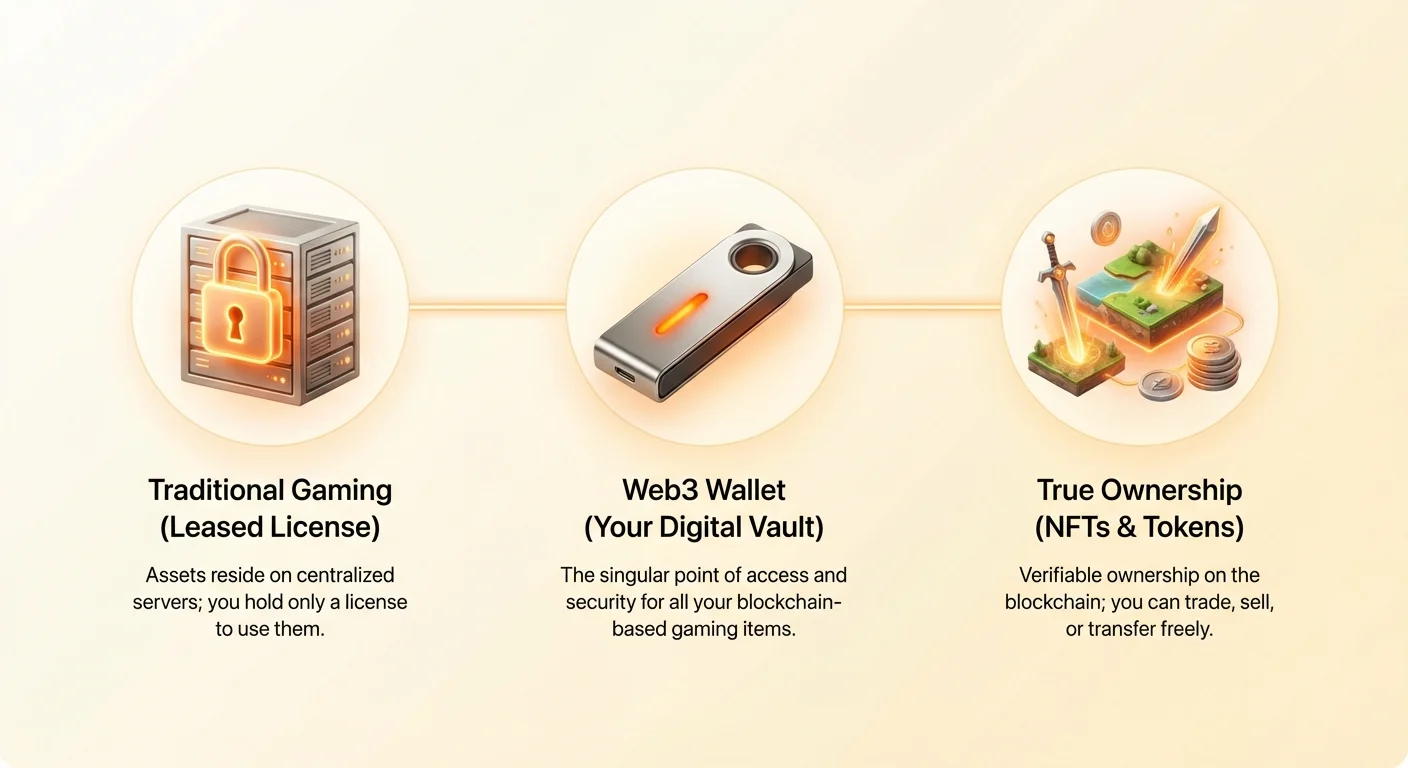
In traditional gaming (like World of Warcraft or Fortnite), when you purchase an item or unlock a rare skin, the database entry confirming your ownership resides solely on the game publisher’s centralized servers. If the game shuts down or your account is banned, the asset disappears, and you have no recourse.
In Web3 gaming (often called "Play-to-Earn" or "P2E" games), in-game items—such as land parcels, unique character skins, or powerful equipment—are minted as NFTs on a public blockchain (like Ethereum, Solana, or Polygon).
Key Ownership Distinction:
- Traditional: You own a license to use the item.
- Web3: You own the item itself, recorded on the blockchain, and it is secured by your private wallet key. You can sell, trade, or transfer this asset without needing the game developer's permission.
Wallets as Your Inventory: Self-Custody vs. Managed Wallets
Your crypto wallet is the singular point of access to all your gaming assets. It acts as both your bank vault and your personal in-game inventory. For Web3 gaming, you must choose between two main types of wallet management:
- Self-Custody (Non-Custodial) Wallets: This is the preferred method for anyone seeking true ownership. Wallets like MetaMask or Trust Wallet give you complete control over your private keys and seed phrase. If you lose access, no one can recover your assets for you, but conversely, no centralized entity can take them away. Most serious Web3 games require connection via a self-custody wallet.
- Managed (Custodial) Wallets: Some beginner-friendly P2E platforms or exchanges offer internal wallets where the platform holds the private keys for you. While convenient—you don't have to worry about a seed phrase—it defeats the core principle of Web3 ownership. If the platform is hacked or fails, your assets are at risk.
Actionable Tip: Always prioritize self-custody wallets for significant NFT holdings. Treat your seed phrase with the highest level of physical security; it is the master key to your digital gaming life.
Securing Your Digital Gear: Best Practices for Web3 Gaming Wallets
Because your wallet directly controls high-value NFTs and P2E tokens, security is paramount. The single biggest risk in Web3 gaming isn't volatility; it's compromise through phishing or poor asset segregation. This section focuses on implementing strong security protocols for managing in-game assets.
Segregation: Why You Need a Dedicated Gaming Wallet
One of the most effective strategies for risk management is asset segregation. Just as you wouldn’t keep all your life savings in your daily spending wallet, you should not connect your high-value long-term crypto or NFT storage wallet to every new Web3 game.
The Strategy (The “Hot/Cold” Separation):
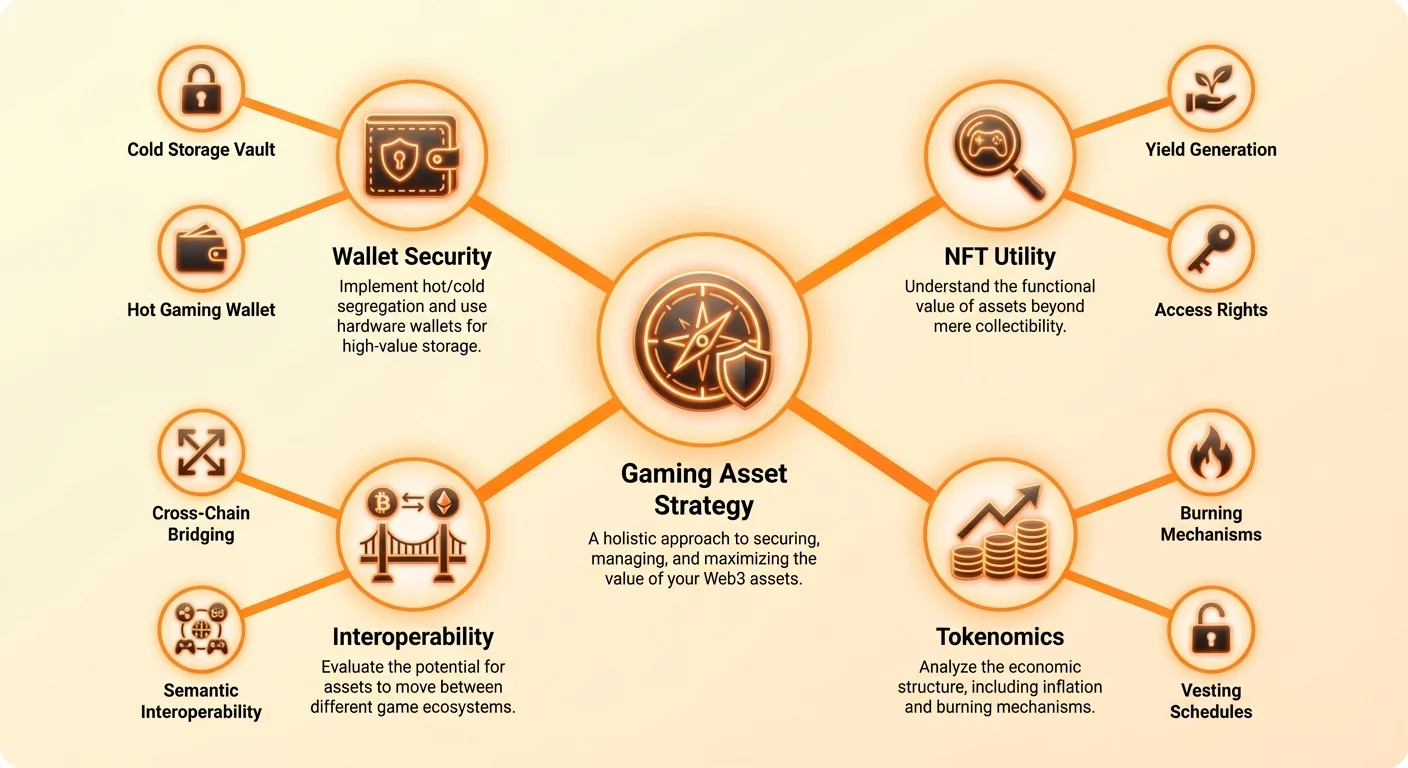
- Cold Wallet (Vault): Use a hardware wallet (like Ledger or Trezor) to store your highest-value assets (e.g., extremely rare legendary NFTs, primary ETH holdings, or governance tokens). This wallet should never be connected to a game or a new decentralized application (dApp).
- Hot Wallet (Spending/Gaming Wallet): Use a separate, software-based wallet (like MetaMask) that contains only the necessary assets required to play the game (e.g., a small amount of gas fees and the NFTs actively being used). This wallet is the one you connect to game marketplaces and dApps.
- Transfer Only What You Need: When you finish playing or accumulating significant value in the hot wallet, periodically transfer the high-value items back to the cold storage vault. This minimizes the potential damage if the hot wallet is compromised via a malicious smart contract interaction.
Hot Wallets vs. Hardware Wallets for NFTs
The choice between a software wallet (hot) and a hardware wallet (cold) dictates the trade-off between convenience and security.
| Wallet Type | Security Profile | Use Case in Gaming | Best Practice |
|---|---|---|---|
| Hot Wallet (Software) | Connected to the internet, moderately secure. | Daily gameplay, swapping small amounts of tokens, buying low-cost consumables, paying gas fees. | Use a dedicated, segregated gaming wallet only. |
| Cold Wallet (Hardware) | Offline, requiring physical confirmation for transactions. Highest security. | Storing high-value NFTs (e.g., virtual land, rare items), staking P2E tokens for long-term yield. | Use for storage; transfer assets out to the hot wallet only when they are needed for gameplay. |
For managing in-game assets, beginners should learn how to safely transfer assets between their hot gaming wallet and their cold storage periodically to ensure maximum security for their largest investments.
Recognizing and Avoiding Common Gaming Scams
Web3 gaming is rife with targeted scams designed to exploit user excitement and lack of technical knowledge.
- The Signature Request Scam: Never sign a blind or confusing transaction request. In Web3, connecting your wallet often involves signing a message (harmless), but executing a transaction requires a signature that transfers assets or approves spending limits. Always verify the transaction details (the amount, the asset, and the recipient address) before approving.
- Fake Mints and Airdrops: Scammers often promote fake "free NFT" airdrops or launch look-alike websites for new games. Clicking a link or attempting to "mint" on a fake site can drain your wallet by approving a malicious smart contract. Always verify URLs directly through official social channels or verified platforms.
- Approving Unlimited Spending: When interacting with decentralized exchanges or marketplaces, your wallet might ask for "approval" to spend a specific token (like ETH or a game token) on your behalf. Ensure this approval is set to a reasonable limit, not "unlimited." Setting an unlimited spend approval makes your entire balance vulnerable if the contract you approved is compromised later.
Maximizing Value: NFT Utility and Fractionalization Strategies
The utility of a gaming NFT is what dictates its long-term value. Asset management in Web3 gaming requires a clear understanding of what your asset does within the ecosystem and how you can unlock its potential value, even when facing high prices or low liquidity.
Defining True NFT Utility
In the context of Web3 gaming, an NFT is more than just a collectible; it is a programmable asset with intrinsic function. Managing these assets means understanding how they contribute to your earning potential or gameplay experience.
Examples of Utility:
- Yield Generation: A land parcel NFT might generate daily rental income or production resources (fungible game tokens).
- Access Rights: A specific NFT might grant access to exclusive areas, tournaments, or early-stage development (alpha testing).
- Staking Multipliers: Holding a rare character NFT might increase the annual percentage yield (APY) you receive when staking the game's native governance token.
- Upgradability: Some items can be combined or burned (destroyed) to create a superior, rarer item, affecting your management strategy—should you hold two common items or risk combining them for one rare item?
When managing your inventory, regularly review the utility of each NFT. An NFT that has lost its utility (e.g., the game mechanic it was tied to was phased out) should be considered for liquidation or conversion to a fungible asset.
Understanding Asset Tiering and Rarity
The economic strategy of a P2E game relies heavily on asset tiering. Rarity usually correlates with higher utility, but also higher market price and lower liquidity.
A strategic asset manager will analyze their portfolio based on the following:
- Common Assets (High Liquidity, Low Utility): Easily traded, useful for earning small daily rewards or providing quick cash flow (e.g., simple starter tools).
- Epic/Legendary Assets (Low Liquidity, High Utility): Difficult to trade quickly, but essential for maximizing long-term yield or achieving peak competitive performance (e.g., highly specialized weapons or character classes).
The goal of management is often to find the sweet spot: maintaining enough liquid (common) assets to pay daily gas fees and participate in minor trades, while securely holding and optimizing the performance of key, high-utility (legendary) assets.
Fractionalization: Shared Ownership and Liquidity
As Web3 games mature, the price of the rarest, highest-utility NFTs—such as genesis land plots or one-of-a-kind avatars—can become prohibitive for the average player. Fractionalization is a strategy used to unlock liquidity and share ownership of these expensive assets.
How Fractionalization Works: A single, high-value NFT is locked into a smart contract, and in return, the contract issues many fungible tokens (F-NFTs) representing proportional ownership of that asset.
- Benefit for the Owner: The original owner can sell 10% or 50% of the asset without giving up the entire item, raising capital (liquidity) while retaining control or majority ownership.
- Benefit for the Buyer: Investors or smaller players can gain exposure to a high-value asset, earning a portion of the yield it generates (e.g., rental income from a land plot) without buying the entire plot.
Managing fractionalized assets requires specialized exchange platforms and an understanding of governance, as major decisions regarding the NFT (like selling it outright) often require a vote among all F-NFT holders.
Advanced Topics: Interoperability and Tokenomics
Successful long-term asset management in Web3 gaming requires looking beyond the confines of a single game. You must evaluate the potential for assets to move between ecosystems (interoperability) and understand the economic structure underpinning the game itself (tokenomics).
Metaverse Interoperability Risk
The promise of the metaverse is that digital items should be portable—a weapon you craft in Game A should, ideally, be usable or recognized in Game B. While many platforms aim for interoperability, the reality is complex and introduces specific risks.
- Cross-Chain Bridging: Moving an NFT from one blockchain (like Ethereum) to another (like Polygon) requires a bridge. Bridging introduces smart contract risk, as the asset is temporarily locked, and the bridge itself can be a target for hackers. Only use well-vetted, official bridges.
- Semantic Interoperability: Even if an asset moves chains, its utility may not translate. A "Laser Sword" NFT might be a powerful weapon in its native environment but function only as a cosmetic banner in another metaverse. Assess whether an asset’s value is tied solely to one ecosystem or if it has genuine cross-platform potential.
Effective management means minimizing exposure to unnecessary bridging and valuing assets based on confirmed, rather than promised, interoperability.
Analyzing Play-to-Earn (P2E) Tokenomics
The tokens you earn from playing (P2E tokens, often fungible currencies) are central to asset management. Unlike traditional currencies, these are often inflationary by design, meaning new tokens are constantly being created and distributed to players. Analyzing the tokenomics helps determine the long-term sustainability of the asset you are accumulating. (Refer to the Tokenomics Deep Dive page for detailed analysis strategies).
Key Tokenomics Metrics to Monitor:
- Inflation Rate: How quickly are new tokens entering the circulation? High inflation rapidly devalues the token unless demand (e.g., new players or burning mechanisms) can keep pace.
- Burning Mechanisms: What incentives exist for players to permanently remove tokens from circulation (e.g., using tokens to upgrade an NFT, which then "burns" the tokens)? Strong burning mechanisms are crucial for fighting inflation.
- Vesting Schedules: If the founders, early investors, or team hold large amounts of the native token, when are those tokens scheduled to unlock? Large unlocks can dramatically increase supply and depress market prices, requiring you to adjust your liquidation strategy ahead of time.
If you are earning a high-inflation token, the best asset management strategy is often to convert that token to a more stable asset (like USDC or ETH) immediately upon earning, rather than holding it long-term.
Implementing Your Strategy: A Practical Checklist
Web3 gaming asset management is an ongoing process that requires consistent attention to security and market conditions.
Daily, Weekly, and Monthly Management Tasks
Daily Tasks (The 'Maintenance' Checklist):
- Review Wallet Connections: Check which dApps and contracts your hot gaming wallet is currently approved to interact with. Revoke approvals for any contracts you are no longer using.
- Harvest and Convert: Harvest earned P2E tokens and convert them to stablecoins or higher-value assets (like ETH) before inflation erodes their value.
- Check for Security Updates: Ensure all software wallets and hardware wallet firmware are up to date.
Weekly Tasks (The 'Inventory' Checklist):
- Transfer to Cold Storage: Move valuable, unused NFTs and substantial accumulated fungible tokens from your hot gaming wallet to your cold hardware wallet vault.
- Verify Rarity and Price Floor: Check the current market price floor for your key assets on reputable marketplaces to maintain a clear valuation of your holdings.
- Monitor Governance: If you hold governance tokens, review proposals and vote to protect your interests in the ecosystem.
Monthly Tasks (The 'Strategy' Checklist):
- Tokenomics Audit: Re-evaluate the project’s tokenomics (inflation, burn rates, vesting schedules) to determine if your long-term holding strategy is still viable.
- Review Smart Contract Activity: Analyze any new smart contract interactions or game mechanics that might affect the utility or security of your assets.
Conclusion
Web3 gaming offers an unprecedented opportunity for true digital ownership and value creation, but that power comes with the responsibility of self-sovereignty. By adopting a proactive asset management strategy—including strict wallet segregation, continuous security checks, careful evaluation of NFT utility, and a critical eye toward tokenomics—you move beyond just playing the game. You become a sophisticated manager of a growing portfolio, effectively building self-sovereignty within the exciting new digital economy.