
The cryptocurrency market is famous for its high volatility. Assets like Bitcoin and Ethereum can experience significant price fluctuations in short periods. While this volatility offers opportunities for traders, it presents challenges for everyday transactions and long-term savings. Stablecoins emerged as a solution to this problem. They are digital assets designed to maintain a stable value relative to a specific peg, usually a fiat currency like the US Dollar.
By bridging the gap between traditional finance and the blockchain economy, stablecoins provide a steady unit of account. They allow users to keep funds on-chain without exposure to market swings. This utility has made them a cornerstone of the crypto ecosystem. Traders use them to preserve capital during downturns. Investors use them to earn yield in decentralized finance protocols.
However, stability is achieved through different methods. Not all stablecoins share the same risk profile or architectural design. The two primary categories are fiat-backed stablecoins and algorithmic or crypto-backed stablecoins. Understanding the differences between these types is essential for any user. Each type offers distinct advantages regarding liquidity, censorship resistance, and ease of use. Conversely, they also carry unique risks that can lead to a loss of value.
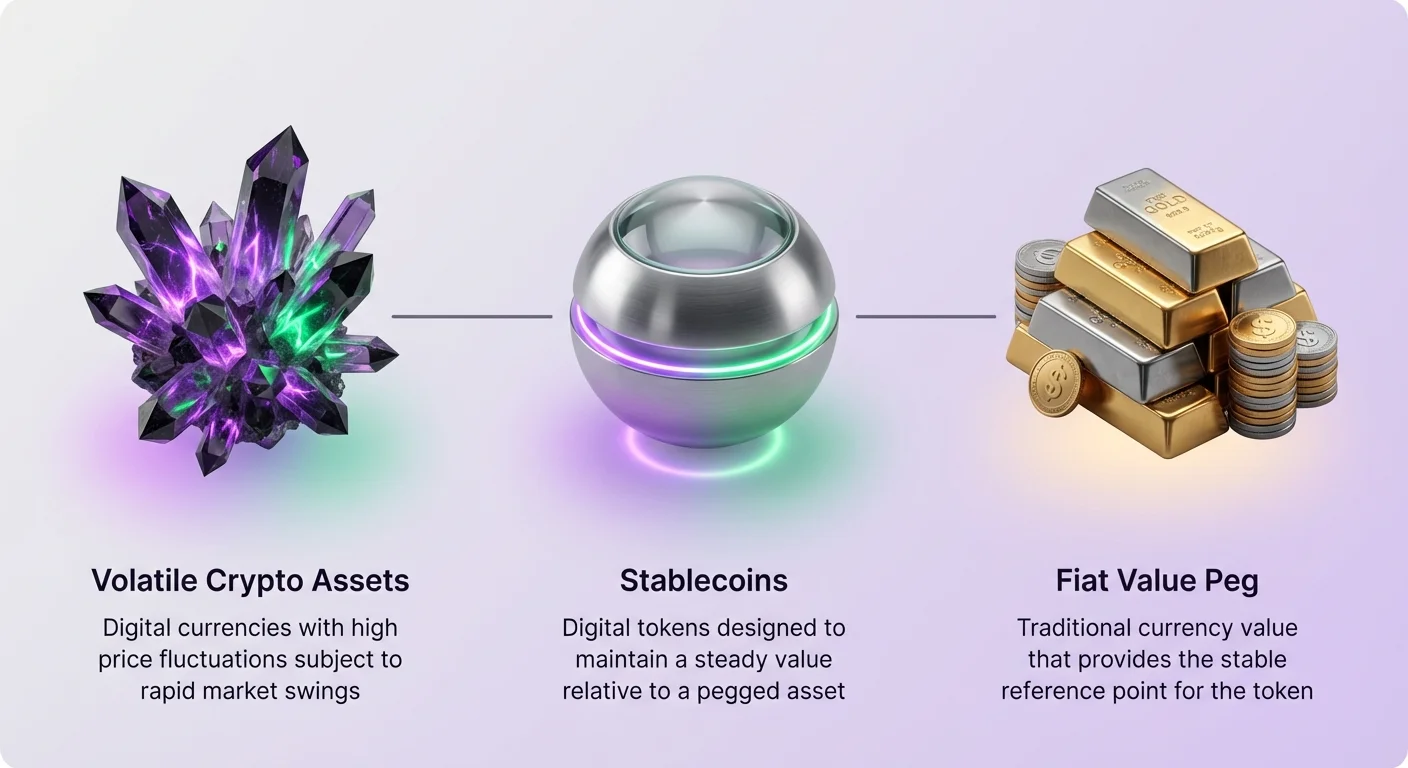
The Infrastructure of Stability
To understand stablecoins, one must first understand the networks they inhabit. Most prominent stablecoins exist as tokens on smart contract platforms. Ethereum is the most dominant network for these assets. It hosts the ERC-20 token standard, which ensures that different tokens can interact seamlessly with wallets and exchanges. When you hold a stablecoin on Ethereum, you are holding a digital token that represents value, secured by the underlying blockchain.
The Role of Smart Contracts
Smart contracts are the software engines that power stablecoins and decentralized applications. These are self-executing contracts with the terms of the agreement directly written into code. For stablecoins, smart contracts manage the issuance and transfer of tokens. They ensure that the total supply aligns with the protocol's design. In the case of decentralized stablecoins, smart contracts also manage the collateralization ratios and stability mechanisms.
While smart contracts automate processes and remove human error, they introduce technical risk. If the code contains a bug or vulnerability, it can be exploited. This is a critical consideration for any user holding large amounts of digital assets. Audits and time-tested protocols help mitigate these risks, but they never eliminate them entirely.
Gas Fees and Transaction Costs
Transacting with stablecoins requires paying network fees, known as gas. On Ethereum, gas is paid in ETH. This means you cannot send a dollar-pegged token without also holding a small amount of ETH in your wallet. The cost of gas varies based on network demand. During periods of high congestion, moving stablecoins can become expensive.
Updates to the network, such as EIP-1559, have overhauled the fee market to make costs more predictable. This upgrade introduced a base fee that is burned, permanently removing some ETH from circulation. Understanding gas dynamics is vital for stablecoin strategies. High fees can eat into the profits generated from yield farming or lending, especially for smaller portfolios.
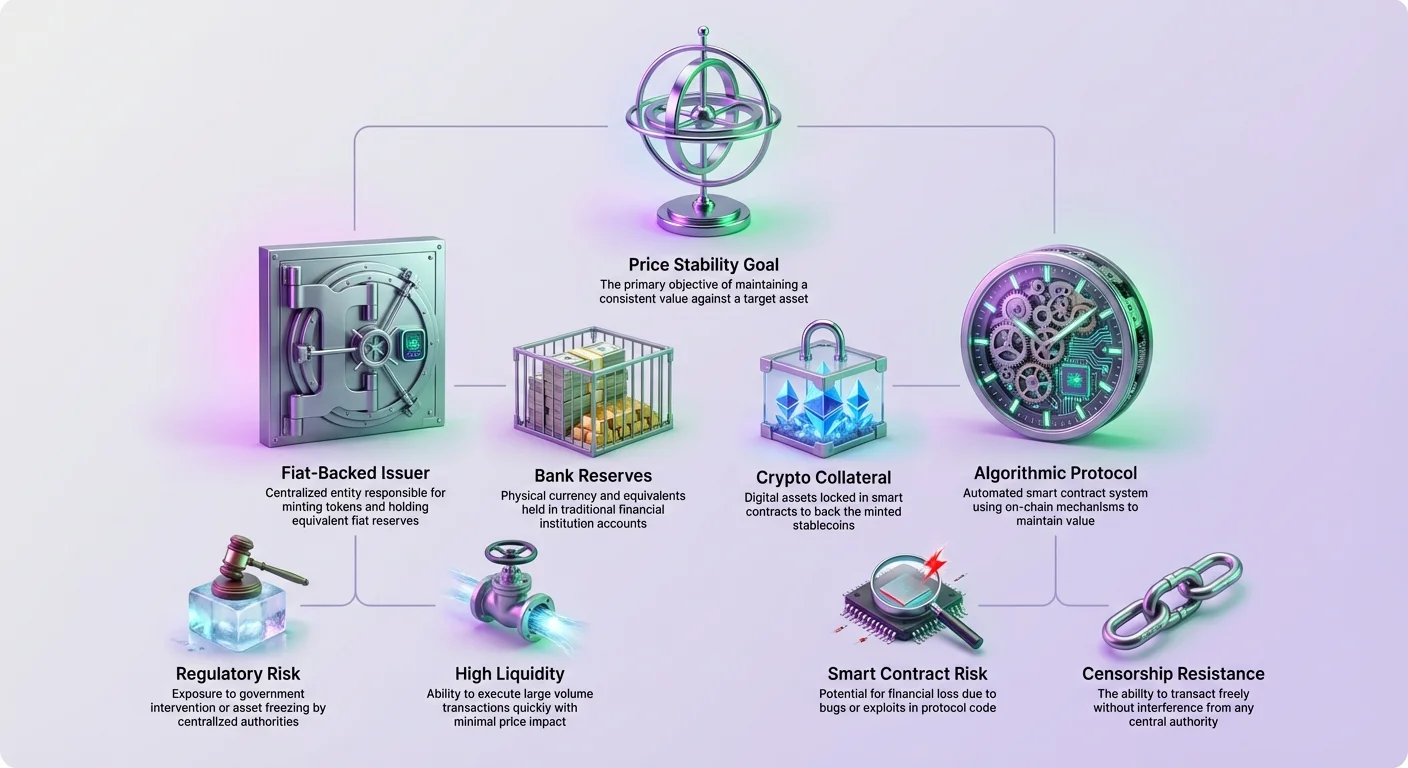
Fiat-Backed Assets: The Centralized Model
Fiat-backed stablecoins are the most common and liquid form of stable digital currency. Examples include USDT (Tether) and USDC. The mechanism behind them is conceptually simple. A centralized issuer creates the tokens. For every token minted on the blockchain, the issuer holds an equivalent amount of fiat currency or cash equivalents in a reserve bank account.
This 1:1 backing provides a high degree of confidence in the peg. Users trust that they can redeem their tokens for actual dollars at any time. Because of this perceived safety, fiat-backed stablecoins command the highest market capitalizations. They are the primary pair for trading on both centralized and decentralized exchanges.
The primary advantage of this model is liquidity. Large institutional players and high-volume traders prefer these assets because they can move millions of dollars without significant price slippage. They serve as the default "on-ramp" and "off-ramp" for the crypto economy. When you convert dollars from a bank account into crypto, you are often buying a fiat-backed stablecoin first.
However, this model introduces centralization risks. The reserves are held by a private company, not a decentralized protocol. Users must trust that the issuer is honest about their reserves. Furthermore, because the funds are in traditional bank accounts, they are subject to regulation and censorship. An issuer can freeze specific wallet addresses at the request of law enforcement. This contradicts the permissionless ethos of cryptocurrency, where no central authority should control access to funds.
Algorithmic and Decentralized Alternatives
Algorithmic and crypto-backed stablecoins take a different approach. They aim to achieve stability without relying on traditional banking rails or centralized issuers. Instead of holding dollars in a vault, these protocols use on-chain assets and mathematical algorithms to maintain their peg.
Some decentralized stablecoins are over-collateralized. This means users lock up cryptocurrency, such as ETH or BTC, into a smart contract vault. The value of the locked crypto exceeds the value of the stablecoins minted. If the value of the collateral drops, the protocol may liquidate the position to ensure the stablecoin remains solvent. This system allows for a dollar-pegged asset that is completely transparent and auditable on the blockchain.
Privacy and Censorship Resistance
A major benefit of decentralized stablecoins is censorship resistance. Since there is no central administrator, no single entity can freeze a user's funds. This aligns closer to the core values of Bitcoin and decentralized finance. Projects like the Freedom Dollar (fUSD) on the Zano network take this a step further by integrating privacy features.
In typical stablecoins, transactions are visible on a public ledger. Anyone can see the sender, receiver, and amount. Privacy-focused stablecoins obfuscate these details, offering financial confidentiality similar to physical cash. For users living in regimes with strict capital controls or surveillance, these features are not just a luxury but a necessity.
The Risk of De-pegging
The trade-off for decentralization is complexity. Algorithmic mechanisms are intricate and rely on market incentives to function. If the market behaves irrationally or experiences an extreme crash, these incentives can fail. This can lead to a "de-peg" event, where the stablecoin loses its $1.00 value and drops significantly.
History has seen several algorithmic stablecoins fail catastrophically. When confidence is lost, a "bank run" can occur on the protocol. Unlike fiat-backed issuers who can legally guarantee redemption, an algorithm cannot stop a panic. Users must carefully evaluate the mechanism design and collateral quality before holding these assets long-term.
Strategies for Generating Yield
One of the most compelling use cases for stablecoins is the ability to generate passive income. In the traditional banking world, interest rates on savings accounts are often negligible. In the crypto ecosystem, specifically within Decentralized Finance (DeFi), stablecoins can earn significantly higher yields.
Liquidity Provision
Decentralized exchanges (DEXs) rely on users to provide capital for trading. This is known as liquidity provision. Users deposit pairs of assets into liquidity pools. For example, a user might deposit equal values of USDC and ETH into a pool on a platform like Verse DEX. In return, they receive a portion of the trading fees generated by the pool.
Providing liquidity with stablecoins can be a stable strategy, but it carries a risk known as impermanent loss. This happens when the price of the volatile asset (like ETH) changes significantly compared to the stable asset. The rebalancing of the pool might result in a user having less total value than if they had simply held the assets in a wallet. However, trading fees and additional rewards can often offset this loss.
Yield Farming and Lending
Yield farming involves moving assets between different protocols to maximize returns. Users can lend their stablecoins to borrowers through decentralized lending platforms. Borrowers put up collateral to take out the loan, ensuring the lender is protected. The interest paid by the borrower goes to the lender.
Staking is another avenue. Some protocols reward users for locking up their tokens to secure the network or participate in governance. While stablecoins themselves are not typically "staked" in the consensus sense (like Proof of Stake), they can be staked in rewards contracts. For instance, depositing liquidity pool tokens into a "farm" to earn additional protocol tokens.
Navigating Risks and Best Practices
Engaging with stablecoins and DeFi strategies requires strict risk management. The high yields offered in DeFi are often a reflection of the higher risk profile. Users should never deposit more capital than they can afford to lose.
Smart Contract Verification
Before interacting with any protocol, verify the legitimacy of the smart contract. Scammers often create fake versions of popular tokens or platforms to steal funds. Always use official links and verify the token contract address. Reputable projects will have their code audited by third-party security firms. While an audit does not guarantee total safety, it indicates that the code has been reviewed for common vulnerabilities.
Diversification
Diversification is a key defense against failure. Instead of holding all funds in a single stablecoin, users can spread their capital across multiple assets. A mix of fiat-backed and decentralized stablecoins balances the risks of centralization against the risks of algorithmic failure. If one issuer faces regulatory trouble or one algorithm breaks, the entire portfolio is not lost.
Wallet Security
Security begins with the wallet. Self-custodial wallets give users full control over their private keys. This means no third party can access the funds, but it also means the user is solely responsible for safety. Hardware wallets provide an extra layer of protection by keeping private keys offline. For significant holdings, using a hardware wallet is the industry standard for safety.
Users should also be wary of "approval" transactions. When interacting with a dApp, you grant it permission to spend your tokens. Malicious contracts can drain wallets if given unlimited approval. Regularly reviewing and revoking permissions for old or unused contracts is a good hygiene practice for crypto users.
Comparative Analysis
Choosing between fiat-backed and algorithmic stablecoins depends on the user's priorities. A trader prioritizing speed and liquidity for arbitrage will choose differently than a privacy advocate seeking long-term savings.
| Feature | Fiat-Backed (e.g., USDC, USDT) | Algorithmic/Decentralized (e.g., DAI, fUSD) |
|---|---|---|
| Stability Mechanism | 1:1 Fiat Reserves in Banks | Smart Contracts & Crypto Collateral |
| Censorship Resistance | Low (Can be frozen) | High (Code is law) |
| Transparency | Audits of Bank Statements | Real-time On-chain Visibility |
This table highlights the fundamental trade-offs. Fiat-backed options bridge the gap to the traditional economy efficiently but act as gatekeepers. Decentralized options offer true autonomy but require a deeper understanding of blockchain mechanics and market theory.
Conclusion
Stablecoins have fundamentally changed the cryptocurrency landscape. They provide the stability necessary for payments, savings, and complex financial strategies without leaving the blockchain. Whether one chooses the high liquidity of fiat-backed assets or the censorship resistance of algorithmic alternatives, the utility is undeniable. These assets serve as the fuel for the decentralized finance engine, enabling lending, borrowing, and trading at a global scale.
However, stability in name does not guarantee safety in practice. The risks of regulatory intervention, smart contract failure, and market volatility remain ever-present. Users must approach these assets with diligence, utilizing diversification and robust security practices. By understanding the mechanics behind the peg, investors can make informed decisions that align with their risk tolerance and financial goals.
Diversify your stablecoin holdings across different types to protect against specific failure points like regulation or code bugs.