The shift from centralized servers to peer-to-peer networks has introduced a new way of organizing digital cooperation. At the heart of this evolution lies the concept of automating management through code rather than relying on human intermediaries. This transition is powered by blockchain technology and the software that runs atop it.
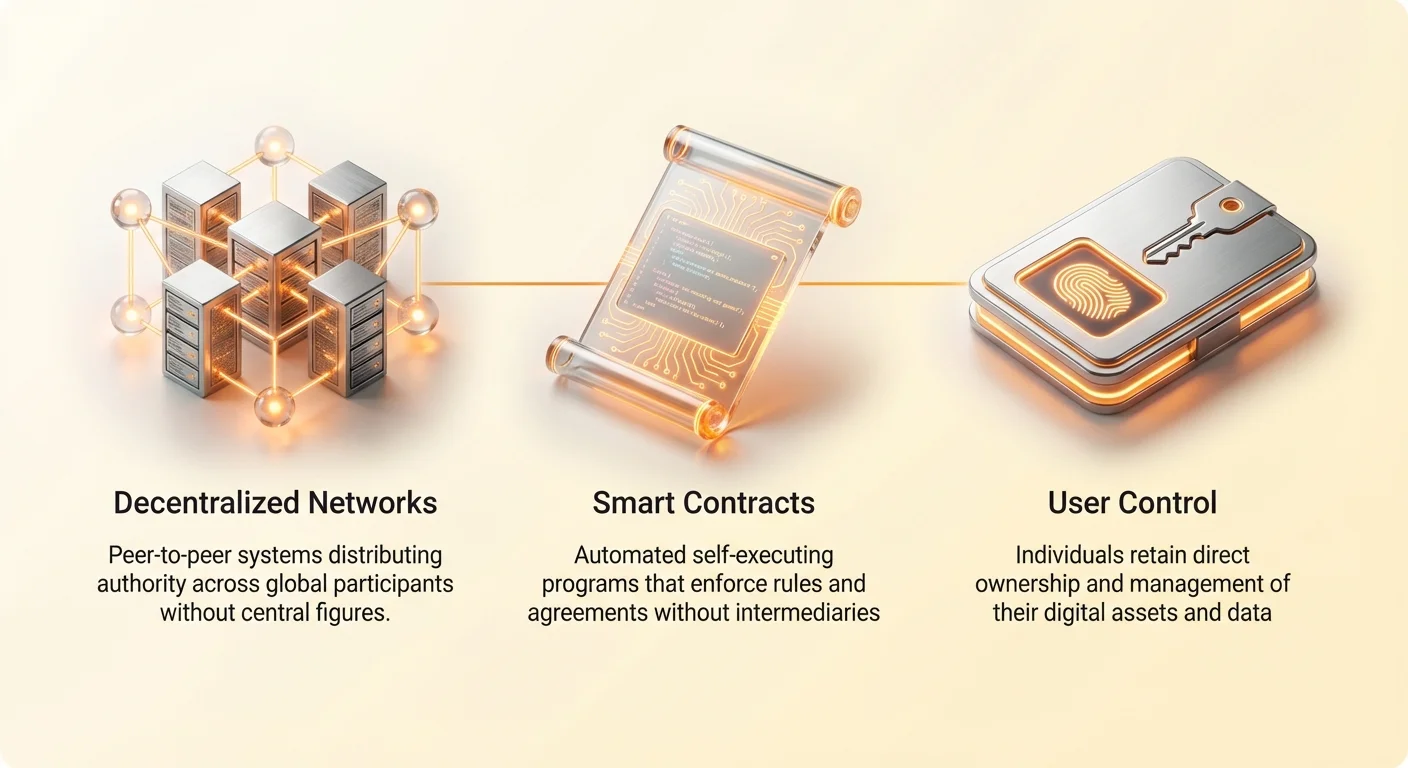
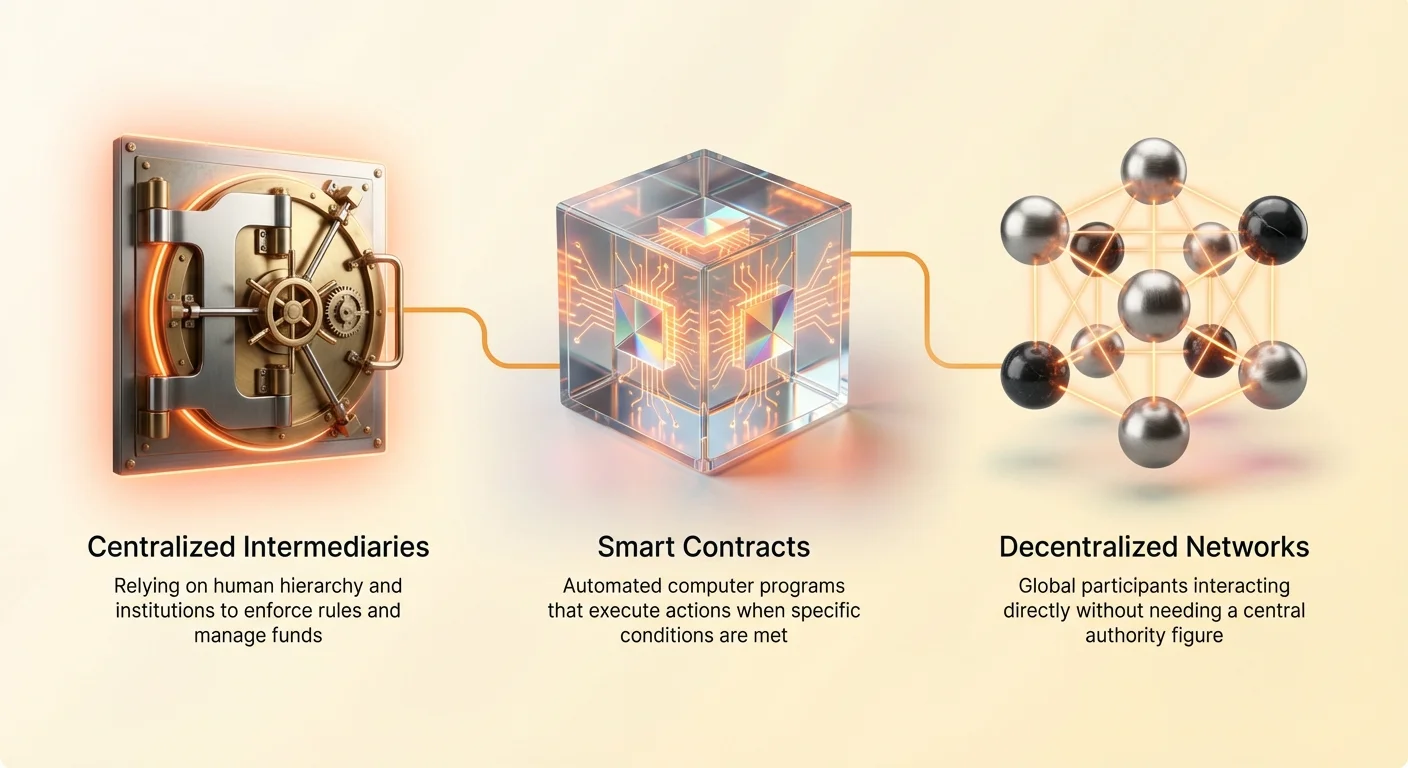
Traditional organizations rely on a hierarchy of humans to enforce rules, manage funds, and make decisions. In contrast, the emerging digital landscape utilizes decentralized networks to distribute authority. This structure allows participants to interact globally without needing to trust a central figure or institution.
The foundation of this new organizational model is transparency. Every transaction and rule change is recorded on a public ledger. This ensures that the state of the organization is verifiable by anyone at any time. It removes the opacity that often plagues traditional financial and corporate structures.
As these systems evolve, they are reshaping how applications are built and governed. The combination of programmable value and decentralized consensus creates a framework where users are not just customers but active participants. This aligns incentives between the creators of a platform and the community that utilizes it.
The Technological Backbone: Smart Contracts
Defining the Rules of Engagement
A smart contract serves as the engine for decentralized coordination. It is essentially a computer program stored on a blockchain that executes automatically when specific conditions are met. These contracts replace the need for traditional legal agreements and the intermediaries who enforce them.
When a developer deploys a smart contract, they create a specific address on the network. Users interact with this program by sending digital assets to that address. This action triggers the code to execute exactly as written. The process is deterministic, meaning the outcome is predictable and transparent based on the input.
For example, a simple contract could act as a trust fund. It might be programmed to hold funds and release a set portion to a specific recipient every month. No lawyer or bank is required to manage this disbursement. The code itself holds custody of the assets and executes the transfer according to the pre-defined schedule.
From Bitcoin to Turing Complete Systems
The concept of smart contracts is not exclusive to modern platforms. Bitcoin utilizes a form of smart contracts, although its functionality is intentionally limited to focus on security and simplicity. Bitcoin's script allows for basic conditions to be set on how funds can be spent.
Ethereum expanded upon this by creating a network that is a "Turing complete state machine." This means the network functions as a shared global computer capable of running any computation that a regular computer can handle. This flexibility allows for complex logic beyond simple transactions.
This evolution enabled developers to build sophisticated applications directly on the blockchain. Instead of just moving currency from point A to B, the network can host messaging apps, games, and complex financial instruments. However, this increased capability comes with trade-offs regarding processing speed and transaction costs compared to centralized cloud computing.
Decentralized Applications (dApps) Architecture
The Three Core Components
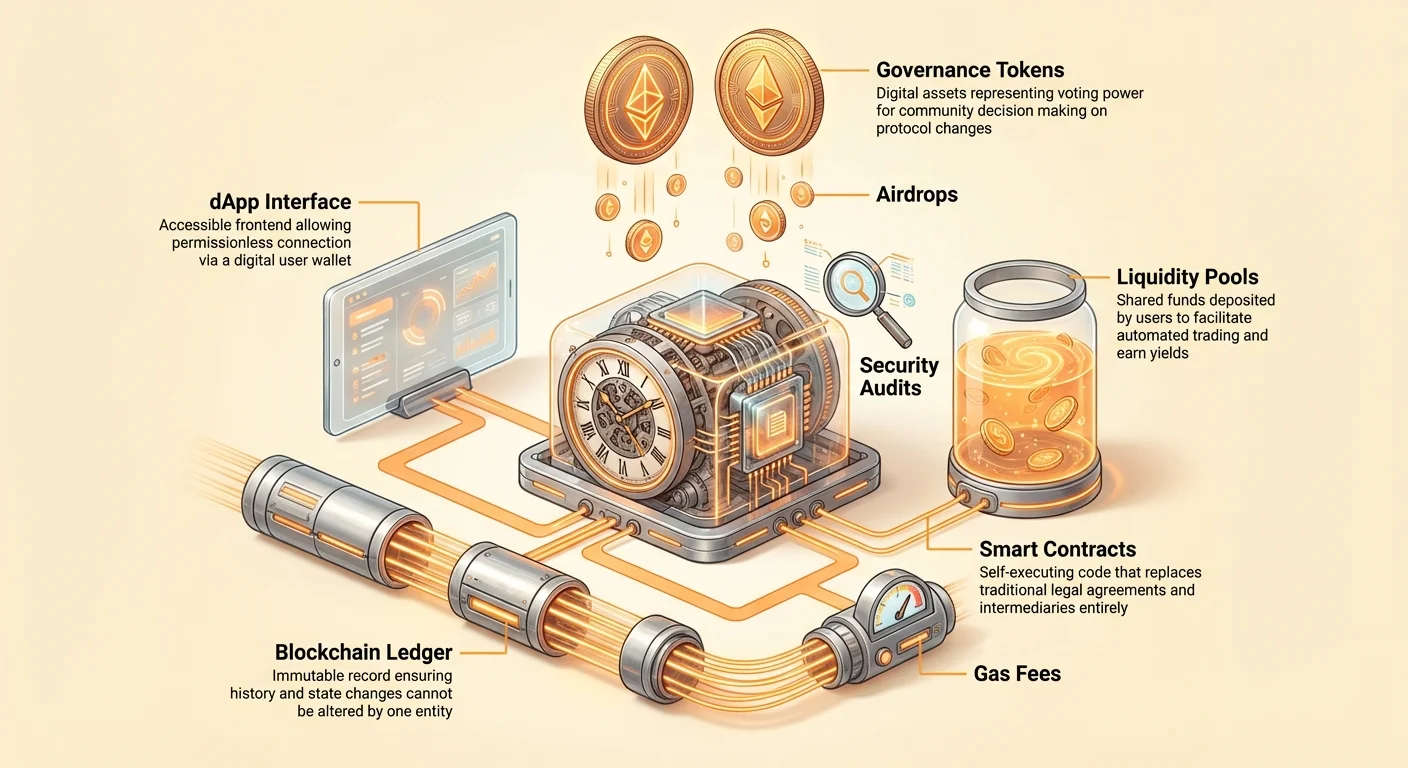
A Decentralized Application, or dApp, operates differently than the apps found on a standard smartphone or computer. While they may look similar on the surface, their backend infrastructure relies on peer-to-peer networks rather than centralized servers. A typical dApp functions through the interaction of three primary elements.
First, smart contracts provide the logic and rules. These are the open-source protocols that define how the application functions. Because the code is public, anyone can inspect it to verify that the application does what it claims to do.
Second, the blockchain serves as the immutable ledger. It records the history of all interactions and state changes. This ensures that data cannot be altered or deleted by a single controlling entity. It provides the "trustless" environment necessary for strangers to interact safely.
Third, tokens facilitate value transfer and access. Operations on the blockchain require "gas" fees paid in the network's native currency. Additionally, dApps often utilize their own specific tokens for functions like voting, staking, or incentivizing user behavior within the application.
User Interface and Accessibility
Despite the complex backend, the user experience of a dApp is designed to be accessible. Users interact with a frontend interface that connects to the blockchain via a digital wallet. This setup allows for permissionless access.
In a centralized system, a user must typically create an account, provide personal identity information, and wait for approval. In the decentralized world, anyone with a wallet address can connect and interact immediately. There are no gatekeepers to deny access based on geography or status, although local regulations may still apply to the user.
This architecture grants users full control over their assets. In a traditional trading app, the service provider takes custody of the funds. In a dApp, the user retains ownership of their private keys and assets until the moment a transaction is executed by the smart contract.
Governance and Token Economics
The Power of Governance Tokens
Governance is the mechanism through which decentralized networks make decisions. Since there is no CEO or board of directors in the traditional sense, the community must collectively decide on changes to the protocol. This is often achieved through the issuance of governance tokens.
Projects frequently issue their own native tokens to represent a stake in the protocol. These tokens often function similarly to voting shares in a corporation. Holders of the token can propose changes or vote on proposals submitted by others.
The weight of a user's vote is typically proportional to the number of tokens they hold. This system aligns the incentives of the stakeholders with the success of the platform. If the protocol succeeds, the value of the governance token generally rises, rewarding those who hold and govern it.
Distribution Mechanisms and Airdrops
For a decentralized governance system to be effective, the tokens must be distributed to a wide network of users. One popular method for achieving this is the "airdrop." An airdrop involves sending free tokens to the wallets of users who meet specific criteria.
Projects use airdrops to instantly create a user base and decentralize control. By distributing tokens to thousands of active users, the project ensures that governance power is not concentrated in the hands of a few developers or early investors. This also acts as a powerful marketing tool.
Qualification for these distributions is often determined by a "snapshot." The project records the state of the blockchain at a specific moment in time. Users who interacted with the protocol or held specific assets prior to that block are eligible for the reward.
Comparison of Governance Distribution Models:
| Mechanism | Metric Used | Primary Goal |
|---|---|---|
| Usage-Based | Transaction Volume | Reward active participants |
| Holding-Based | Ownership of Asset | Loyalty to specific ecosystem |
| Liquidity-Based | Value Provided | Deepen market liquidity |
Real-World Governance Examples
The impact of token-based governance is visible in major protocols. For instance, Uniswap, a leading decentralized exchange, launched its UNI token to decentralize its stewardship. This move was partly a defense mechanism to retain liquidity against competitors.
By airdropping UNI tokens to anyone who had previously used the platform, Uniswap effectively transferred ownership of the protocol's treasury and future direction to its community. This event demonstrated how governance tokens can be used to align user loyalty with platform growth.
Similarly, NFT projects like Bored Ape Yacht Club have used airdrops to expand their ecosystem. By granting existing holders new assets, they maintain engagement and distribute value within the community. This creates a cycle where users are incentivized to hold assets long-term to participate in future governance and rewards.
The Role of DeFi in Decentralized Governance
Automating Financial Services
Decentralized Finance (DeFi) represents the most mature sector for these governance models. DeFi applications aim to recreate traditional financial services—such as lending, borrowing, and trading—without intermediaries. These platforms rely entirely on smart contracts to manage capital.
In a DeFi lending protocol, users deposit funds into a shared pool managed by code. The protocol then lends these funds to borrowers who provide collateral. The interest rates are often determined algorithmically based on supply and demand.
Because these systems are automated, the profits generated are distributed directly to the participants. There is no bank branch or loan officer taking a cut of the yield. This efficiency often results in higher returns for lenders and more transparent terms for borrowers compared to traditional finance (TradFi).
Liquidity and Community Incentives
For these financial protocols to function, they require deep liquidity. A decentralized exchange cannot facilitate trades if there are no assets in its pools. To solve this, protocols use incentive structures governed by smart contracts.
Liquidity providers are users who deposit pairs of assets into a smart contract to facilitate trading. In return, they earn a percentage of the trading fees. This "crowd-sourced" liquidity model replaces the market makers found in centralized finance.
Governance comes into play when deciding how these incentives are structured. Token holders might vote to increase rewards for specific liquidity pools to attract more capital. This allows the community to actively manage the protocol's economic policy and react to market conditions in real time.
Risks and Security Challenges
Smart Contract Vulnerabilities
While the removal of human intermediaries reduces certain risks, it introduces others. The primary risk in this ecosystem is code quality. Smart contracts are deterministic, meaning they execute exactly as written, even if the code contains an error.
If a smart contract has a bug, hackers can exploit it to drain funds. Because transactions on the blockchain are immutable, these actions cannot be reversed. Unlike a bank transfer that can be cancelled, a theft in a decentralized network is usually permanent.
Developers mitigate this by engaging third-party security firms to audit their code. However, even audited contracts can contain unforeseen vulnerabilities. The open-source nature of the code cuts both ways: it allows the community to verify security, but it also allows attackers to study the code for weaknesses.
Malicious Actors and Rug Pulls
Beyond accidental bugs, there is the risk of deliberate fraud. The permissionless nature of these networks means anyone can deploy a smart contract, including scammers. A common fraudulent practice is known as a "rug pull."
In a rug pull, developers create a project and hype it to attract investor funds. Once a significant amount of value is locked in the protocol, the insiders withdraw the liquidity and abandon the project. This causes the value of the associated tokens to collapse to zero.
These scams often exploit the anonymity of the blockchain. Since developers do not need to reveal their real-world identities to launch a dApp, holding them accountable for fraud is extremely difficult. Users must perform their own due diligence on the team and the code before participating.
The Phishing Threat
Even when interacting with legitimate, audited dApps, users face external security threats. Phishing attacks are prevalent in the sector. Attackers often create fake websites that look identical to popular dApp interfaces.
If a user connects their wallet to a malicious site, they may inadvertently grant permission for the attacker to spend their funds. The smart contract on the blockchain works correctly, but the user interface has been compromised to trick the user.
Verifying the URL and ensuring the presence of security certificates are critical steps for user safety. Because there is no customer support department to contact for lost funds, the responsibility for security falls entirely on the individual user.
Future Applications Beyond Finance
Supply Chain and Identity
While finance has been the primary driver of adoption, the underlying technology has applications across various industries. Supply chain management stands to benefit significantly from the transparency of smart contracts.
Tracking products from manufacture to delivery on a shared ledger ensures authenticity. Smart contracts can automatically release payments to suppliers once a shipment is verified at a specific location. This reduces disputes and accelerates global trade.
Decentralized identity is another promising frontier. Currently, digital identity is fragmented across dozens of centralized databases. A blockchain-based system would allow individuals to own their identity credentials and share them selectively without relying on a central authority.
The Evolution of Voting Systems
The governance models developed for DeFi protocols have implications for broader societal voting. Secure, transparent voting systems are a long-standing challenge for governments and organizations.
Blockchain technology offers a way to record votes immutably while allowing anyone to verify the tally. Smart contracts can ensure that the rules of the election are adhered to strictly. This could reduce concerns regarding voter fraud and increase trust in democratic processes.
As these technologies mature, we may see the principles of decentralized governance applied to non-profit organizations, community groups, and potentially municipal governance. The ability to coordinate resources and decision-making without a centralized leader is a powerful tool for human collaboration.
Conclusion
The rise of decentralized networks represents a fundamental change in how digital communities organize and operate. By leveraging smart contracts, these systems replace trust in individuals with trust in verifiable code. This architecture offers enhanced transparency, security, and user control, while simultaneously presenting new challenges regarding individual responsibility and technical risk.
As the technology moves beyond its initial financial applications, the models of governance established today will likely influence a wide range of industries. The transition from passive users to active stakeholders creates a more equitable digital environment. While hurdles remain regarding regulation and security, the trajectory points toward a future where ownership and authority are distributed among the community rather than concentrated in silos.
The future of digital organization relies on code that allows strangers to collaborate securely without intermediaries.