
The landscape of cryptocurrency has evolved significantly since the inception of Bitcoin. While Bitcoin introduced the world to decentralized digital currency, a new wave of innovation arrived with the development of programmable blockchains. This evolution sparked a competitive environment known as the "Layer 1 (L1) wars," where various protocols compete to become the primary foundation for the decentralized internet.
At the heart of this competition is the quest to support complex applications while balancing security, speed, and cost. Early blockchain networks functioned primarily as ledgers for recording transactions. However, the industry quickly moved toward platforms capable of running "smart contracts," which are automated software programs living on the network.
This shift created a diverse ecosystem of protocols. Some, like Ethereum, established early dominance through robust developer communities and widespread adoption. Others, such as Solana and Avalanche, emerged later with promises of higher performance and improved scalability. Understanding the differences between these ecosystems requires examining their underlying technologies, consensus mechanisms, and the specific problems they aim to solve for users and developers.
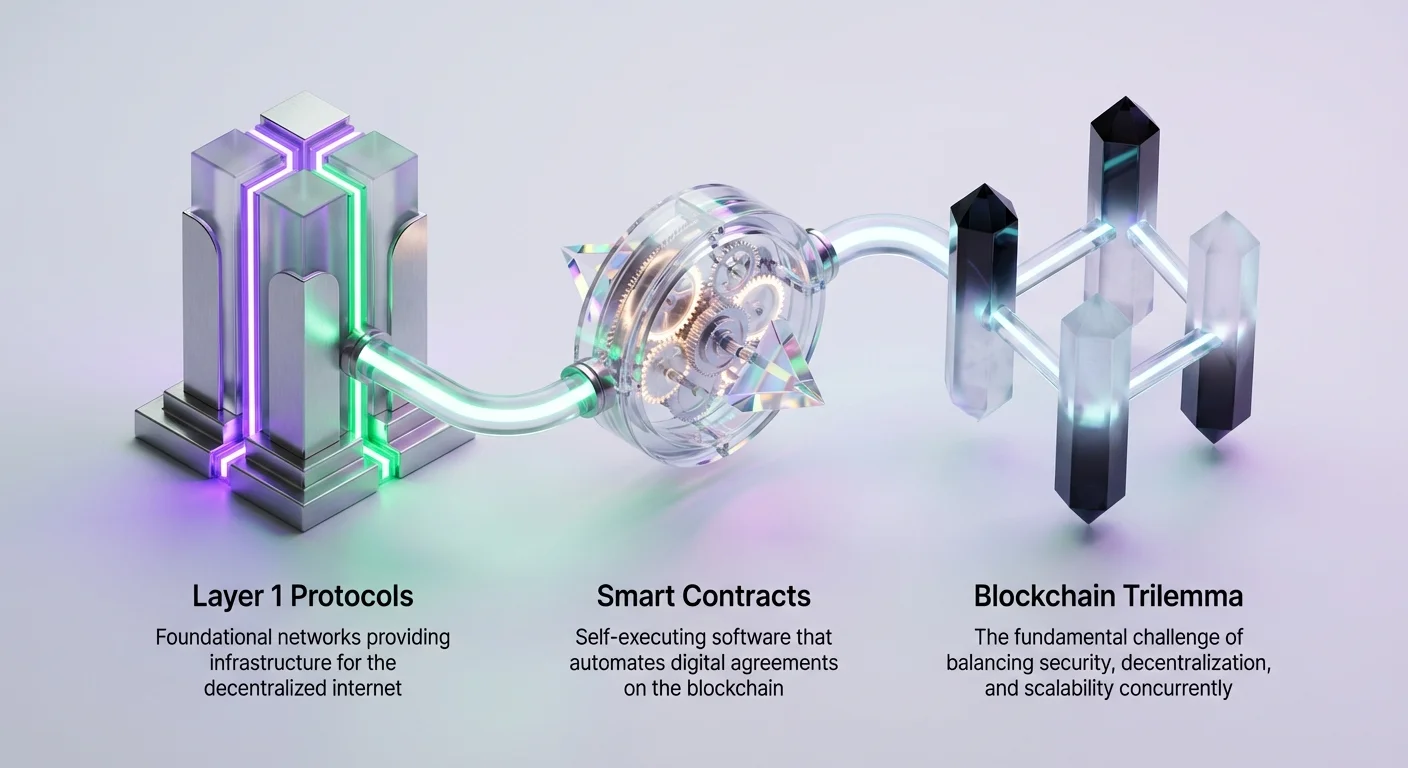
The Ethereum Standard and the Trilemma
Ethereum serves as the benchmark against which most other Layer 1 protocols are measured. As the pioneer of smart contract technology, it introduced the Ethereum Virtual Machine (EVM), a computation engine that powers decentralized applications (dApps). This innovation allowed developers to create tokens, financial protocols, and unique digital assets like Non-Fungible Tokens (NFTs).
However, Ethereum's success highlighted a critical challenge known as the 'blockchain trilemma.' This concept suggests that it is difficult for a decentralized network to achieve security, decentralization, and scalability simultaneously. As usage on the Ethereum mainnet surged, the network faced congestion. This resulted in high transaction costs, known as gas fees, and slower processing times during peak periods.
To address these issues, the network has undergone significant upgrades. A major transition involved moving from a Proof of Work model to Proof of Stake (PoS). This shift significantly reduced energy consumption and set the stage for future scalability improvements like sharding. Despite these advances, the limitations of the mainnet created an opening for alternative blockchains to capture market share by prioritizing speed and lower costs.
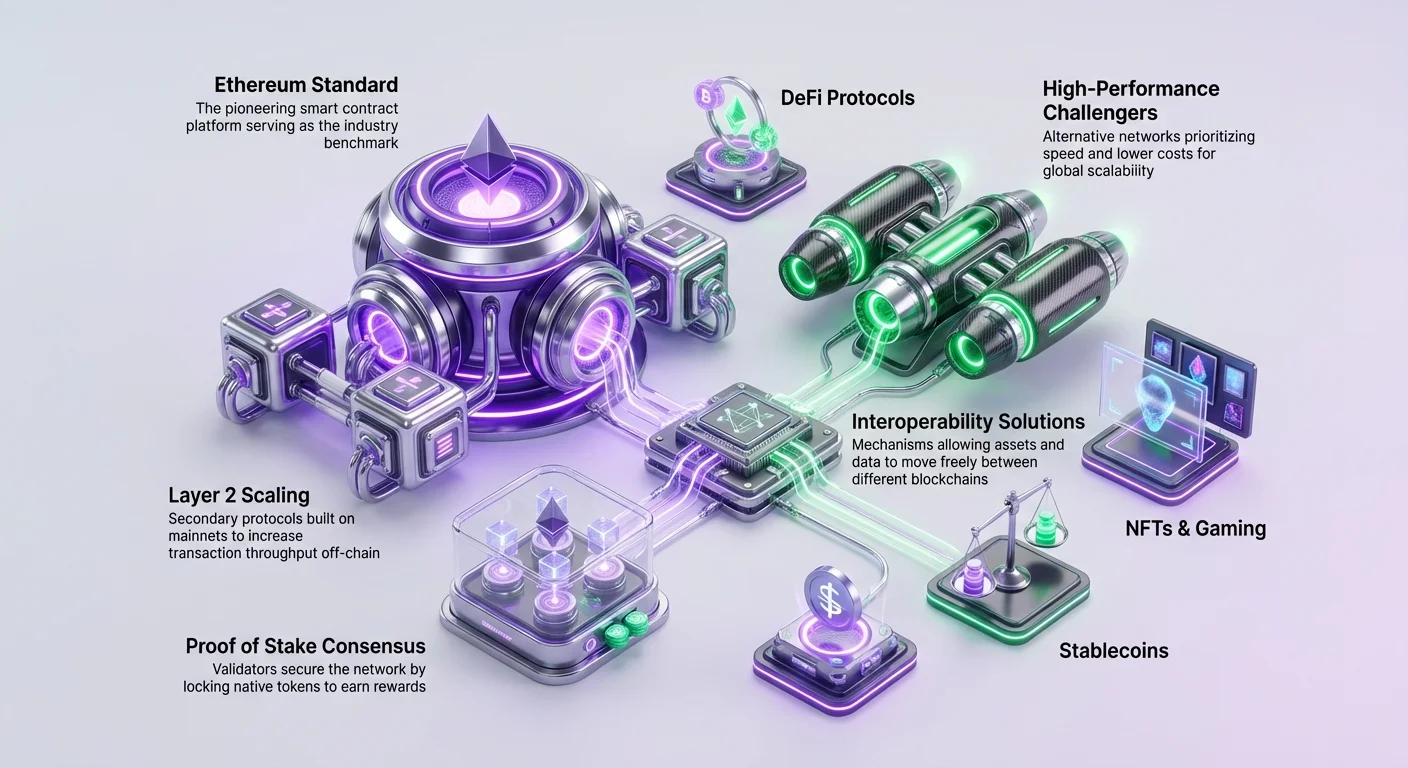
High-Performance Challengers
Alternative Layer 1 blockchains, often referred to as "Altcoins," have entered the market to offer diverse functionalities and use cases beyond what Bitcoin and early Ethereum iterations provided. Solana, for instance, is recognized as a high-performance blockchain designed to handle massive throughput. Its architecture focuses on speed, making it a strong competitor for applications requiring fast settlement and low latency.
Deep dives into the Solana ecosystem reveal a focus on mitigating the bottlenecks that plague older networks. By optimizing for performance, it aims to support global-scale applications. However, users and investors often compare its advantages and disadvantages directly against Ethereum to determine which trade-offs regarding decentralization and stability are acceptable for their needs.
Other protocols like Avalanche offer unique characteristics that differentiate them in the market. While specific technical architectures vary, the core value proposition of these challengers remains consistent: providing a scalable infrastructure for Web3. They attract developers by offering environments where dApps can operate with lower fees, encouraging experimentation and broader user adoption.
Specialized Networks and Interoperability
Not all Layer 1 networks compete directly on general-purpose computing. Some focus on specific niches or architectural philosophies. Stellar Lumens (XLM), for example, operates as a decentralized network built specifically for fast and affordable cross-border transactions. Backed by a nonprofit foundation, it powers remittances and tokenized assets, distinguishing itself from networks focused primarily on decentralized finance (DeFi) or gaming.
Similarly, networks like the Ripple XRP Ledger and TRON DAO (TRX) occupy distinct sectors of the decentralized world. BNB Chain serves as a smart contract platform supported by a major exchange ecosystem, offering deep integration with trading services. Cardano (ADA) takes a research-driven approach, emphasizing peer-reviewed development to ensure stability and security.
This specialization has led to a fragmented landscape where different blockchains excel at different tasks. Users often find themselves navigating multiple networks to access specific features. This reality emphasizes the importance of interoperability and the ability to move assets between chains. The competition is no longer just about a single "Ethereum killer" taking over but about which ecosystem can best serve specific user needs while remaining connected to the broader industry.
Comparing Consensus Mechanisms
A fundamental differentiator between these protocol ecosystems is the mechanism used to agree on the state of the ledger. The industry has largely shifted away from the energy-intensive mining used by Bitcoin toward Proof of Stake (PoS). In a PoS system, network security is maintained by validators who lock up, or "stake," their native tokens.
| Feature | Proof of Work (PoW) | Proof of Stake (PoS) |
|---|---|---|
| Security Source | Computational power | Staked assets |
| Energy Usage | High consumption | Energy efficient |
| Participant Role | Miners | Validators |
Staking has become a central activity in the L1 ecosystem. It allows token holders to participate in network governance and security while earning rewards. This model aligns the incentives of users with the health of the protocol. The transition of major networks to PoS highlights a broader industry trend toward sustainability and economic security models that do not rely on massive hardware infrastructure.
Coins vs. Tokens in the Ecosystem
To understand the L1 competition, one must distinguish between the base assets of these networks and the assets built upon them. A "coin" is the native cryptocurrency of a specific blockchain, such as Ether (ETH) on Ethereum or SOL on Solana. These coins are used to pay for transaction fees and secure the network.
In contrast, "tokens" are digital assets built on top of existing blockchains. The ERC-20 standard on Ethereum is the most prominent example, having enabled the creation of thousands of different assets. These tokens can represent anything from voting rights in a protocol to stablecoins pegged to fiat currencies.
Understanding this difference is vital for evaluating ecosystem health. A thriving Layer 1 will host a vast array of tokens, indicating a vibrant developer community. The competition is not just about the value of the native coin but about the utility and volume of the tokens circulating on the network.
Scalability Solutions: Layer 2s and Sidechains
The limitations of Layer 1 blockchains have given rise to a secondary layer of competition: scaling solutions. Layer 2 (L2) solutions are protocols built on top of a mainnet (like Ethereum) designed to improve scalability. They process transactions off-chain and then settle the final data on the main L1, inheriting its security.
Two primary types of rollups dominate this space: ZK-Rollups and Optimistic Rollups. ZK-Rollups use complex cryptography to prove the validity of transactions bundled together, while Optimistic Rollups assume transactions are valid unless challenged. These technologies allow networks to handle significantly more activity without clogging the base layer.
Sidechains represent another approach. These are distinct blockchains that run parallel to a mainnet. They operate with their own consensus mechanisms and security parameters. While sidechains offer greater flexibility and often lower fees, they involve different trade-offs regarding security compared to Layer 2s that rely directly on the mainnet's strength.
The Role of DeFi and Liquidity
Decentralized Finance (DeFi) is the primary battleground where these protocols compete for liquidity. DeFi applications aim to recreate traditional financial systems—such as lending, borrowing, and trading—without intermediaries. The success of an L1 ecosystem is often measured by the total value of assets locked in its DeFi protocols.
Key components of this ecosystem include Decentralized Exchanges (DEXs) and automated market makers (AMMs). These platforms allow users to swap assets peer-to-peer. Concepts like yield farming and liquidity pools have emerged as popular ways for users to earn returns on their holdings. By providing liquidity to these pools, users facilitate efficient financial transactions and receive a portion of the trading fees.
Different blockchains compete to attract these financial activities by offering better incentives, faster execution, or unique financial products. For instance, networks with lower fees make it economically viable for smaller investors to participate in complex DeFi strategies that would be prohibitively expensive on a congested network.
The Importance of Stablecoins
Stablecoins play a pivotal role in the L1 ecosystem, serving as the bridge between volatile cryptocurrencies and stable fiat value. These are typically US-dollar pegged assets like USDT or USDC. They allow users to store value on-chain without exposure to market fluctuations and are used extensively for trading and payments.
| Asset Type | Primary Function | Volatility |
|---|---|---|
| Native Coin | Network Fees & Security | High |
| Governance Token | Voting & Protocol Control | High |
| Stablecoin | Medium of Exchange | Very Low |
The availability and liquidity of stablecoins on a specific Layer 1 are strong indicators of its adoption. A network with deep stablecoin liquidity can support robust lending markets and efficient trading. Consequently, L1 protocols actively seek to integrate major stablecoins to ensure their ecosystems remain practical for daily financial operations.
Application Diversity: NFTs and Gaming
Beyond finance, the competition extends to other sectors like digital collectibles and gaming. Non-Fungible Tokens (NFTs) have become a major driver of network activity. Unlike fungible tokens where each unit is identical, NFTs are unique digital items that can represent art, music, or in-game assets.
Some blockchains have optimized their infrastructure to support the high volume of low-value transactions required for gaming and NFT minting. High gas fees can stifle the growth of gaming economies, prompting developers to migrate to more efficient chains. This has led to the rise of "GameFi," where gaming and decentralized finance intersect.
The choice of blockchain for an NFT project or game often depends on the target audience and the specific technical requirements. While Ethereum maintains high-value NFT markets, competitors have gained ground by offering affordable entry points for creators and collectors. This diversification enriches the overall crypto landscape, offering users multiple environments tailored to different types of digital ownership.
The Future of Ecosystem Development
As the industry matures, the lines between these ecosystems are beginning to blur. Innovations like "restaking" allow validators to secure multiple protocols simultaneously, increasing capital efficiency. Bridges and interoperability protocols are making it easier to move assets across chains, reducing the lock-in effect of any single network.
Governance also plays a crucial role in how these protocols evolve. Decisions regarding monetary policy, software upgrades, and fee structures are often made by the community of token holders. This decentralized governance model ensures that the networks can adapt to changing market needs, although it introduces its own set of challenges regarding coordination and consensus.
The concept of "censorship resistance" remains a core tenet across these platforms. The ability to transact freely without a central authority is the unifying philosophy of the crypto space. Whether through a high-speed L1 or a secure L2, the ultimate goal is to provide users with sovereignty over their digital assets and financial interactions.
Navigating the Multi-Chain World
For users, the L1 competition offers a wealth of options but also requires due diligence. Each network comes with its own wallet standards, security risks, and user experience. Understanding how to manage self-custodial wallets and interact safely with dApps is essential.
Common risks in this environment include smart contract vulnerabilities and volatility. Users must learn to differentiate between established protocols and experimental ones. The availability of educational resources—guides on how to buy, sell, swap, and stake—is critical for onboarding new participants into these complex ecosystems.
The growth of Web3 wallets that support multiple chains is simplifying this experience. These tools allow users to switch between Ethereum, Solana, Avalanche, and others seamlessly. As the user interface improves, the underlying technical complexity of the "L1 wars" may eventually fade into the background, leaving users to focus simply on the applications they wish to use.
Conclusion
The competition among Layer 1 protocols has accelerated the pace of innovation in the cryptocurrency space. What began with Bitcoin has expanded into a multifaceted ecosystem of smart contract platforms, each vying to solve the blockchain trilemma in unique ways. Ethereum remains a dominant force, utilizing Layer 2 solutions to scale, while high-performance challengers like Solana and Avalanche offer distinct advantages in speed and cost efficiency.
There is unlikely to be a single winner that takes all. Instead, the future points toward a multi-chain reality where different protocols specialize in specific use cases, from high-frequency trading and gaming to secure international settlements. The continued development of interoperability solutions will bridge these islands, creating a cohesive decentralized web where users can navigate freely between ecosystems based on their immediate needs.
The most successful blockchain ecosystems will be those that balance technical performance with robust security and a user-friendly experience.