
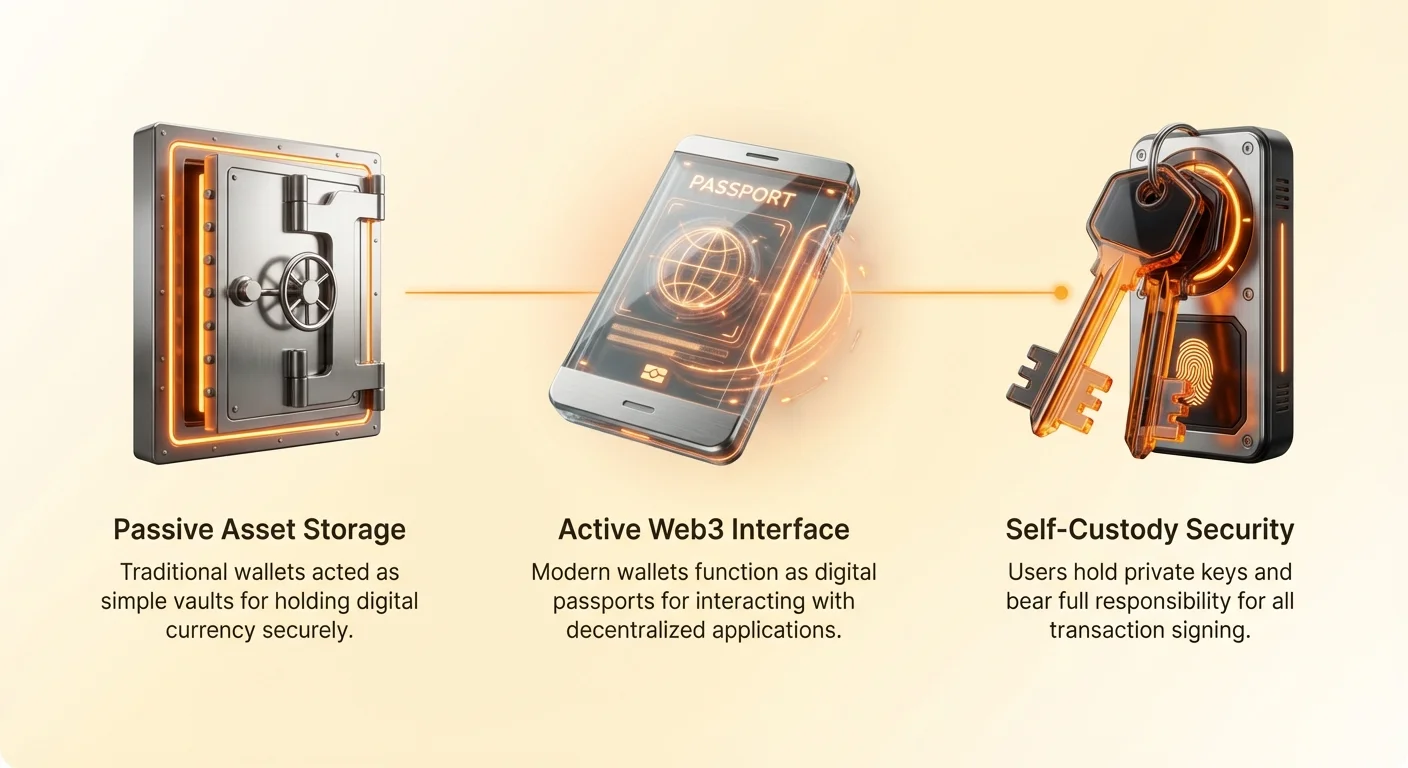
The landscape of cryptocurrency has shifted dramatically from simple asset storage to active participation in a decentralized economy. In the early days of digital assets, a wallet was simply a vault. You generated a public address, sent coins to it, and held them hoping for appreciation. Today, the role of the wallet has transformed into a digital passport. It is the primary tool for identity verification, transaction signing, and interacting with a complex web of decentralized applications (DApps) and smart contracts.
Web3 wallets are the gateway to decentralized finance (DeFi). They allow users to lend, borrow, trade, and stake assets without intermediaries like banks or centralized exchanges. Unlike traditional accounts where a third party manages access, these wallets rely on self-custody. This means the user holds the private keys and bears full responsibility for every interaction. While this autonomy offers financial freedom, it introduces significant risks.
Interacting with DApps requires a fundamental shift in how users view security. It is no longer just about keeping a password safe. It involves understanding permissions, verifying smart contract addresses, and recognizing the difference between a simple login and a transaction approval. As the ecosystem grows, understanding the mechanics of these interactions becomes the single most important skill for any crypto enthusiast.
The Evolution of Non-Custodial Interfaces
The journey toward Web3 began with the distinction between custodial and non-custodial wallets. Custodial options, often provided by centralized exchanges, manage the technical security on behalf of the user. They are convenient for trading but limit interaction with the broader blockchain ecosystem. You cannot connect a centralized exchange account directly to a decentralized exchange or a yield farming protocol. This limitation drove the adoption of non-custodial software that lives directly on user devices.
Non-custodial wallets give users full control over their private keys and seed phrases. This architecture is essential for Web3 because DApps require cryptographic signatures to function. When you use a decentralized exchange, the application does not hold your funds. Instead, it requests permission to move specific assets from your wallet, which you must authorize with a digital signature. This process is only possible because the wallet software holds the private key locally on your device, allowing for instant, trustless interactions.
Browser Extensions and Web Integration
The most common way users engage with DeFi is through browser extension wallets. These lightweight programs install directly into web browsers like Chrome, Firefox, or Brave. They function as a bridge between the standard internet (Web2) and the blockchain (Web3). When you visit a DApp enabled website, the extension "injects" code into the page, allowing the site to detect your wallet and request a connection.
This seamless integration makes browser extensions the standard for desktop DeFi users. They provide a visual interface for complex blockchain data, translating raw code into readable prompts. Users can see their token balances, transaction history, and pending requests without leaving the webpage they are interacting with. This convenience is unmatched for tasks that require frequent approvals, such as minting NFTs or managing liquidity positions across multiple protocols.
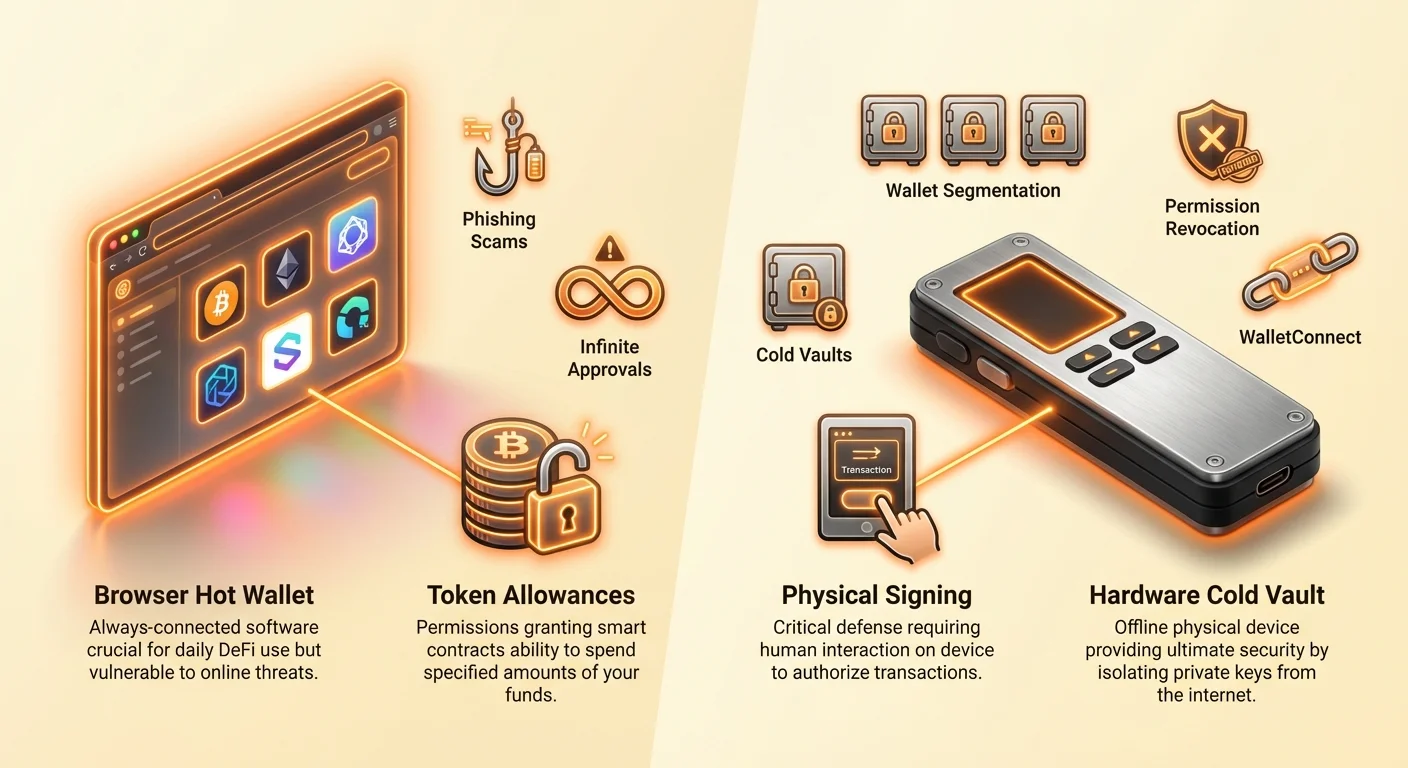
However, the "always-on" nature of browser extensions creates a specific threat vector. Because the wallet is connected to the internet and potentially interacting with multiple tabs simultaneously, it is considered a "hot wallet." If the computer is compromised by malware, or if the user inadvertently interacts with a phishing site while the wallet is unlocked, funds can be drained. Security in this context relies heavily on the user's ability to scrutinize every pop-up window and signature request.
Mobile Wallets and the DApp Browser
Mobile cryptocurrency wallets have evolved alongside desktop versions to support the on-the-go lifestyle of modern traders. Early mobile apps were restricted to sending and receiving payments. Modern iterations now include integrated DApp browsers or support protocols like WalletConnect. An integrated browser creates a sandbox environment within the wallet app itself, allowing users to navigate to DeFi platforms securely without switching applications.
WalletConnect offers an alternative approach by establishing a secure link between a mobile wallet and a desktop or separate mobile browser. When a user wants to connect to a DApp, the site displays a QR code. Scanning this code with the mobile wallet creates an encrypted tunnel. The DApp proposes transactions, and the mobile device receives a push notification to sign or reject them. This separates the browsing environment from the key storage, adding a layer of segregation that can enhance security.
Despite these features, mobile devices present unique challenges. Screen real estate is limited, which can make it difficult to read the full details of a smart contract interaction. A malicious contract might hide critical information that would be obvious on a desktop monitor. Additionally, mobile devices are frequently connected to public Wi-Fi networks, increasing the surface area for potential attacks if a VPN is not used.
Understanding Token Approvals and Allowances
One of the most critical yet misunderstood concepts in DeFi is the token approval process. Before a smart contract can interact with the tokens in your wallet, you must grant it permission. This is distinct from sending a transaction. An approval tells the blockchain that a specific contract address is allowed to spend a specific amount of your funds.
The Risks of Infinite Approvals
To streamline the user experience, many DApps request an "infinite approval" by default. This grants the smart contract permission to spend an unlimited amount of a specific token from your wallet at any time. The benefit is that you only have to pay the gas fee for approval once. You can then trade or stake that token repeatedly without signing new permission transactions.
The danger lies in the permanence of this permission. If the smart contract you approved is later exploited or contains malicious code, the attacker can drain all the tokens you approved, even if you are not currently using the DApp. The approval remains active on the blockchain until you specifically revoke it. Many users have lost substantial sums because they granted infinite approvals to a protocol that was hacked months or years later.
Managing and Revoking Permissions
Safe interaction requires diligent management of these allowances. Users should get in the habit of editing the permission amount. Instead of approving an infinite sum, you can edit the field to approve only the exact amount needed for the immediate transaction. This creates a "zero-trust" environment where a compromised contract can only access the funds you explicitly intended to use.
Regularly auditing open permissions is a mandatory hygiene practice for Web3 users. Various tools allow you to scan your wallet address and see which contracts have access to your tokens. If you see an old protocol you no longer use, or a contract that looks suspicious, you should send a revocation transaction. This transaction costs a small network fee but removes the contract's ability to spend your funds, effectively closing the door to potential exploits.
Hardware Wallets as the Ultimate Security Layer
While software wallets offer convenience, hardware wallets provide the gold standard for security in the DeFi ecosystem. These physical devices store private keys offline in a secure element chip, isolating them from internet-connected devices. When you use a hardware wallet with a DApp, the workflow changes slightly to introduce a physical verification step.
The Hybrid Workflow
Most modern hardware wallets can integrate with popular browser extensions. In this setup, the browser extension acts merely as an interface. It displays the website and initiates the transaction request, but it cannot sign the transaction because it does not have the private key. Instead, it passes the unsigned transaction data to the connected hardware device.
The user must then physically confirm the transaction on the hardware wallet's screen. This is a critical defense against malware. Even if a hacker has remote control of your computer, they cannot force a transaction because they cannot physically press the buttons on the device sitting on your desk. This "human-in-the-loop" requirement prevents automated draining attacks that target software wallets.
Blind Signing Vulnerabilities
Despite the security of hardware wallets, a risk known as "blind signing" persists. This occurs when the hardware wallet's screen cannot display the full details of a complex smart contract interaction. The device might simply show "Sign Transaction" or a hash string that is unreadable to humans. If you approve this, you are trusting that the software interface is telling the truth about what the transaction does.
To mitigate this, users should verify contract addresses against official documentation whenever possible. Many hardware wallet manufacturers are updating their firmware to decipher and display human-readable details for popular protocols. However, if a device asks you to sign a complex interaction that you cannot verify, the safest course of action is often to reject the request and investigate further.
Navigating the Sea of Web3 Scams
The irreversible nature of blockchain transactions makes DeFi users high-value targets for scammers. The technical complexity of Web3 interactions often masks simple social engineering attacks. Understanding the common methods used by attackers is the first line of defense for any wallet owner.
Phishing and Impersonation
Phishing in Web3 often involves cloning the user interface of a popular DApp. Scammers buy ads on search engines or hijack social media accounts to post links to these fake sites. The site looks identical to the real one, but when you connect your wallet, it proposes a malicious transaction. Instead of swapping tokens or staking, the transaction might transfer ownership of your assets or grant an infinite approval to the attacker's address.
Always bookmark the official URLs of the protocols you use. Never rely on search engine results or links sent in direct messages on platforms like Discord or Telegram. Verifying the URL character by character is essential, as attackers often use "homoglyph" attacks, replacing letters with similar-looking characters from different alphabets to trick the eye.
Airdrop Scams and Dusting
Another common tactic involves sending unsolicited tokens to a user's wallet. This is known as a "dusting attack" or a malicious airdrop. The user sees a new, valuable-looking token in their balance and attempts to swap it or cash it out. However, the token is often coded to fail the transaction but return an error message directing the user to a "support" website.
Connecting your wallet to this support site initiates a phishing attack. In other cases, interacting with the token contract itself might compromise the wallet if the approval mechanisms are exploited. The general rule for DeFi wallets is to ignore any token you did not purchase or specifically claim from a reputable source. Most wallet interfaces now include features to hide these spam assets from view to prevent accidental interaction.
Strategic Wallet Segmentation
To limit the impact of a potential security breach, experienced DeFi users employ a strategy called wallet segmentation. This involves using different wallets for different purposes, creating firewalls between assets. By spreading risk, you ensure that a single mistake does not result in a total loss of net worth.
The Burner Wallet
A "burner" wallet is a low-value, temporary hot wallet used for interacting with new or high-risk protocols. You transfer only the minimum amount of cryptocurrency needed for a specific activity to this wallet. If the new DApp turns out to be a scam, or if you accidentally sign a malicious permission, the loss is limited to the small amount in the burner wallet. Your main savings remain untouched in a separate address.
The Cold Storage Vault
At the other end of the spectrum is the cold storage vault, typically secured by a hardware wallet or a paper wallet setup. This address should never interact with smart contracts. It is strictly for sending and receiving basic currency transfers. Its purpose is to hold the bulk of your long-term investments.
If you wish to engage in DeFi with these funds, you first transfer a portion to a hot wallet or a designated interaction wallet. This one-way flow of funds ensures that your savings are never exposed to infinite approval risks or smart contract bugs. The cold wallet remains completely air-gapped from the experimental and risky layer of the Web3 ecosystem.
Technical Comparison of Wallet Types
For users navigating the DeFi space, understanding the trade-offs between different wallet configurations is vital. The table below outlines how different wallet types perform regarding Web3 interactions.
| Feature | Browser Extension | Mobile Wallet | Hardware Wallet |
|---|---|---|---|
| Security | Low to Medium | Medium | High |
| Convenience | High (Instant access) | High (Portable) | Low (Requires device) |
| Web3 Ready | Native integration | Via WalletConnect | Via integrations |
| Cost | Free | Free | $50 - $200+ |
| Best For | Daily DeFi & NFTs | Payments & Checks | Long-term Storage |
This comparison highlights that no single solution is perfect. Most users will find that a combination of these tools works best. A hardware wallet linked to a browser extension offers a balance of security and utility, while a mobile wallet provides necessary access when away from a desk.
Conclusion
The transition to Web3 and DeFi represents a fundamental change in financial responsibility. Wallets are no longer passive storage containers but active tools for digital signing and identity management. With this power comes the burden of vigilance. Every click, every connection, and every signature carries a potential risk that must be weighed against the reward of participation.
By understanding the mechanics of permissions, utilizing hardware security, and segmenting assets, users can navigate this frontier safely. The tools for self-custody are powerful, but they require a user who is informed, cautious, and proactive. Security in the decentralized world is not a product you buy, but a process you practice every day.
True security in DeFi comes from treating every signature as a financial transaction and never trusting a website blindly.