The foundation of maintaining stablecoin security and managing liquidity across decentralized networks lies in the robust protection of the digital wallets that hold these assets. As the cryptocurrency ecosystem expands into a multi-chain environment involving Ethereum, Solana, Binance Smart Chain (BSC), and others, the ability to securely store, transact, and manage digital assets becomes paramount. Without a secure storage solution, the risks associated with holding stablecoins and other digital tokens increase significantly.
Investors and participants in the decentralized finance (DeFi) space must understand the mechanics of wallet security to effectively manage their cross-chain liquidity. This involves selecting the right type of wallet for specific network interactions, understanding the difference between custodial and non-custodial solutions, and implementing rigorous security protocols to protect private keys. By leveraging the correct tools, users can navigate the complexities of the crypto landscape while minimizing exposure to theft, hacks, and unauthorized access.
The Role of Non-Custodial Wallets in Asset Security
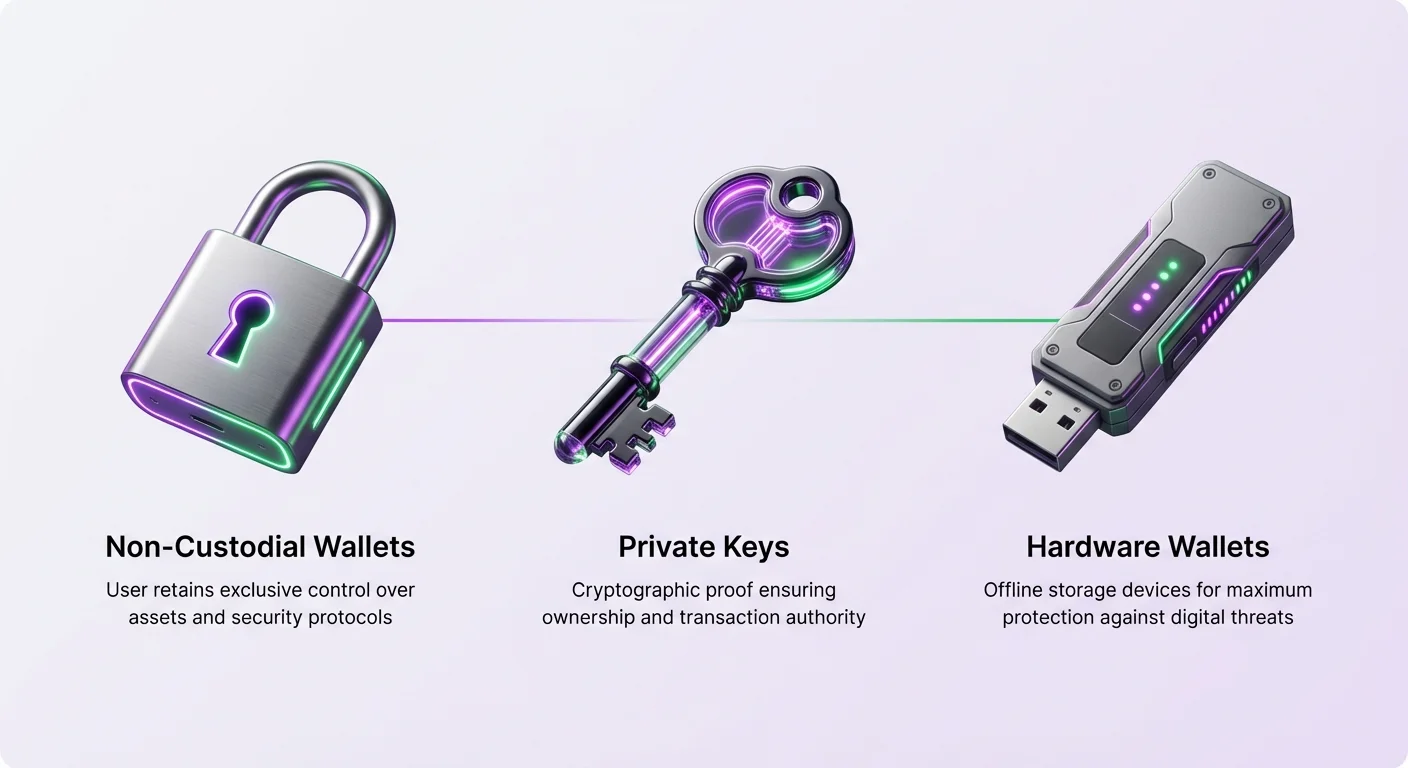
Securely managing digital assets begins with the choice of wallet architecture. Non-custodial wallets are critical for users who prioritize full ownership of their funds. Unlike custodial exchanges where a third party holds the assets, non-custodial wallets place the responsibility of security entirely on the user. This eliminates the counterparty risk associated with centralized platforms, which is a crucial aspect of mitigating long-term holding risks.
Control Over Private Keys
The defining feature of a non-custodial wallet is the user's exclusive control over private keys. These keys serve as the cryptographic proof of ownership for assets on the blockchain. When a user controls their private keys, no external entity can freeze funds or block transactions. This level of autonomy is essential for maintaining liquidity flow across different networks without reliance on intermediaries.
Wallets such as MetaMask and Phantom are prime examples of non-custodial solutions that provide this level of control. By encrypting private keys locally on the user's device, these applications ensure that sensitive data never leaves the user's possession. This architecture prevents remote attackers from accessing funds unless the specific device is compromised or the user inadvertently shares their security credentials.
Assessing Custodial Trade-Offs
While non-custodial options offer maximum control, some users may opt for custodial platforms that offer "assisted self-custody" or enhanced recovery features. Platforms like Uphold utilize a reserve model to back assets, providing real-time transparency regarding the funds they hold. This approach can offer a safety net for users who are uncomfortable managing their own private keys entirely.
However, relying on custodial solutions introduces a layer of trust. Users must evaluate the security measures of the platform, such as cold storage practices and two-factor authentication (2FA) enforcement. For large amounts of stablecoin liquidity intended for long-term storage, shifting towards self-custody remains the recommended standard for reducing systemic risk.

Securing Assets on EVM and Multi-Chain Networks
Managing liquidity often requires interacting with multiple blockchain networks. The Ethereum Virtual Machine (EVM) standard is the backbone for many stablecoins and DeFi applications. Wallets that support EVM-compatible chains are essential tools for users moving assets between Ethereum, Polygon, and Binance Smart Chain.
MetaMask and DeFi Integration
MetaMask stands out as a primary tool for interacting with the Ethereum ecosystem and other EVM-compatible networks. Available as a browser extension and mobile app, it facilitates seamless connections to decentralized applications (dApps). This connectivity is vital for users engaging in token swaps, staking, or liquidity provision.
The security features within MetaMask include phishing protection and the ability to integrate with hardware wallets. This allows users to keep their keys offline while still interacting with online dApps. By supporting multiple networks like BSC and Polygon in a single interface, users can manage cross-chain assets without needing separate wallets for every network, streamlining the liquidity management process.
Binance Smart Chain (BSC) Considerations
For users operating within the Binance ecosystem, dedicated wallets like Trust Wallet and the Binance Wallet offer specialized support for BEP-20 tokens. These wallets are designed to handle the specific staking and transaction mechanics of the Binance Smart Chain. Securing BNB and connected stablecoins in these wallets ensures fast transaction capabilities, which is often necessary for rebalancing portfolios or moving liquidity quickly.
Trust Wallet, in particular, offers a mobile-first approach to multi-chain support. It allows users to store and stake assets across a wide variety of blockchains, not just BSC. This versatility makes it a strong candidate for users who hold a diverse portfolio of stablecoins and volatile assets across different standards.
High-Speed Network Security: Solana and Ripple
As transaction speeds increase and costs decrease on alternative Layer 1 blockchains, managing assets on networks like Solana and the XRP Ledger requires specialized tools. These networks use different cryptographic standards than Ethereum, necessitating dedicated wallet solutions to ensure compatibility and security.
Managing Solana Ecosystem Assets
The Solana network is known for high throughput and low fees, making it a popular venue for stablecoin transactions and DeFi activities. Wallets like Phantom and Solflare are engineered specifically for this ecosystem. They support SOL and SPL tokens, which are the native asset standards for Solana.
Phantom provides a user-friendly interface that includes built-in features for swapping tokens and staking SOL directly within the wallet. From a security perspective, it employs non-custodial encryption, ensuring that the private keys remain on the user's device. Solflare offers similar benefits but is often favored by advanced users for its robust desktop integration and focus on security for frequent traders.
XRP Ledger and Reserve Requirements
Managing liquidity on the XRP Ledger involves unique mechanics, such as the reserve requirement. Unlike some chains where wallets can be empty, an XRP wallet requires a minimum balance, typically 10 XRP, to activate the address. This feature is a spam prevention mechanism inherent to the Ripple network.
Wallets like Xumm and Exodus provide secure interfaces for holding XRP. They handle the nuances of the ledger, such as "Destination Tags" which are often required when sending funds to centralized exchanges. Understanding these network-specific requirements is critical for preventing loss of funds during cross-chain transfers or liquidity movements.
Privacy and Anonymity in Asset Management
For some users, security is synonymous with privacy. Managing cross-chain liquidity can sometimes expose a user's entire transaction history if not managed carefully. Certain wallets prioritize anonymity, offering features that obfuscate transaction data or integrate with privacy networks.
Privacy-Centric Wallet Design
Cake Wallet serves as an example of a privacy-focused tool. Originally built for Monero (XMR), it has expanded to support Bitcoin, Litecoin, and Ethereum. Its open-source nature allows for community auditing, which is a gold standard for security software.
Key privacy features include built-in Tor and VPN support, which help mask the user's IP address during transactions. Additionally, the wallet enables the creation of subaddresses and view-only wallets, providing granular control over how transaction data is viewed by the public. For users moving stablecoins or other assets, these features help maintain financial privacy in an otherwise transparent ledger environment.
No-KYC Exchange Integration
A critical component of managing cross-chain liquidity is the ability to swap assets. Many wallets now integrate built-in exchange features that do not require Know Your Customer (KYC) verification. This allows users to swap between cryptocurrencies like BTC, LTC, and ETH directly within the app. While convenient, users must remain vigilant about the exchange rates and security of the underlying swap providers used by these wallet integrations.
The Role of Hardware Wallets in Risk Mitigation
While software wallets offer convenience for active trading and dApp interaction, hardware wallets provide the highest tier of security for storing significant amounts of stablecoins and other digital assets. These devices keep private keys completely offline, isolating them from internet-connected threats such as malware and phishing attacks.
Cold Storage Solutions
Devices like the Ledger Nano X and Trezor Model T act as "cold storage" for digital assets. When a user wants to authorize a transaction, the signing process happens inside the device. The private key never leaves the hardware, meaning that even if the computer connected to the internet is compromised, the attacker cannot extract the keys needed to steal funds.
This method is essential for mitigating the risk of de-pegging or market volatility by ensuring that the "core" holdings are immune to digital theft. If a stablecoin peg becomes volatile and a user needs to exit a position, having secure access via a hardware wallet ensures that they are the only ones who can authorize the movement of those funds.
Advanced Security Features
Modern hardware wallets like the Trezor Safe 5 offer advanced protections such as EAL 6+ Secure Elements and Shamir’s Secret Sharing. Shamir’s Secret Sharing allows users to split their recovery seed into multiple unique shares. To recover the wallet, a specific number of these shares must be combined. This eliminates the "single point of failure" risk associated with a standard seed phrase, providing a robust safeguard for institutional-grade or high-net-worth liquidity management.
Best Practices for Securing Digital Assets
Regardless of the wallet chosen, the security of stablecoins and cross-chain assets ultimately depends on the user's adherence to security protocols. The technological protections of a wallet are rendered useless if the human element fails.
| Security Measure | Purpose | Recommendation |
|---|---|---|
| Seed Phrase Backup | Wallet Recovery | Write down offline; never store digitally. |
| Two-Factor Auth (2FA) | Access Control | Enable on all accounts; use authenticator apps. |
| Phishing Awareness | Fraud Prevention | Verify URLs; download only from official sources. |
Seed Phrase Management
The recovery phrase, often 12 or 24 words, is the master key to a user's funds. If a wallet device is lost or damaged, this phrase is the only way to restore access. Users must write this phrase down on paper or durable metal and store it in a secure, physical location. Storing it in a cloud document, screenshot, or email exposes it to potential hackers. If an attacker gains access to the seed phrase, they can drain all associated liquidity across every chain the wallet interacts with.
Phishing and Scam Prevention
Phishing remains one of the most common vectors for asset theft. Scammers often create fake versions of popular wallets or websites that look identical to the originals. Users must always verify they are downloading wallet software from the official domain. Additionally, users should never share their private keys or seed phrases with "support agents" or websites claiming to offer airdrops or technical assistance. Legitimate wallet providers will never ask for this information.
Conclusion
Managing security for stablecoins and cross-chain liquidity requires a comprehensive approach to wallet management. By utilizing non-custodial wallets like MetaMask, Phantom, and Trust Wallet, users gain the necessary control to interact with DeFi protocols across Ethereum, Solana, and Binance Smart Chain. However, this control comes with the responsibility of securing private keys and remaining vigilant against threats.
Integrating hardware wallets such as Ledger or Trezor into a liquidity management strategy provides the necessary cold storage layer to protect substantial holdings from online attacks. Combining these tools with strict adherence to seed phrase privacy and phishing awareness creates a defense-in-depth strategy. As the crypto landscape evolves, these fundamental security practices remain the primary defense against the risks of asset loss in a decentralized economy.
True security in the crypto space is not defined by the stability of the asset, but by the secrecy and protection of the private keys that control it.