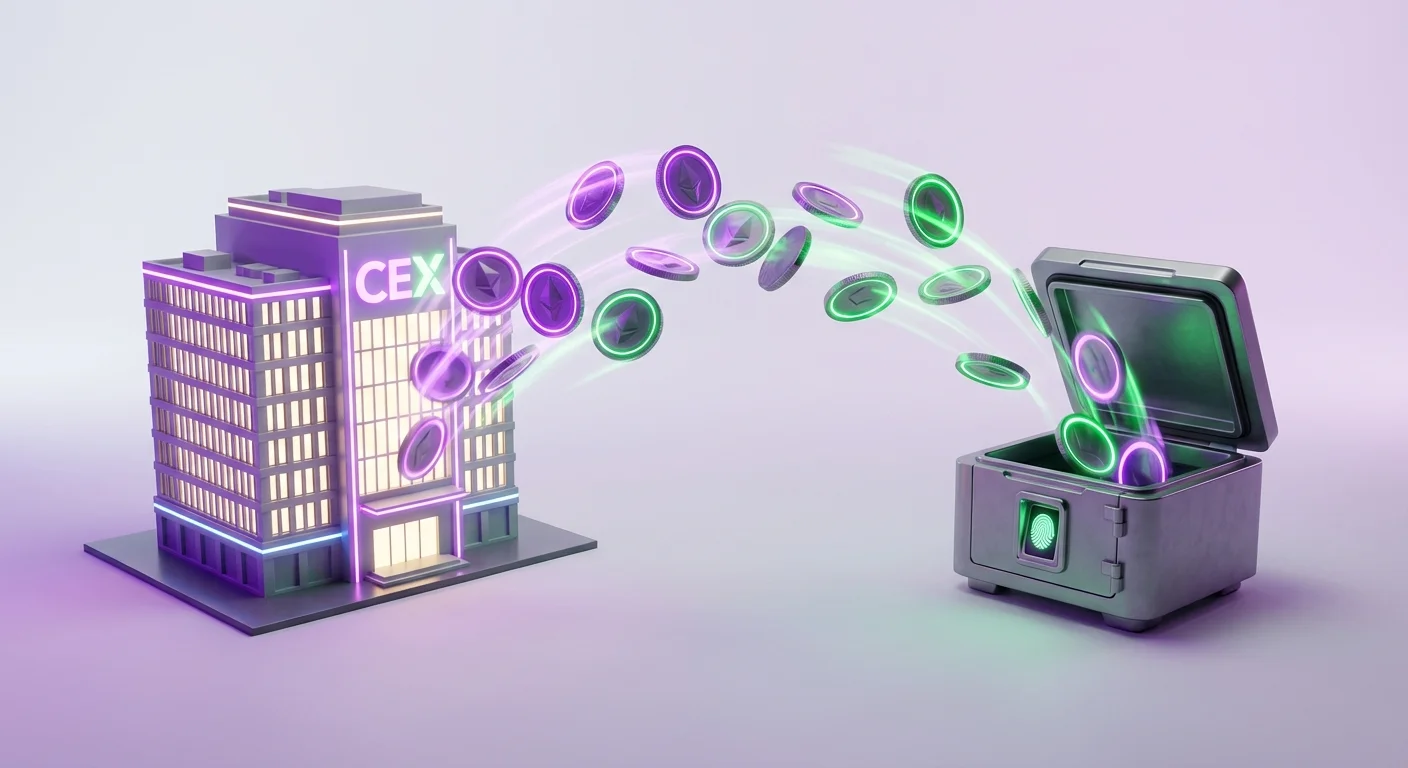
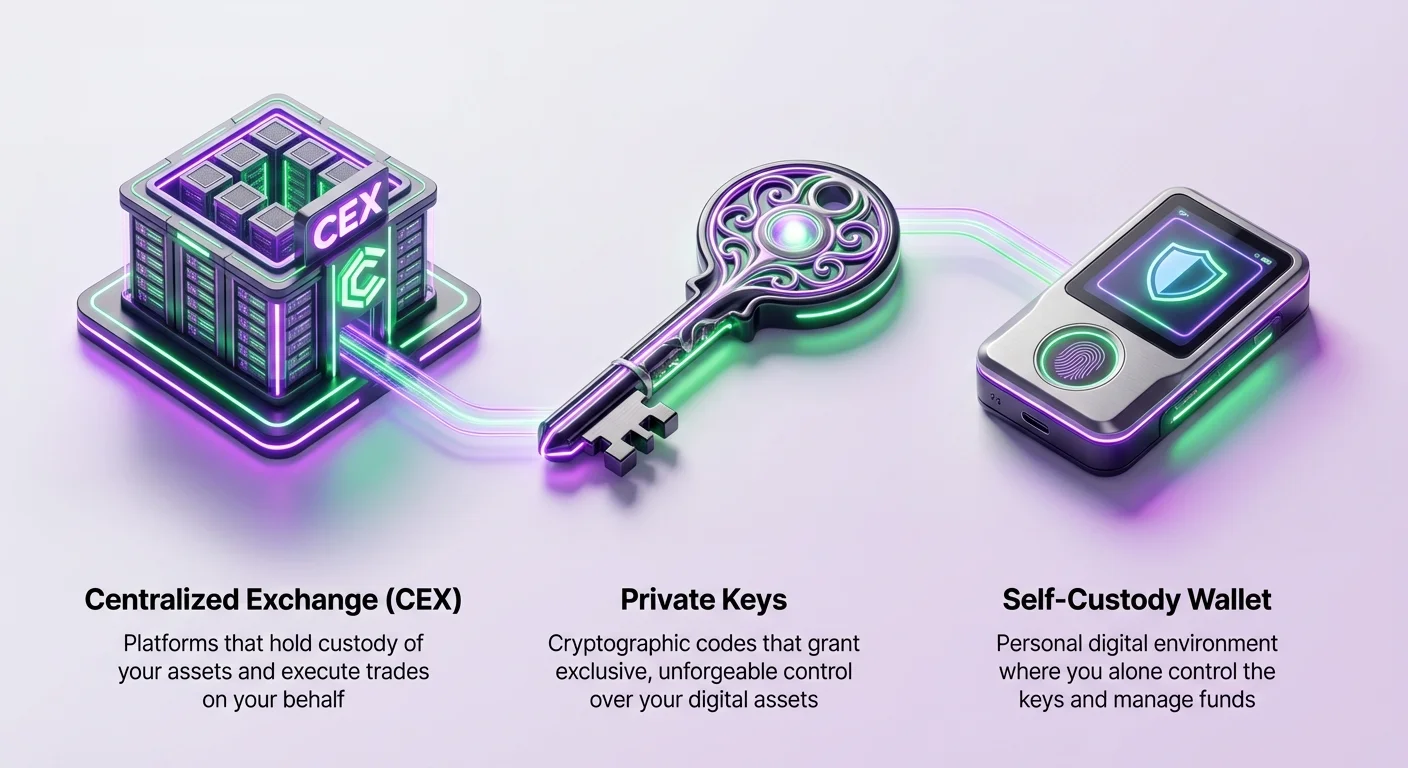
Moving digital assets from a centralized exchange to a personal wallet is a fundamental step for any cryptocurrency investor. While exchanges offer convenience for buying and selling, they retain control over the private keys that prove ownership of the funds. This model creates a vulnerability where users must trust a third party to secure their assets.
Transitioning to self-custody shifts this responsibility back to the owner. It ensures that the assets remain accessible regardless of an exchange's operational status or solvency. This process involves creating a digital environment where only you hold the keys to your financial data.
Taking direct control of altcoins requires understanding the specific technical standards of different blockchain networks. Unlike holding a simple balance on a trading screen, self-custody involves interacting directly with protocols like Solana, Ethereum, or the XRP Ledger.
Each network dictates how addresses are formatted, how fees are paid, and how tokens are managed. A successful migration strategy accounts for these differences to prevent loss of funds during transfer. It also requires selecting the right interface to manage these assets securely.
The primary motivation for this shift is security and autonomy. When funds sit on an exchange, they are pooled in hot wallets that can be targets for large-scale cyber attacks. Personal wallets allow for cold storage options that keep sensitive data completely offline.
By moving assets off-platform, investors also unlock functionality that exchanges often restrict. This includes direct interaction with decentralized applications, earning yield through on-chain staking, and participating in governance votes. Self-custody is not just about safety. It is about utilizing the full utility of the blockchain technology.
Evaluating Wallet Categories
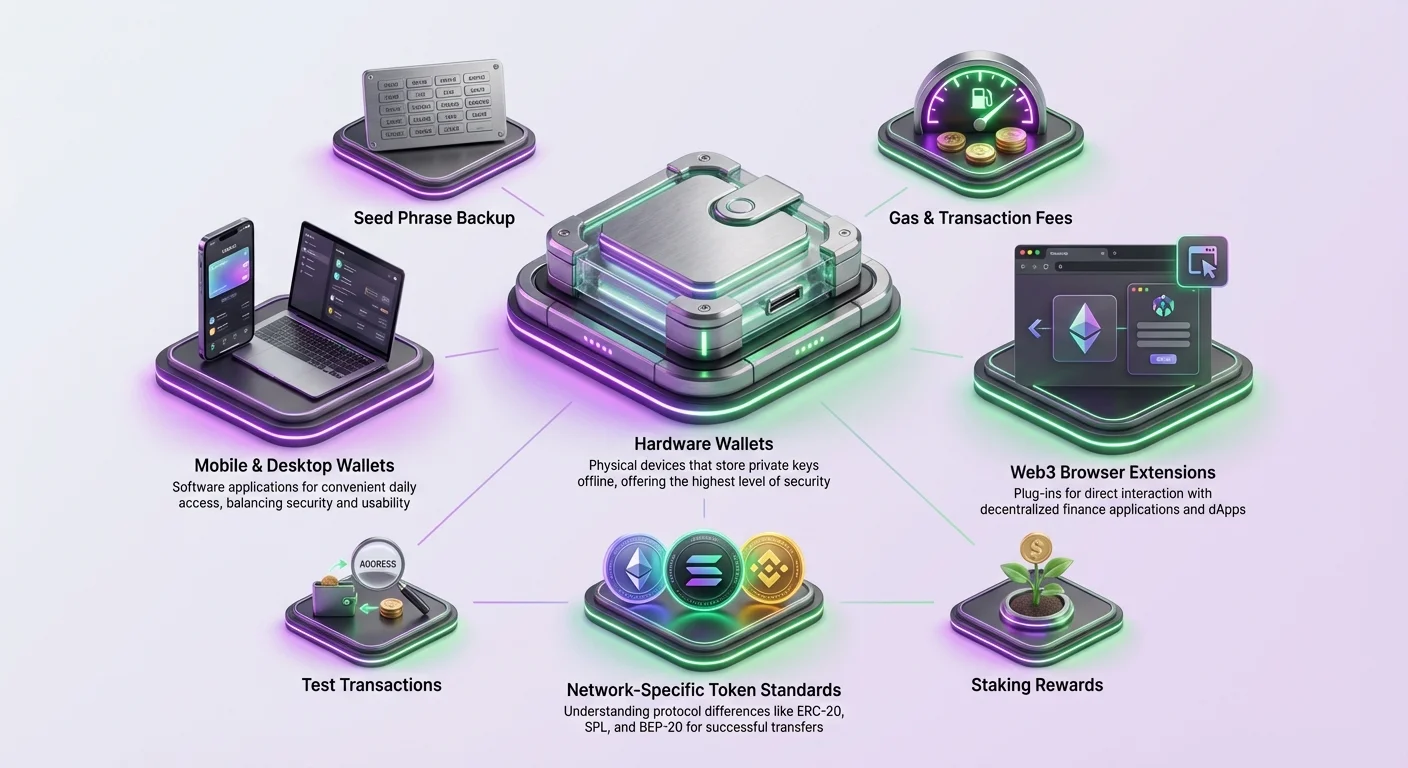
Selecting the appropriate storage solution depends on how frequently the assets need to be accessed. Wallets fall into distinct categories based on their connectivity and platform. Understanding the trade-offs between accessibility and security is vital before initiating any transfer.
Mobile wallets are applications designed for smartphones. They offer a balance of security and convenience, making them suitable for daily transactions and payments. These apps often use biometric data like face ID or fingerprints to add a layer of protection. They are ideal for users who need to manage their portfolio on the go.
Desktop wallets are software programs installed directly on a computer. They typically offer more robust features for portfolio management and trading than mobile versions. These wallets are well-suited for users who engage in frequent activity but prefer the security of a non-web-based interface. They often include built-in charting tools or exchange integrations.
Hardware wallets represent the gold standard for long-term storage. These are physical devices that store private keys offline, isolating them from internet-connected environments. Transactions must be physically confirmed on the device, making remote theft nearly impossible. This method is recommended for significant holdings where security is the absolute priority.
| Wallet Type | Best Use Case | Security Level |
|---|---|---|
| Mobile App | Daily spending & quick access | Moderate |
| Desktop | Portfolio management & analysis | Moderate to High |
| Hardware | Long-term cold storage | Very High |
Browser extensions, often called Web3 wallets, are another common category. These plug directly into web browsers to facilitate interaction with decentralized finance applications. While highly functional for active users in ecosystems like Ethereum or Solana, they carry higher risks due to their constant internet exposure.
Managing Solana and SPL Tokens
The Solana network operates differently from Ethereum-based chains, requiring wallets specifically engineered for its architecture. A dedicated Solana wallet manages SOL, the native currency, as well as SPL tokens, which are assets built on top of the Solana blockchain.
Speed and low transaction costs are the hallmarks of this network. Wallets designed for Solana, such as Phantom or Solflare, prioritize these features. They allow for near-instant settlement of transfers. When migrating from an exchange, it is crucial to ensure the receiving address is a native Solana address.
Staking is a core feature of the Solana ecosystem. Self-custody wallets often integrate staking directly into the interface. This allows users to delegate their SOL to validators and earn rewards without releasing control of their funds. Exchanges often take a cut of these rewards, but self-custody permits direct participation.
Users must be aware that SPL tokens require a small amount of SOL to be held in the wallet to pay for rent and transaction fees. Attempting to move tokens to an empty wallet without any SOL for gas fees can result in stuck transactions. Always transfer a small amount of SOL first before moving other SPL assets.
Security on Solana also involves understanding token approvals. When interacting with decentralized applications, wallets will ask for permission to spend funds. Users should be cautious and only grant approvals to trusted platforms. Revoking these permissions regularly is a good hygiene practice for maintaining wallet security.
Navigating the Ethereum Ecosystem
Ethereum wallets are the gateway to a vast network of ERC-20 tokens, non-fungible tokens, and decentralized finance platforms. The most widely used interface for this ecosystem is MetaMask. It functions as a bridge between a user's browser and the Ethereum blockchain.
Migrating Ethereum-based assets requires careful attention to gas fees. Unlike networks with negligible costs, Ethereum transaction fees can fluctuate significantly based on network demand. Users should monitor gas prices before initiating transfers from an exchange to avoid overpaying.
Compatibility is a major advantage of Ethereum wallets. Many support Ethereum Virtual Machine (EVM) compatible networks like Binance Smart Chain, Polygon, and Avalanche. This allows a single wallet interface to manage assets across multiple blockchains. However, users must manually add these networks to their wallet settings to view the balances.
The distinction between Layer 1 and Layer 2 networks is important here. If withdrawing a token like USDT, exchanges often offer multiple network options. Sending tokens via the wrong network to an address that does not support it can lead to permanent loss. Always verify that the withdrawal network on the exchange matches the network selected in the receiving wallet.
For those holding significant value in ERC-20 tokens, hardware wallet integration is recommended. Most software wallets, including MetaMask, allow users to connect a hardware device. This setup allows the software to act as the interface while the private keys remain secure on the physical device.
XRP and the Ledger Mechanics
Ripple (XRP) utilizes a unique ledger system that differs significantly from blockchain architectures like Bitcoin or Ethereum. An XRP wallet is essential for interacting with the XRP Ledger and payment networks. The most distinct feature of this system is the reserve requirement.
To activate a new XRP wallet address, the network requires a minimum deposit. This is currently set at 10 XRP. This reserve is locked in the protocol to prevent ledger spam and cannot be spent. When migrating from an exchange, the first transfer must be at least this amount to initialize the account.
Another critical component of XRP transactions is the "Destination Tag" or "Memo." While this is primarily used when depositing funds to a centralized exchange to identify the user, it is generally not required when withdrawing to a self-custody wallet.
However, users should always double-check if their specific wallet requires a tag. Sending funds without a required tag to an exchange results in loss, but sending to a personal wallet usually only requires the public address.
XRP transactions are known for their speed and low cost. This makes the asset popular for cross-border payments. Self-custody wallets for XRP, such as Xumm or Trust Wallet, are optimized to handle these rapid settlements. They often provide direct access to the decentralized exchange built into the XRP Ledger itself.
Binance Chain and BEP-20 Standards
The Binance ecosystem offers a dual-chain architecture, but most activity occurs on the Binance Smart Chain (BSC). Wallets for this network manage BNB and BEP-20 tokens. These tokens are functionally similar to Ethereum's ERC-20 standard but operate with significantly lower fees.
Trust Wallet is a leading option for this ecosystem, offering deep integration with Binance Coin features. Users moving funds from an exchange must select the correct network (BEP-20) during withdrawal. Confusing the older BEP-2 standard with BEP-20 is a common error that can complicate transfers.
Staking BNB is a popular way to generate passive income. Dedicated BNB wallets allow users to delegate their coins to validators directly. This supports network security and provides rewards in return. Unlike exchange-based staking, on-chain staking usually has a lock-up period that users must account for.
The Binance ecosystem is heavily utilized for decentralized finance. Web3 wallets allow users to connect to decentralized exchanges to swap tokens without an intermediary. This capability is a primary driver for migration, as it opens access to tokens that may not be listed on major centralized platforms.
Security Protocols for Self-Custody
The transition to self-custody is only as effective as the security measures employed. The foundation of wallet security is the seed phrase. This is a sequence of 12 to 24 random words generated when a wallet is first created. It functions as the master key to the funds.
This recovery phrase must be stored offline. Writing it on a piece of paper or engraving it into a metal plate protects it from digital threats. Storing it in a cloud service, a text file, or a screenshot on a phone exposes it to hackers. If the device is lost or damaged, the seed phrase is the only way to restore access.
Two-factor authentication (2FA) adds an essential layer of defense for software wallets. While hardware wallets rely on physical possession, mobile and desktop apps should be secured with strong passwords and biometric locks. This prevents unauthorized access if the physical device falls into the wrong hands.
Phishing is the most common threat to self-custody users. Scammers create fake websites or support channels that mimic legitimate wallet providers. They trick users into entering their seed phrases. Legitimate wallet software will never ask for a seed phrase outside of the initial restoration process.
Best Practices for Migration
Migrating assets should be a deliberate and slow process. Speed is the enemy of security during transfers. A standard practice is to perform a test transaction with a minimal amount of value. Once the test amount arrives safely in the self-custody wallet, the remaining balance can be transferred.
Address verification is critical. Malware exists that can swap clipboard data, replacing the intended recipient address with a hacker's address. Users should always visually confirm the first four and last four characters of the destination address before confirming a transaction.
Keeping software up to date is another vital habit. Wallet developers release updates to patch security vulnerabilities and improve functionality. Running outdated software can expose users to known exploits. However, updates should only be downloaded from official sources to avoid tampered versions.
Diversification of storage can also mitigate risk. Rather than keeping all assets in a single wallet, distributing funds across multiple addresses or devices prevents a total loss in the event of a compromise. This strategy is particularly useful for investors with substantial portfolios.
Recovery and Restoration
Understanding how to recover a wallet is as important as setting it up. The recovery process relies entirely on the seed phrase backup. If a phone is lost or a computer crashes, the user simply downloads the wallet software on a new device and selects the "Import" or "Restore" option.
During restoration, the words must be entered in the exact order they were generated. Any deviation in spelling or sequence will result in a different wallet address being generated. This highlights the importance of clear, legible handwriting when creating the backup.
Passphrases offer an advanced layer of recovery security. Some wallets allow users to add a custom word to the seed phrase. This creates a completely hidden wallet. Even if the main seed phrase is compromised, the attacker cannot access the funds without the specific passphrase.
Regularly checking backups is a good practice. Users should verify they still have access to their physical recovery sheet and that it remains readable. Fire or water damage to a paper backup is a real physical risk that should be mitigated with proper storage containers.
Conclusion
Migrating from a centralized exchange to self-custody is a decisive move toward financial independence. It reclaims the fundamental promise of cryptocurrency: the ability to own value without an intermediary. While the process introduces new responsibilities regarding security and management, the benefits of control and access to the broader blockchain ecosystem are substantial.
Successfully managing your own keys requires vigilance and a willingness to learn the technical nuances of different networks. By selecting the right tools, securing recovery phrases, and understanding network mechanics, investors can safeguard their wealth effectively. The shift from trusting a corporation to trusting cryptographic proof is the defining characteristic of a mature crypto participant.
True ownership begins the moment you, and only you, control the private keys.