
The landscape of digital asset investment has expanded significantly beyond the early days of simple Bitcoin transactions. As the cryptocurrency market matures, the infrastructure supporting the acquisition and management of altcoins has become increasingly sophisticated. Investors now face a diverse array of platforms designed to facilitate not only the purchase of tokens but also deep engagement with blockchain ecosystems.
Understanding the nuances of these platforms is essential for any participant looking to build a diversified portfolio. The market is no longer limited to a single type of exchange. It now encompasses a spectrum of services ranging from centralized powerhouses to decentralized protocols and user-friendly brokerage services.
This evolution provides traders with unprecedented choice regarding security models, fee structures, and access to emerging technologies. Selecting the right entry point requires a comprehensive understanding of how these platforms operate and the specific features they offer.
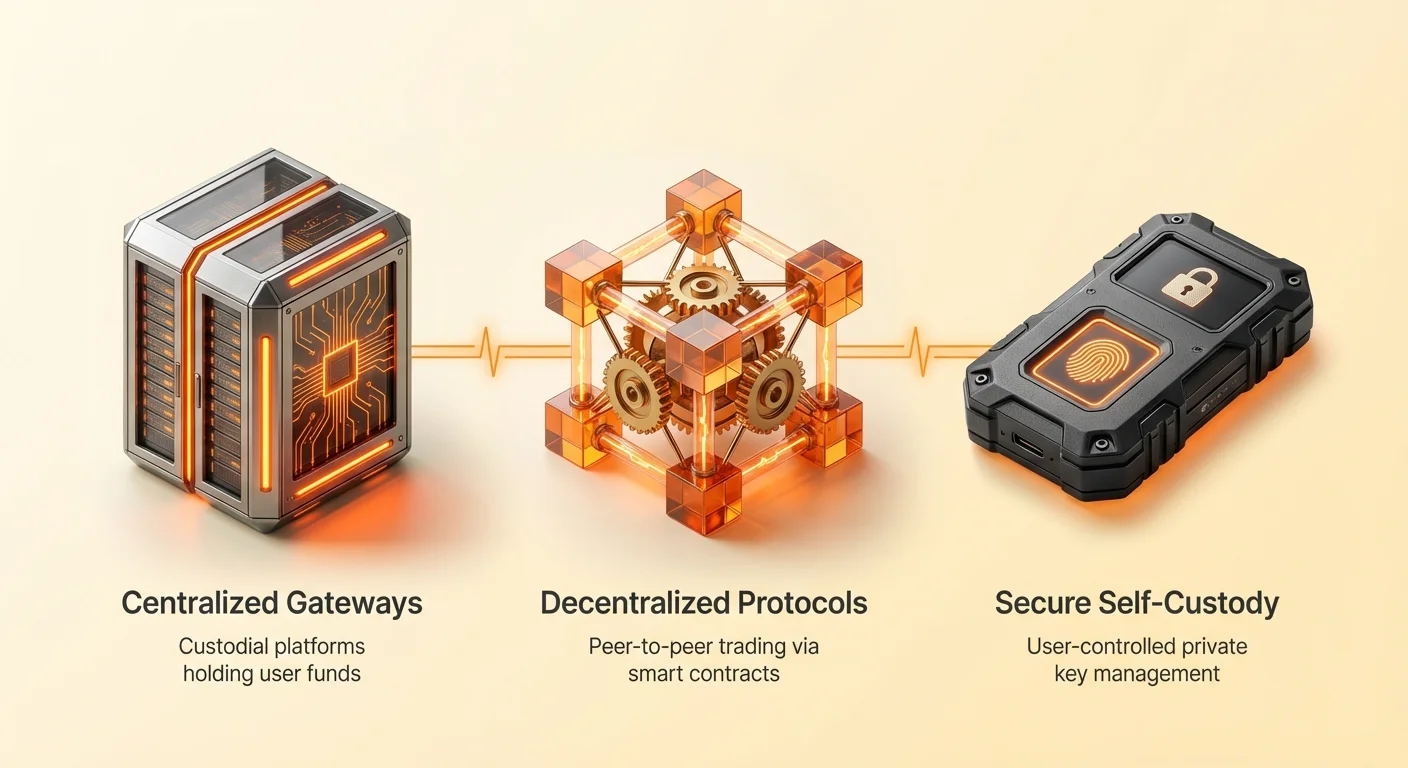
Centralized Exchanges as Primary Gateways
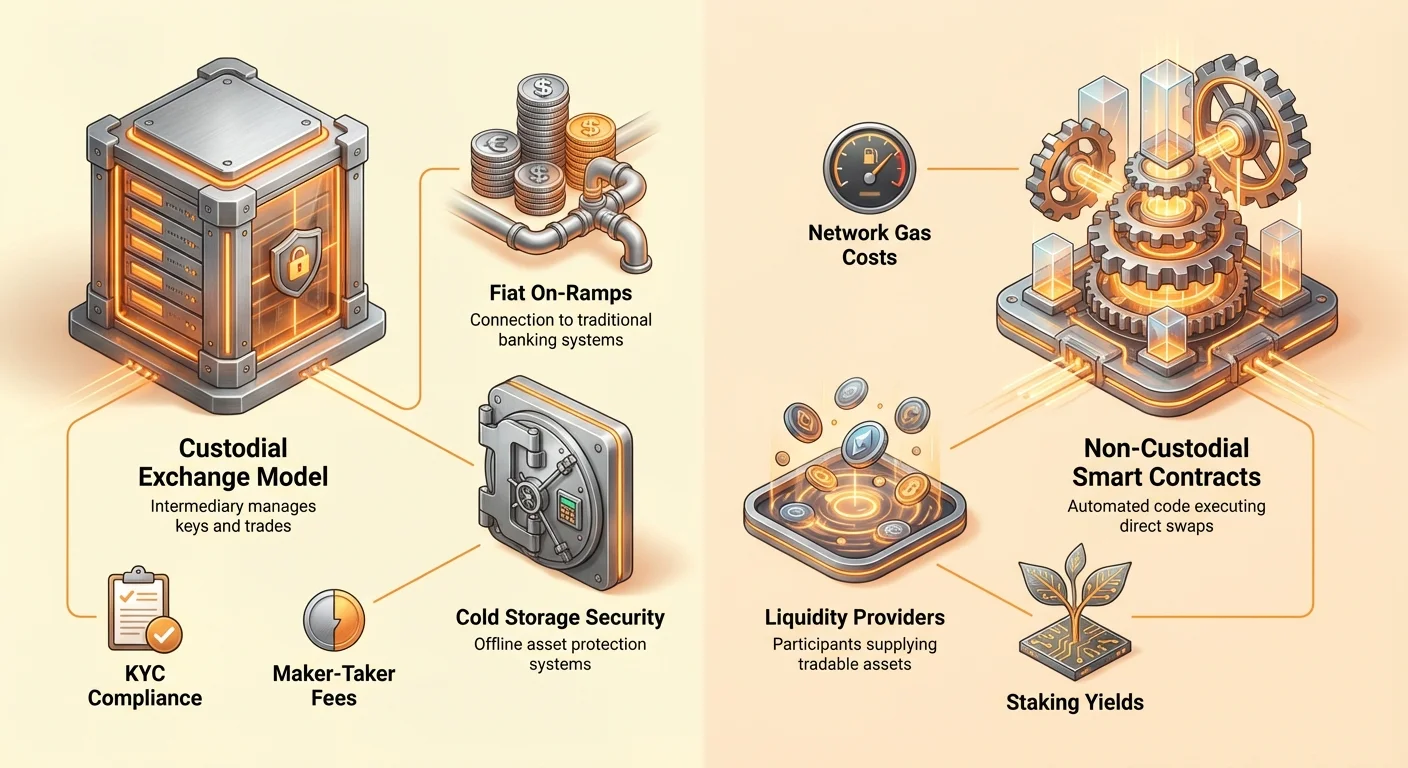
Centralized exchanges (CEXs) act as the primary onboarding point for the majority of cryptocurrency users. These platforms function similarly to traditional stock exchanges, acting as intermediaries between buyers and sellers. A central authority manages the order book, matches trades, and holds custody of user funds. This custodial nature is a defining characteristic, offering both convenience and specific custody risks.
The primary advantage of a centralized model is liquidity. Because these platforms aggregate millions of users, they typically offer deep order books. This ensures that trades can be executed quickly and at prices close to the market rate. For altcoin traders, liquidity is vital. Low liquidity can lead to slippage, where the final execution price differs significantly from the expected price.
Centralized platforms also provide a streamlined user experience. They usually offer integrated fiat on-ramps, allowing users to deposit government-issued currency via bank transfers or credit cards. Once funded, users can navigate through intuitive interfaces to swap fiat for a wide variety of digital assets. This accessibility makes CEXs the standard starting point for newcomers.
The Brokerage Model vs. Trading Platforms
While often grouped with exchanges, cryptocurrency brokers operate on a different model. An exchange matches a buyer with a seller. A broker, however, acts as a counterparty to the user. When you buy from a broker, you are buying directly from the platform's inventory or through their network of liquidity providers.
Brokers prioritize simplicity and speed over advanced trading utility. Their interfaces are often stripped of complex charts and depth maps, focusing instead on a simple "buy" or "sell" button. This removes the intimidation factor for investors who are not professional traders. The trade-off is often in the fee structure.
Brokers typically charge a "spread" rather than a transparent transaction fee. The spread is the difference between the buying price and the selling price quoted by the platform. This fee is built into the price of the asset itself, representing hidden costs of trading. For casual investors, this convenience fee is often acceptable. However, for high-volume traders, the costs associated with spreads can exceed the commissions charged by standard exchanges.
Decentralized Protocols and Direct Access
Decentralized exchanges (DEXs) represent a fundamental shift in how altcoins are acquired. Unlike their centralized counterparts, DEXs operate without a central authority. They utilize smart contracts on a blockchain to facilitate trading directly between users. This model is non-custodial, meaning the platform never holds user funds.
Trading on a DEX requires a personal cryptocurrency wallet. Users connect their wallet to the platform, approve a smart contract interaction, and swap tokens directly from their own custody. This eliminates the risk of an exchange collapse or hack resulting in the loss of user funds, provided the smart contracts themselves are secure.
DEXs are often the first venue where new altcoins are listed. Centralized exchanges have rigorous vetting processes and listing fees, which can delay the arrival of new tokens. Decentralized protocols allow for permissionless listing, giving traders access to early-stage projects. However, this freedom comes with increased responsibility, as there is no central entity to vet projects for legitimacy.
| Feature | Centralized Exchange (CEX) | Decentralized Exchange (DEX) |
|---|---|---|
| Custody | Platform holds funds | User holds funds |
| Liquidity | Provider-managed | User/Pool-managed |
| Listing Speed | Slower (Vetted) | Instant (Permissionless) |
Hybrid and P2P Alternatives
The market also includes hybrid exchanges and Peer-to-Peer (P2P) platforms. Hybrid exchanges attempt to merge the liquidity of CEXs with the security of DEXs. They might manage the order book off-chain for speed while settling trades on-chain for security. This sector is still evolving but aims to solve the latency issues often found in fully decentralized models.
P2P platforms facilitate direct trades between individuals but often provide an escrow service to ensure safety. Users can post advertisements to buy or sell crypto at specific rates and utilizing specific payment methods. This is particularly popular in regions with limited banking access or strict capital controls.
P2P trading allows for a wider variety of payment methods, including local bank transfers, cash deposits, and digital wallets that might not be supported by major exchanges. The trade-off is speed; trades are not instant and require manual confirmation from both parties.
Understanding Fee Structures
Fees are a critical component of platform selection and can significantly impact long-term profitability. Every platform must generate revenue, but the methods vary. The most common structure on exchanges is the maker-taker model.
Market "makers" are users who place limit orders that sit on the order book, adding liquidity to the market. Market "takers" are users who place market orders that are filled immediately, removing liquidity. Exchanges often charge lower fees to makers to incentivize liquidity provision strategies. Some platforms even offer rebates to high-volume makers.
In addition to trading fees, users must navigate deposit and withdrawal fees. While cryptocurrency deposits are often free, withdrawing assets to a private wallet usually incurs a fee. This fee covers the network gas costs and often includes a surcharge for the exchange. Fiat deposits and withdrawals via bank wire or credit card also carry their own processing fees, which can vary widely depending on the payment processor.
Ecosystem Access and Staking
Modern acquisition platforms offer more than just trading; they provide access to the broader blockchain economy. Staking has become a cornerstone feature for many investors. In Proof-of-Stake (PoS) networks, validators lock up capital to secure the network and validate transactions. In return, they receive block rewards.
Exchanges have integrated staking directly into their user interfaces. This allows users to earn a yield on their assets without needing to manage the technical complexities of running a validator node or delegating on-chain. The exchange handles the technical process and distributes rewards to users, typically taking a small percentage as a service fee.
Beyond protocol staking, platforms offer various "earn" products. These may involve lending assets to margin traders or providing liquidity to DeFi protocols connected to the exchange. While these options offer passive income, they carry different risk profiles compared to native staking. It is crucial to distinguish between yield generated from network consensus (staking) and yield generated from lending markets.
Security Protocols and Account Safety
Security is the paramount concern when selecting a platform. The history of the industry includes numerous instances of exchange hacks and insolvencies. As a result, top-tier platforms have implemented rigorous security standards.
Cold storage is the industry standard for asset protection. This involves keeping the vast majority of user funds in offline wallets that are not connected to the internet. Only a small percentage of funds are kept in "hot wallets" to facilitate immediate withdrawals and trading liquidity. This limits the potential loss in the event of a system breach.
For user accounts, Two-Factor Authentication (2FA) is a non-negotiable feature. The most secure platforms support hardware security keys and app-based authenticators, moving away from less secure SMS-based verification. Additionally, features like address whitelisting allow users to restrict withdrawals only to pre-approved external addresses, adding a layer of protection against unauthorized transfers.
Regulatory Compliance and Verification
The regulatory environment for cryptocurrency is tightening globally. This has led to the widespread implementation of Know Your Customer (KYC) and Anti-Money Laundering (AML) procedures. Most reputable centralized platforms now require identity verification before users can deposit fiat currency or withdraw significant amounts of crypto.
This verification process typically involves submitting a government-issued ID, a selfie, and proof of address. While this reduces anonymity, it provides a layer of legal recourse and security. Regulated entities are often required to maintain specific capital reserves and undergo audits, providing users with assurance regarding the platform's solvency.
Conversely, some platforms continue to operate with optional or tiered KYC. These "anonymous" or "no-ID" exchanges prioritize privacy. They often limit fiat on-ramps and restrict withdrawal limits for unverified accounts. While they appeal to privacy-focused traders, they operate in a gray area and may face sudden regulatory crackdowns or service interruptions.
Fiat On-Ramps and Payment Methods
The ease of converting local currency into digital assets is a major differentiator among platforms. Major exchanges have established banking relationships that allow for seamless bank transfers (ACH, SEPA, SWIFT). These methods are generally the most cost-effective way to move large sums of money, though they can take several days to settle.
For speed, many platforms support credit and debit card purchases. This allows for instant acquisition of altcoins, but it comes at a premium. Card processing fees can range significantly, often comprising a percentage of the transaction plus a fixed fee.
Digital payment processors like PayPal have also entered the space. Some exchanges allow direct deposits via digital wallets, offering a balance of speed and convenience. However, integration varies; some platforms only allow withdrawals to these services, while others support full two-way functionality.
Advanced Trading Tools and Interfaces
As traders gain experience, their demand for sophisticated tools increases. Basic "swap" interfaces are insufficient for technical analysis or complex order execution. Professional-grade platforms provide detailed charting software with indicators, overlays, and drawing tools.
Order types are a key differentiator. Beyond market and limit orders, advanced platforms offer stop-loss, take-profit, and trailing stop orders. These automated instructions help traders manage risk by exiting positions automatically if prices move against them.
Some platforms also offer API access, allowing users to connect external trading bots or portfolio management software. This connectivity is essential for algorithmic traders who rely on automated strategies. Copy trading is another emerging feature, where users can automatically replicate the trades of successful investors on the platform.
Evaluating Liquidity Depth
Liquidity depth refers to the market's ability to absorb large orders without significantly impacting the price. A platform with a "thin" order book will see high volatility when a large trade occurs. For altcoins, which generally have lower market caps than Bitcoin, liquidity is a primary concern.
Top-tier exchanges attract market makers who ensure there are always buy and sell orders available at various price points. This stability attracts more traders, creating a virtuous cycle of liquidity. When evaluating a platform, traders should look at the 24-hour trading volume for the specific pairs they intend to trade.
It is also important to check the "spread" on specific pairs. A wide gap between the highest bid and lowest ask indicates low liquidity. This hidden cost can erode profits, especially for frequent traders.
Token Variety and Listing Standards
The number of assets supported varies wildly between platforms. Some exchanges focus on a curated list of high-quality, established projects. These platforms often view themselves as gatekeepers, protecting users from low-quality or fraudulent tokens. A listing on such an exchange is often seen as a stamp of legitimacy.
Other platforms adopt a more aggressive listing strategy, aiming to offer every new token as soon as it gains traction. These "altcoin gems" hunters prefer exchanges with hundreds or thousands of pairs. While this provides access to high-potential opportunities, it exposes investors to significantly higher risks of rug pulls and project failures.
Users must align their platform choice with their risk tolerance. A conservative investor might prefer a platform with 50 vetted assets, while a speculative trader might need a platform with 500+ listings.
User Education and Resources
The complexity of blockchain technology creates a steep learning curve. Recognizing this, many platforms have integrated educational resources directly into their ecosystems. These learning hubs provide articles, videos, and tutorials covering everything from basic wallet security to advanced DeFi concepts.
Some platforms have gamified this process. "Learn and Earn" programs reward users with small amounts of cryptocurrency for completing educational modules. This incentivizes learning and helps users understand the utility of the specific tokens they are trading.
Access to reliable information is part of the ecosystem experience. Platforms may provide market insights, news feeds, and research reports. This keeps traders informed about network upgrades, forks, and market trends without needing to leave the exchange environment.
Mobile vs. Desktop Experiences
In an increasingly mobile world, the quality of a platform's mobile application is a decisive factor. The best platforms offer fully functional apps that mirror the capabilities of their desktop counterparts. This includes access to advanced charts, all order types, and security settings.
However, there is often a trade-off between power and simplicity. Some platforms offer two versions of their app: a "Lite" version for quick buys and portfolio checking, and a "Pro" version for active trading. This segmentation ensures that beginners are not overwhelmed while experts have the tools they need.
Security on mobile devices presents unique challenges. biometric authentication (fingerprint or face scan) is a standard feature for securing mobile apps. Users should also verify if the app allows for full account management or if sensitive actions like password changes require desktop access for added security.
The Role of Stablecoins
Stablecoins act as the bridge between the volatility of crypto and the stability of fiat currency. They are essential for traders who need to exit positions without withdrawing to a bank account. The availability of stablecoin pairs is a key metric for exchange utility.
Most platforms support major stablecoins pegged to the US Dollar. However, the variety of trading pairs available for each stablecoin matters. Some exchanges essentially force users to trade against one specific stablecoin, while others offer pairs for multiple stablecoins, giving traders arbitrage opportunities and risk diversification.
The type of stablecoin supported also matters. Traders wary of centralized stablecoins may prefer platforms that offer robust liquidity for decentralized, algorithmic stablecoins.
Customer Support and Reliability
Technical issues are inevitable in digital finance. When a deposit is delayed or a login fails, responsive customer support is vital. The standard for support has risen over the years. Leading platforms now offer 24/7 live chat support with human agents.
Reliability also encompasses platform uptime. Cryptocurrency markets never sleep, and a platform outage during a period of high volatility can be disastrous for traders unable to manage their positions. Users should research a platform's history of downtime and how they communicate with users during maintenance.
Community reputation serves as a strong indicator of reliability. Forums and social media channels often highlight recurring issues with specific exchanges. A pattern of unresolved tickets or withdrawal freezes is a major red flag.
Cross-Chain Functionality
As the blockchain ecosystem becomes multi-chain, platforms must facilitate movement between networks. Early exchanges often only supported the Ethereum version of a token (ERC-20). Modern platforms now support multiple networks for deposits and withdrawals.
For example, a user might want to withdraw Tether (USDT). A good platform will allow them to choose whether to withdraw it via Ethereum, Tron, Solana, or Binance Smart Chain. Each network has different speeds and fee structures. This flexibility is crucial for users who interact with DeFi applications on various blockchains.
This functionality reduces the need for external bridges, which can be complex and risky. By acting as a centralized bridge, the exchange simplifies the process of moving capital across the diverse landscape of Layer 1 and Layer 2 protocols.
Privacy-Focused Trading Options
For a subset of the crypto community, privacy is the primary objective. Standard exchanges create a permanent link between a user's real-world identity and their on-chain addresses. Anonymous exchanges seek to break or minimize this link.
These platforms often operate without fiat gateways, dealing strictly in crypto-to-crypto trades. By removing banking integration, they reduce the regulatory pressure to collect user data. However, these platforms often suffer from lower liquidity and may be blocked in certain jurisdictions.
Users of these platforms often utilize privacy coins or specialized routing techniques. It is important to note that while the exchange may not collect data, the public blockchain ledger still records transactions. True privacy requires a combination of platform choice and operational security (OpSec) by the user.
Derivatives and Futures Markets
Spot trading involves buying and owning the actual asset. Derivatives trading involves betting on the future price of an asset without owning it. This sector has grown to rival spot trading in volume. Futures contracts allow traders to speculate on price movements with leverage.
Leverage enables traders to multiply their exposure. For example, with 10x leverage, a 1% price move results in a 10% gain (or loss). While this offers powerful profit potential, it introduces the risk of liquidation. If the price moves against the position, the exchange will automatically close the trade to prevent losses exceeding the collateral.
Perpetual swaps are a specific type of futures contract popular in crypto. Unlike traditional futures, they do not have an expiration date. Traders can hold the position as long as they can pay the funding rate. Access to these instruments requires platforms with robust risk management engines and insurance funds to handle market volatility.
Passive Income via Lending
Crypto lending is distinct from staking. In lending programs, users deposit their crypto into a pool that is then borrowed by other traders or institutions. The borrowers pay interest, which is shared with the depositor.
Exchanges facilitate this by automating the process. "Earn" products often package these lending services into simple interfaces with projected Annual Percentage Yields (APY). The rates are often higher than traditional savings accounts, reflecting the higher risk profile.
The risk in lending is counterparty risk. If the borrower defaults and the collateral is insufficient, the lender could lose principal. Centralized platforms often mitigate this by requiring borrowers to over-collateralize their loans, but in extreme market crashes, systems can fail. Users should clearly understand the source of the yield before depositing.
The Impact of Geographic Restrictions
Not all platforms are available to all users. Regulations vary significantly by country and even by state. The United States, for example, has a strict regulatory framework that prevents many global exchanges from offering services to US residents.
"Global" exchanges often create specific subsidiaries for different regions (e.g., Binance.US vs. Binance.com). These regional versions often have restricted feature sets, fewer listed tokens, and different fee schedules to comply with local laws.
Geo-blocking is common. Users attempting to access a platform from a restricted region will be blocked based on their IP address. While VPNs can bypass this, doing so often violates the platform's Terms of Service, putting funds at risk of being frozen during identity verification checks.
Conclusion
The ecosystem of altcoin acquisition platforms has matured into a diverse and segmented market. Investors are no longer forced into a "one size fits all" solution. From the high-speed, high-liquidity environment of centralized giants to the permissionless innovation of decentralized protocols, there is a platform tailored to every strategy.
Choosing the right environment involves a careful balance of priorities. For some, the security of a regulated, publicly traded broker is worth the higher fees and limited asset selection. For others, the privacy and autonomy of a non-custodial exchange are non-negotiable, even if it means managing complex private keys and fluctuating network costs.
Ultimately, the most effective strategy often involves utilizing multiple platforms. A centralized exchange may serve as a fiat on-ramp and safe harbor for major assets, while a decentralized interface provides access to the frontier of new tokens and DeFi yields. By understanding the mechanics, risks, and features of each type of platform, investors can navigate the crypto market with confidence and precision.
The ideal platform is not the one with the most features, but the one that aligns perfectly with your specific security needs, technical ability, and investment goals.