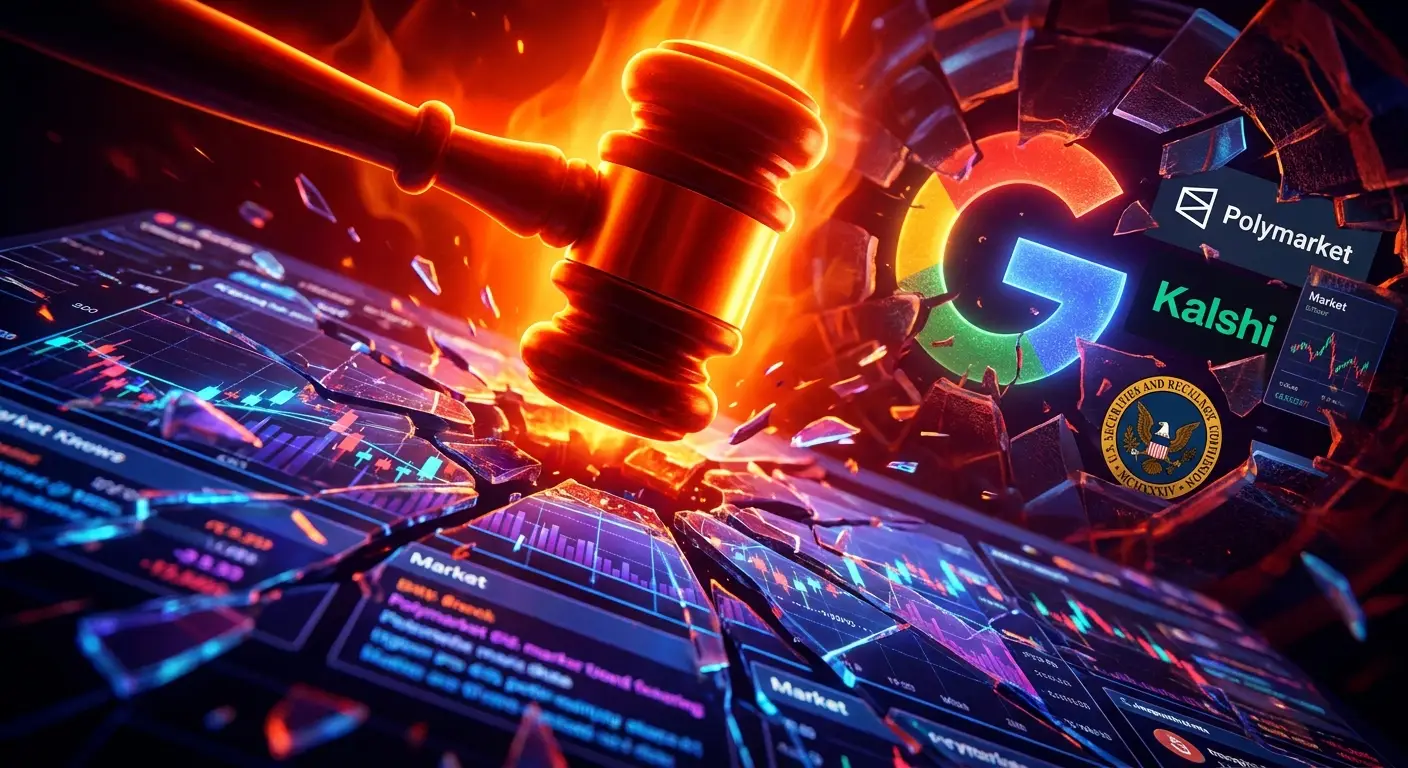
The prediction market industry, which recently hit record-shattering trading volumes, is facing a coordinated squeeze from both judicial authorities and big tech. In a dual blow to the sector, a high-profile federal court ruling in New York has cleared the way for state-level gambling crackdowns, while Google has announced a total ban on prediction market extensions within its Chrome Web Store.
These developments signal a shift in the regulatory environment as platforms like Polymarket and Kalshi struggle to maintain their status as regulated financial instruments rather than illegal gambling operations.
Judge Torres Delivers "Major Loss" in New York
SDNY Judge Analisa Torres—widely known for her role in the SEC v. Ripple case—has rejected a request from Kalshi for a preliminary injunction against New York state regulators. Kalshi had argued that its sports-related event contracts should be treated as swaps regulated by the Commodity Futures Trading Commission (CFTC), thereby exempting them from state gambling laws via federal preemption.
Judge Torres disagreed, ruling that New York’s gambling laws apply to Kalshi’s contracts and are not preempted by the Commodity Exchange Act (CEA). Legal experts, including gaming law attorney Daniel Wallach, have described this as a "major, major loss" for the industry. The decision allows New York to continue enforcing its gambling laws against prediction markets, potentially forcing platforms to seek state-specific licenses or exit the New York market entirely.
The ruling is expected to have a "knock-on effect" in other jurisdictions. Already, states like Kentucky have filed lawsuits against Kalshi and Polymarket, with Attorney General Russell Coleman alleging the platforms are operating illegal sports betting rings under the guise of financial markets.
Google Chrome Tightens the Noose
While the courts handle the legal definitions, Google is moving to restrict the technical infrastructure of the prediction market ecosystem. The tech giant recently updated its Developer Program Policies, explicitly naming "predictive markets" as prohibited products under its Regulated Goods and Services policy.
Beginning August 1, 2026, Google will enforce a ban on all Chrome extensions that facilitate or enable real-money trades on predictive outcomes. This move creates a significant distribution bottleneck for platforms that rely on browser-based tools to streamline user experiences. The irony of the ban is notable: Google Finance only recently began integrating data from Kalshi and Polymarket in late 2025. Now, the company appears willing to display the odds while simultaneously blocking the tools required to trade them.
Beyond trading, Google’s new policy requires developers to collect only the data strictly necessary for a disclosed purpose, further complicating the data-heavy nature of decentralized prediction platforms.
Record Volumes Amid Corporate Friction
The crackdown arrives at a moment of unprecedented growth for the sector. Combined trading volume across major prediction markets surged 75% in June 2024 to $44.8 billion, largely driven by activity surrounding the 2026 FIFA World Cup. Despite this mainstream momentum, friction with established corporate entities is mounting.
Music streaming giant Spotify recently challenged prediction platforms after discovering that users were allegedly manipulating stream counts to influence market outcomes. Specifically, Spotify identified over 500,000 artificial streams on a track by Malcolm Todd, which had been used to settle a prediction contract on Kalshi. Spotify has since demanded that these platforms remove its branding and clarify that no official partnerships exist.
Industry Shift: From Solana to Robinhood
As regulatory pressure mounts, some projects are shifting their technical foundations. World, a prediction market that launched on the Solana network with significant fanfare and integration into the Phantom wallet, recently announced a move to the Robinhood Chain.
Though the team offered no explicit reason for the exit from Solana, the move aligns with a broader trend of "mainstreaming" in the face of legal scrutiny. Unlike Polymarket or Kalshi, World utilizes Chainlink data for automatic settlement in stablecoins, aiming for a "hands-off" approach to payouts that might distance it from some gambling classifications.
Outlook for Traders and Platforms
For crypto traders and gamblers, the landscape is becoming increasingly fragmented. The shift in momentum suggests a future where prediction markets may be forced to:
- Obtain state-by-state gambling licenses.
- Geofence users in jurisdictions with aggressive Attorneys General.
- Pivot away from browser extensions toward mobile-first or integrated "brokerage" environments like the Robinhood Chain.
While the CFTC has historically shown some support for these markets, the combination of Judge Torres’ ruling and Google’s technical ban suggests that the path to legitimacy in the United States will be fought state by state, and platform by platform.