
축하합니다. 자체 보관을 채택하고 개인 키를 제어함으로써 진정한 재정 주권을 달성했습니다. 제3자, 은행, 중앙화 거래소에 대한 의존을 제거하여 부가 오직 당신만 접근할 수 있게 되었습니다.
그러나 이 자유는 엄숙한 책임을 수반합니다: 무능력 상태, 재난, 또는 사망으로 인해 더 이상 해당 키에 접근할 수 없을 때 발생하는 상황을 관리하는 것입니다.
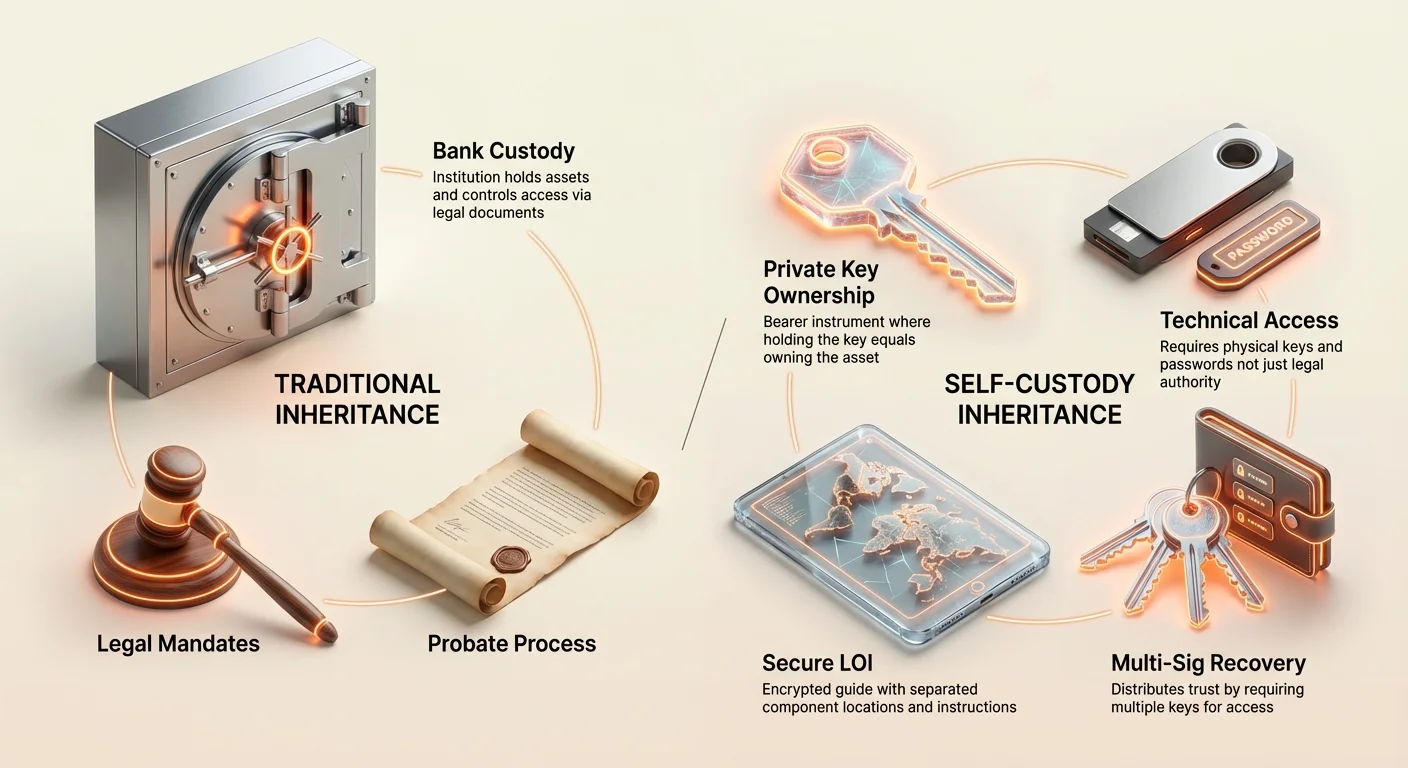
전통 금융에서는 과정이 명확합니다: 법적 문서가 제출되고, 은행이 검인 명령을 준수하며 자산이 이전됩니다. 자체 보관 세계에서는 전화할 은행이 없습니다. 개인 키는 오직 당신(그리고 아마도 확보한 소수 구성 요소)만 아는 비밀이며, 그 비밀이 당신과 함께 사라지면 자금은 영구적으로 손실됩니다—상속인뿐만 아니라 전체 경제 시스템에 대해서도요.
이 가이드는 기본 보안을 넘어 가장 중요한 장기 보안 과제를 다룹니다: 디지털 유산이 당신을 초월해 생존하도록 견고하고 법적으로 타당하며 기술적으로 실현 가능한 계획을 수립하는 것입니다. 우리는 두 가지 상반되는 힘의 균형에 중점을 둡니다: 지금 자금을 안전하게 유지하는 것과 나중에 신뢰할 수 있는 개인에게 접근 가능하게 만드는 것.
자체 주권의 역설: 계획이 필수적인 이유
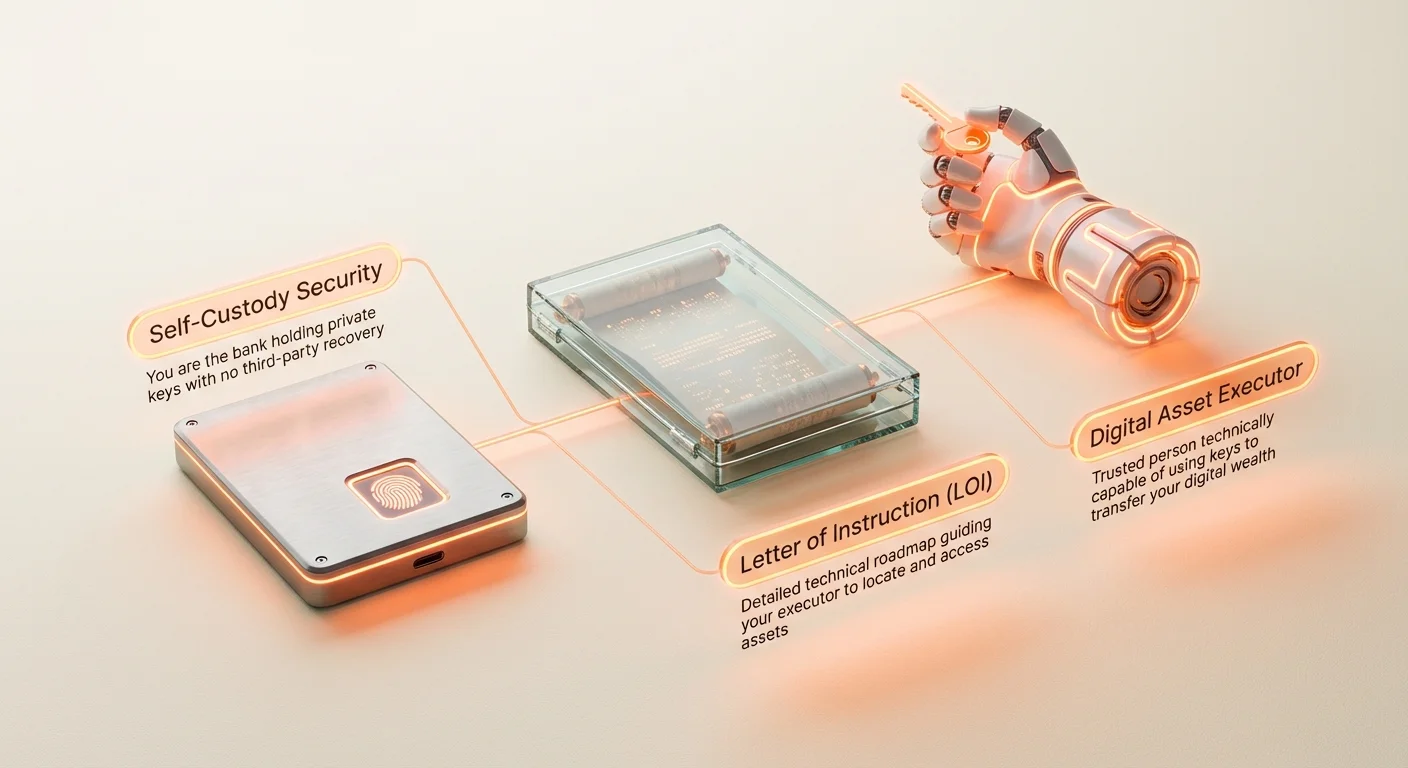
자체 보관은 당신이 은행이 되는 것을 의미합니다. 은행이 금고 키를 잃으면 금고는 접근 불가능합니다. 시드 구문이나 개인 키를 직접 보유하면 전체 디지털 포트폴리오의 단일 실패 지점이 됩니다. 상속 및 재난 계획은 단순한 자산 이전이 아니라 위험 완화의 핵심 구성 요소입니다.
‘Bus Factor’: 단일 실패 지점 식별
'Bus Factor'는 소프트웨어 개발에서 차용한 개념으로, 프로젝트가 완전히 실패하기 전에 버스에 치여야 하는(즉, 사라지거나 무능력 상태가 되는) 팀원의 최소 수를 정의합니다. 자체 보관에서 버스 팩터는 보통 하나: 당신입니다.
전체 키 위치, 암호화 비밀번호, 또는 특정 하드웨어 지갑 모델을 아는 유일한 사람이라면, 당신의 무능력 상태는 자산 접근에 즉각적이고 치명적인 실패를 초래합니다. Bus Factor를 해결하려면 신뢰할 수 있는 사전 선정된 개인들 사이에 지식 접근을 분산화해야 하지만, 특정 합의된 조건 하에서만입니다.
수탁 vs. 자체 보관 상속 과제
전통 방법이 왜 실패하는지 이해하는 것이 새로운 계획을 세우는 데 중요합니다:
| 항목 | 전통 은행 (수탁) | 자체 보관 (비수탁) |
|---|---|---|
| 자산 위치 | 은행이 알고 있으며 계좌 번호로 문서화됨. | 사용자만 알며 (온체인 주소는 공개되지만 소유권 링크는 비밀임). |
| 접근 권한 | 은행으로, 법적 문서(유언, 신탁, 사망 증명서)를 수락함. | 개인 키 보유자(당신). 제3자가 기술적 권한을 가짐. |
| 검인 절차 | 법원 명령이 기관에 전달되어 자금 해제를 의무화함. | 법원 명령은 기능적으로 무용지물임. 명령을 전달할 기관이 없기 때문. |
| 손실 위험 | 낮음 (은행 파산 시에만). | 높음 (키가 손실, 망각 또는 상속인에게 알려지지 않음). |
암호화폐 자금이 기술적으로 "보유자 수표"이기 때문에(키를 보유한 자가 자산을 소유함), 계획은 법적 명령만에 의존할 수 없습니다. 안전한 기술적 활성화에 의존해야 합니다.
미래 위협 모델링
견고한 계획은 다양한 접근 실패 시나리오를 고려해야 합니다:
- 갑작스러운 사망: 지정된 당사자가 시드 구문이나 암호화 방법에 즉시 접근해야 함. 보안 우선순위: 이벤트 발생 시 접근 속도.
- 장기 무능력 상태: 유지(스테이킹 수수료, 세금 의무, 대규모 변동 관리 등)를 위한 자금 접근 메커니즘 필요. 영구적 전체 소유권 포기 없이. 보안 우선순위: 제어되고 취소 가능한 접근.
- 재난 복구: 키 구성 요소의 지리적 중복 필요(예: 집 화재 또는 안전 금고 침수). 보안 우선순위: 물리적 회복력.
Foundational Pillar 1: The Secure Letter of Instruction (LOI)
The most essential component of any crypto inheritance plan, regardless of legal structure or technical complexity, is the Letter of Instruction (LOI). This document is the practical, step-by-step roadmap that guides your executor or trustee through the technical steps necessary to locate and access your digital assets.
Crucial Distinction: The LOI is not your Will. The Will tells the court who gets your assets; the LOI tells your executor how to find and access them.
What the LOI Must Contain
An effective LOI must be comprehensive, detailed, and written for a technically proficient but non-expert user.
- Inventory of Assets: A complete list of all cryptocurrencies held, noting the approximate amount and location (which blockchain/network).
- Wallet Type and Location: A list of every wallet used (Hardware Wallet 1, Hardware Wallet 2, Desktop Software Wallet, etc.). Specify the brand (Trezor, Ledger, etc.) and model.
- Seed Phrase/Key Map: Critically, the LOI should not contain the raw seed phrase itself. Instead, it should contain a clear map or guide instructing the executor where the components of the seed phrase are physically or digitally located. (E.g., "Seed Phrase Component A is in Safe Deposit Box 123; Component B is held by Attorney Smith.")
- Passwords and PINs: List all PINs, hardware wallet passphrases (25th word), or encryption passwords necessary to access the storage mediums. These must be stored separately from the LOI itself and secured via methods outlined below.
- Exchange/Account Access: If you maintain small amounts on centralized exchanges (CEXs) for trading, list the CEX URLs, usernames, and two-factor authentication (2FA) recovery methods.
- Instructions for Transfer: A clear, sequential list of instructions detailing exactly how to initiate a transaction and transfer the funds to the designated trust wallet or beneficiary addresses. Example: "To access Wallet X, retrieve the device from Location Y, enter PIN 1234, and the 25th Word stored in Vault Z."
Best Practices for Storing and Disclosing the LOI
The LOI is a single point of technical knowledge. It must be highly secure yet accessible upon the triggering event.
- Digital Encryption: The LOI should be created digitally (e.g., a PDF) and encrypted using strong, modern encryption software (like VeraCrypt or open-source equivalents). The decryption key or password must be shared with your chosen executor or stored separately in a highly secure, non-digital location.
- Physical Seclusion: A physical, printed copy of the LOI (encrypted instructions, not the seed phrase itself) should be placed inside your physical Will or Trust documentation, or secured in a solicitor’s fireproof safe. This ensures its discovery coincides with the legal process.
- Tiered Disclosure: Never give the entire LOI and all associated passwords to a single person. Your plan should use a tiered approach:
- Tier 1 (The Executor): Receives the main LOI and the location map of the physical key components.
- Tier 2 (The Key Holders): Holds physical or encrypted components of the seed phrase, but does not know what they are for, nor do they possess the LOI.
Integrating the LOI with Legal Documentation
The legal framework provides the authority, and the LOI provides the technical mechanism. They must reference each other. Your Will or Trust document should specifically state that your digital assets exist, reference the LOI (without disclosing sensitive data), and explicitly grant your Digital Asset Executor the authority to follow the instructions within that LOI.
Crucially, the Will must contain a clause that explicitly gives the Executor the power to legally bypass digital restrictions, access data, and transfer assets.
기초 기둥 2: 법적 구조 및 집행자
키가 기술적 접근을 제공하는 반면, 법적 구조는 소유권 정의, 세금 부채 관리, 당신의 의사에 따른 이전을 보장하며 가족 분쟁과 검인 비용을 최소화합니다.
디지털 자산 집행자의 역할
계획에서 가장 전문화된 역할입니다. 디지털 자산 집행자는 종종 일반 유산 집행자와 동일하지만 특정 특성을 가져야 합니다:
- 기술 리터러시: 하드웨어 지갑, 시드 구문, 기본 블록체인 메커니즘 이해. 개인 키로 거래 서명에 익숙해야 함.
- 절대적 신뢰: 전통 기관 감독 외 자금 실제 이전 처리하므로 삶에서 가장 신뢰할 수 있는 사람이어야 함.
- 행동 의지: 사망 후 자금 확보의 종종 스트레스 있고 시간 민감한 작업을 기꺼이 수행할 수 있어야 함.
디지털 자산 집행자는 LOI 따르고, 시드 구문 조각 집계, 자산을 유산 통제 하 새 지갑으로 확보, 유언 또는 신탁에 따라 자금 분배 책임.
암호화폐 자산을 위한 신탁 및 유언 사용
고액 자산 암호화폐 보유자의 경우, 유언에 단순히 수혜자 명시로는 검인 법원의 시간 소모성으로 부족할 수 있습니다. 신탁은 디지털 자산에 더 빠르고 사적이며 견고한 솔루션 제공.
유언 신탁
신탁은 자산(암호화폐 포함) 소유권을 지정 수혜자를 위해 제3자 신탁인(개인 또는 회사)에게 이전할 수 있게 합니다.
- 이점: 잘 작성된 신탁에 보유된 자산은 검인 법원을 완전히 우회하여 사망 시 신탁인이 즉시 행동 가능. 암호화폐에서 지연이 보안 위험 또는 기회 상실로 이어질 수 있어 중요.
- 메커니즘: 신탁 문서가 신탁인의 권한 정의, 개인 키 및 자산 회수, 관리, 이전 권한 포함. LOI가 신탁인이 따라야 할 기술적 단계 제공.
관할권 및 법적 뉘앙스
암호화폐는 전역적으로 탈중앙화되지만 상속법은 엄격히 지역적입니다.
- 거주지 중요: 계획은 주로 거주하는 관할법(거주지) 법에 따라 생성. 여러 국가 시민권 또는 자산 보유 시 복잡성 기하급수적 증가, 여러 유언 또는 신탁 필요 가능.
- 전문화된 법률 자문: 디지털 자산법을 구체적으로 이해하는 변호사 사용. 일반 유산 계획가는 기술적으로 실행 불가능한 언어 포함 가능(예: 자체 보관 지갑 자산에 거래소 이전 명령 요구).
- 디지털 자산 공개: 일부 관할권에서 세금 및 상속 목적 디지털 자산 상세 보고 요구. 사망 시 정확한 평가 및 공개 고려.
Technical Strategies for Access and Transfer
Legal documents establish the "should," but cryptographic tools establish the "can." Technical solutions embed your inheritance instructions directly into the blockchain, often using smart contracts or advanced wallet configurations.
The 'Social Recovery' Multi-Signature Approach
Multi-signature (Multi-Sig) wallets require a specified number of private keys (signatures) out of a total possible keys (M-of-N) to approve any transaction. This is the single most effective technical tool for disaster planning.
Multi-Sig Will Structure (Example: 2-of-3):
- Key 1 (Your Primary Key): Held by you, used for day-to-day transactions.
- Key 2 (Legal Key): Held by your Digital Asset Executor or Trustee.
- Key 3 (Safety Key): Held by a solicitor, institutional custodian, or a separate family member.
Under normal circumstances, you use Keys 1 and 2 to transact. If you become incapacitated or pass away, Key 1 is inaccessible. The Executor (Key 2) can then cooperate with the Safety Key Holder (Key 3) to achieve the necessary 2-of-3 signatures to move the funds to the estate’s designated addresses.
- Benefit: This avoids requiring a single person to possess the entire master key. It distributes trust and requires consensus, minimizing the risk of a malicious or incompetent single executor.
Introduction to Time-Locked Transactions
Time-locking allows you to create a transaction that can only be executed after a specific future block height or time has passed. This is based on cryptographic protocols built into the blockchain (such as Bitcoin’s CheckSequenceVerify or smart contract logic on platforms like Ethereum).
Two common time-lock applications for inheritance:
- Delayed Access: You pre-sign a transfer transaction sending funds from your current wallet to a new wallet controlled by your executor. You set a time lock for five years from now. If you are alive and active, you periodically update the transaction, moving the time lock further out. If you stop updating it (implying incapacitation or death), the pre-signed transaction becomes valid and can be broadcast by your executor five years later, enabling them to retrieve the funds.
- Release Mechanisms: This involves a sophisticated multi-sig setup combined with a time delay. For example, Key A (yours) can access the funds immediately. Key B (Executor) can access the funds, but only after a specific time lock expires. This gives you absolute control now while providing a technical backup pathway for heirs later.
Creating a 'Dead Man's Switch'
A Dead Man’s Switch is a mechanism that automatically releases information (like the LOI or decryption passwords) if you fail to perform a periodic check-in.
Examples of Switches:
- Manual/Digital Check-ins: Using automated services that periodically email you. If you fail to click the confirmation link for 90 days, the service sends an encrypted package containing key retrieval instructions to your designated Executor’s email address.
- Blockchain Activity Monitoring: Services or bespoke code can monitor your primary wallet address. If the address remains dormant (no outgoing transactions) for a defined period (e.g., 18 months), this triggers a notification to a third party, signaling the potential need to activate the inheritance plan.
Caution: While effective, automated switches carry high risk. If accidentally triggered (e.g., due to a vacation or illness), they could expose sensitive information prematurely. Extreme caution and redundancy must be built into the trigger mechanism.
구현 워크플로: 단계별 계획 구축
암호화폐 상속 계획 생성은 단일 작업이 아닌 프로젝트입니다. 주기적 유지보수와 엄격한 테스트 필요.
단계 1: 자산 목록 및 평가
지침 작성 전에 소유 자산과 위치를 정확히 알아야 합니다.
- 포괄적 자산 등록부 생성: 모든 암호화폐, NFT, DeFi 포지션 및 보유 지갑 주소 목록. 체인(Ethereum Mainnet, Polygon, Solana 등) 명시.
- 보관 상태 결정: 키 복구 필요 자체 보관 자산과 중앙화 플랫폼 비밀번호/2FA 복구 자산 명확히 표시.
- 의존성 문서화: 자산 잠금 여부(스테이킹 컨트랙트, 시간 잠금 베스팅 일정, DeFi 유동성 풀 등) 및 인출 행동 명시.
단계 2: 신뢰 파트너 선택 (인간 요소)
보안 체인은 가장 약한 파트너만큼 강합니다. 신뢰, 역량, 지리적 다양성 기준으로 선택.
- 집행자: 고도로 신뢰되고 기술적으로 유능하며 책임 인식. LOI 맵과 법적 권한 수령.
- 키 보유자: 파편화된 시드 구문 또는 멀티시그 키 하나의 구성 요소 보관 책임. 키 용도나 다른 구성 요소 위치를 알아서는 안 됨. 단순 보안 저장 제공자.
- 증인/자문: 제3자(종종 변호사 또는 재무 자문)가 계획 존재와 집행자 및 키 보유자 이름 알지만 기술 세부 아님. 계획 원활 실행 감독.
단계 3: 프로세스 테스트 및 검토 (‘Fire Drill’)
테스트되지 않은 계획은 가설일 뿐입니다. 실제 키 노출 없이 계획 작동 확인 ‘fire drill’ 수행.
- 시뮬레이션 회수: 소량 임시 ‘더미’ 하드웨어 지갑 설정하고 무시할 수 있는 암호화폐 이전. 더미 지갑에 대한 LOI 작성.
- 블라인드 테스트: LOI와 해당 키 구성 요소를 집행자에게 제공. LOI 따라 자금 회수 및 지정 테스트 주소로 이전 요청.
- 검토: 집행자가 자금 성공 회수 시 지침 명확하고 메커니즘 작동. 실패 시 지침 명확화 또는 프로세스 업데이트. 절대 실제 자산으로 테스트하지 말고 실제 프로세스만.
단계 4: 물리적 vs. 디지털 격리
시드 구문 및 관련 비밀번호 파편화는 안전하고 전략적으로 분산되어야 합니다.
- 파편화: 전체 시드 구문을 한 곳에 저장하지 마세요. 24단어를 2-3 구성 요소(예: 1-8단어, 9-16단어, 17-24단어)로 나누고 지리적으로 분리된 다른 위치에 저장.
- 재료 내구성: 내화, 방수 재료(스탬프 금속 플레이트 등)에 구성 요소 저장. 종이는 빠르게 열화.
- 위치 다양성: 구성 요소를 상이한 위치에: 가정 금고, 먼 은행 안전 금고, 국제 변호사/신탁인. 지리적 거리로 지역 재난 보호.
고급 보안 고려사항
보유량 증가 또는 삶 상황 변화에 따라 상속 계획은 효능과 보안을 유지하기 위해 진화해야 합니다.
누출 최소화: 구성 요소 및 정보 분리
자체 보관의 기본 원칙은 단일 실패 지점 최소화입니다. 이는 상속 계획에도 적용됩니다. 집행자가 모든 LOI 지침을 가지고 키 구성 요소 A도 보유하면 보안이 손상됩니다.
세 가지 분리 규칙:
- 계획 (LOI/지침): 구성 요소 접근 로드맵.
- 물리적 구성 요소 (시드 구문 조각): 실제 키/단어.
- 복호화 키 (패스프레이즈/비밀번호): 암호화된 LOI 해제 키 또는 하드웨어 지갑 해제 25번째 단어.
단일인 또는 물리적 위치가 이 세 요소 중 두 개를 보유하지 않도록 하세요.
변화하는 기술 대처
암호화폐 공간은 빠르게 진화합니다. 오늘 구매한 하드웨어 지갑이 5년 후 구식이 되거나 새 소프트웨어 업데이트가 복구 프로세스 변경 가능.
연간 검토 주기: 상속 계획을 연간 검토 필요한 "살아있는 문서"로 취급:
- 하드웨어 확인: 모든 하드웨어 지갑이 여전히 작동하고 제조사 지원 여부?
- 소프트웨어 확인: 이전 지침 정확 여부(예: 네트워크 수수료 구조 또는 복구 지갑 인터페이스 변경)?
- 인력 확인: 집행자와 키 보유자가 여전히 신뢰할 수 있고 유능하며 연락 가능? 삶 상황 변화(예: 이혼 또는 국제 이전)?
무능력 상태 시나리오
질병 또는 부상으로 건전한 재정 결정 장기 불능(무능력 상태) 계획은 법적 상태 모호로 사망 계획보다 어렵습니다.
무능력 상태에 위임장 (PoA) 문서가 중요합니다.
- 특정 권한: PoA는 지정 대리인에게 디지털 자산 관리, 암호화 키 접근, 당신 대신 거래 서명 권한 명시적 부여.
- 활성화 트리거: PoA 발효 조건 정의(예: 두 명의 면허 의사가 정신적/물리적으로 사무 관리 불능 확인).
- 제한 접근: 멀티시그 설정에서 PoA 대리인이 보조 키만 접근 수령 구성 가능. 제3자와 협력해 자금 관리(청구서 지불, 리밸런싱) 가능하나 전체 포트폴리오 일방 통제 불가.
결론
상속 및 재난 계획은 진정한 자체 주권 달성을 위한 최종, 양보할 수 없는 단계입니다. 금융 생활에서 은행을 제거한 시간과 노력을 투자했다면, 당신이 떠난 후 자산을 위한 안전 경로 생성에도 시간과 노력을 투자해야 합니다.
단순하게 시작하세요: 포괄적 지시서 생성, 강력 암호화로 보호, 절대 신뢰하는 1-2명 선택. 그런 다음 전문 법률 자문과 상담하여 기술 계획을 견고한 법적 구조, 이상적으로 신탁으로 속도와 사생활 통합.
계획은 테스트되고 연간 검토되며 소유한 가장 중요한 보험 정책으로 취급해야 합니다. 앞서 생각함으로써 새 디지털 경제 채택이 오늘 당신뿐만 아니라 제공하려는 미래 세대에게 이익이 됩니다.