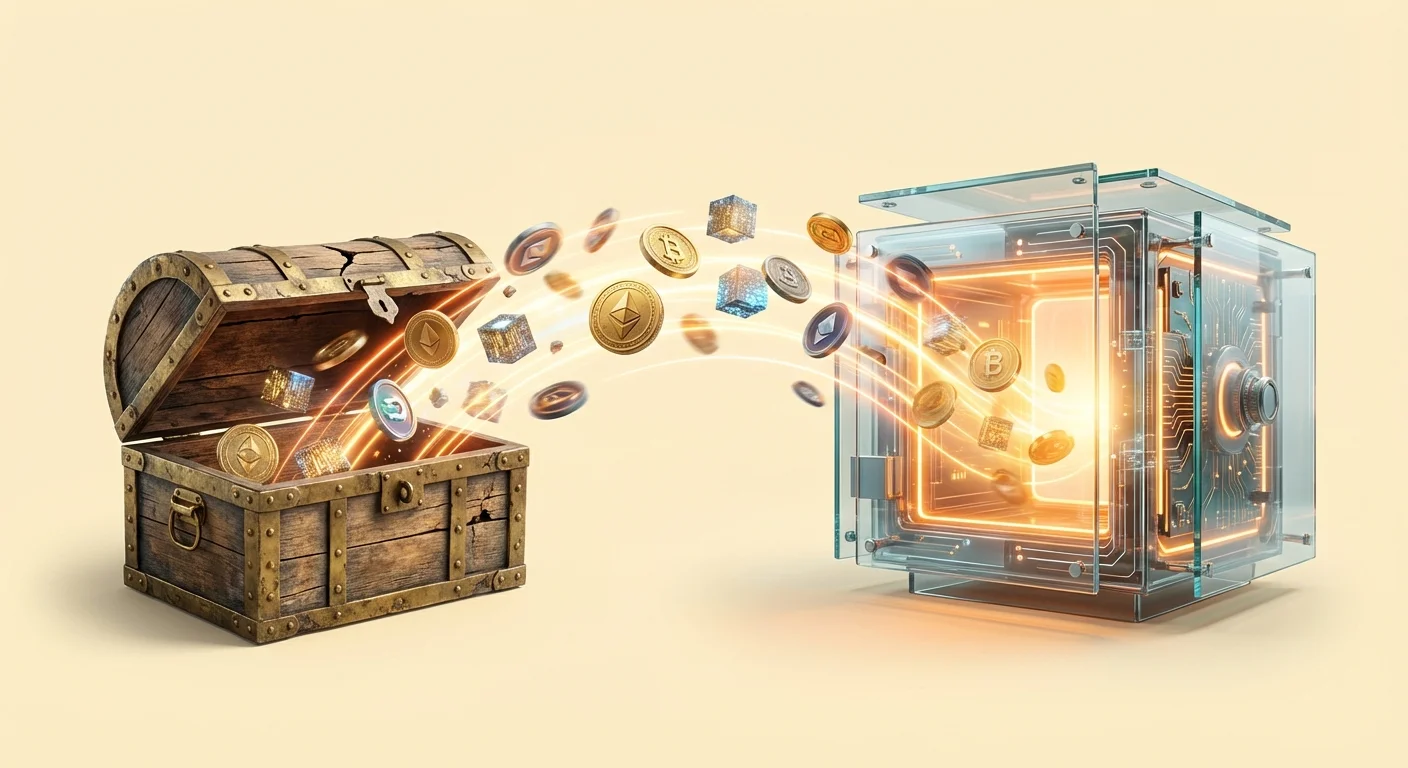
Svijet kriptovaluta obećava financijsku samodostatnost, ali često donosi nespretno i zastrašujuće korisničko iskustvo. Godinama je temelj interakcije s blockchain mrežama poput Ethereum ovisio o vanjski posjedovanom računu (EOA), koji je izravno vezan uz krhku seed frazu od 12 do 24 riječi. Odgovornost je apsolutna: izgubite frazu, izgubite sredstva; otkrijte frazu, izgubite sve.
Ova rigidna struktura glavna je prepreka masovnoj usvajanju. Zamislite da morate točno znati kojim tipom valute plaćati naknade za transakcije (gas) prije nego što uopće napravite kupnju, ili da trebate višestruke autorizacije samo za jednostavnu zamjenu tokena. Ove trenja rješava sljedeća generacija tehnologije novčanika – široko poznata kao apstrakcija računa (AA).
Novčanici apstrakcije računa prenose kontrolu s jednostavnog vlasništva privatnim ključem na logički zasnovane pametne ugovore. Ovaj pomak ključan je jer omogućuje da novčanici postanu prilagodljivi, oporavljivi i eksponencijalno lakši za korištenje. Ovaj vodič istražuje temeljnu razliku između tradicionalnih EOA novčanika i naprednih računa pametnih ugovora, fokusirajući se posebno na tehnički standard ERC-4337, koji poploča put revolucionarnom, modernom kripto iskustvu.
Temelji: Razumijevanje razlike između EOA i novčanika pametnih ugovora
Prije nego što zaronimo u složenosti apstrakcije računa, ključno je razumjeti dva temeljna načina na koje adresa može postojati na Ethereum mreži (i sličnim EVM-kompatibilnim lancima).
Vanjski posjedovani računi (EOA): Status quo
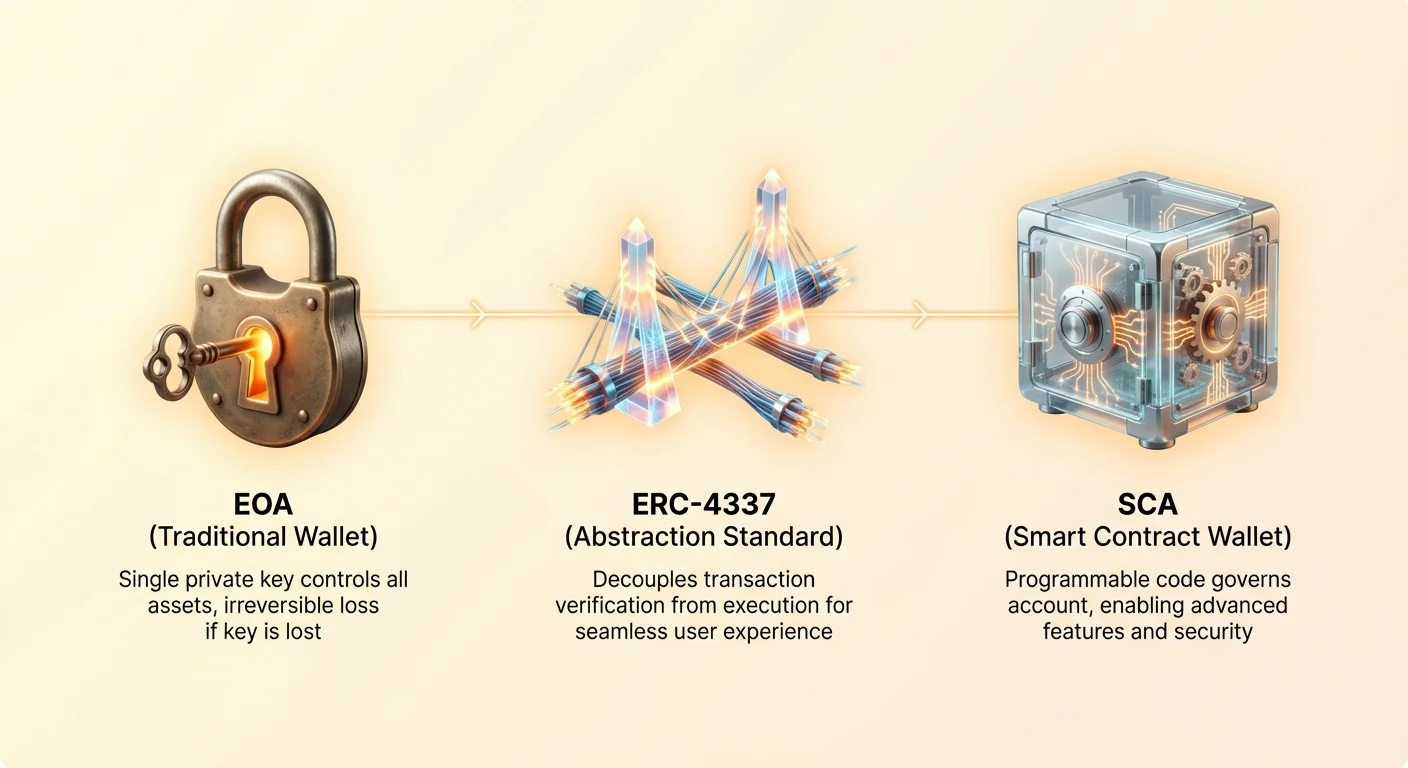
EOA je najčešći tip kripto računa, utjelovljen u tradicionalnim novčanicima poput MetaMask ili Trust Wallet. EOA definirana je jednim privatnim ključem.
Ključne karakteristike EOA:
- Izravna kontrola: Privatni ključ jedina je stvar koja dokazuje vlasništvo. Korisnik mora ručno generirati i sigurno pohraniti mnemonicu (seed frazu) izvedenu iz ovog ključa.
- Bezstanoviti: EOA ne mogu izvršavati interni kod ili logiku. Oni su samo sposobni pokretati transakcije (šalju sredstva ili komuniciraju s ugovorom).
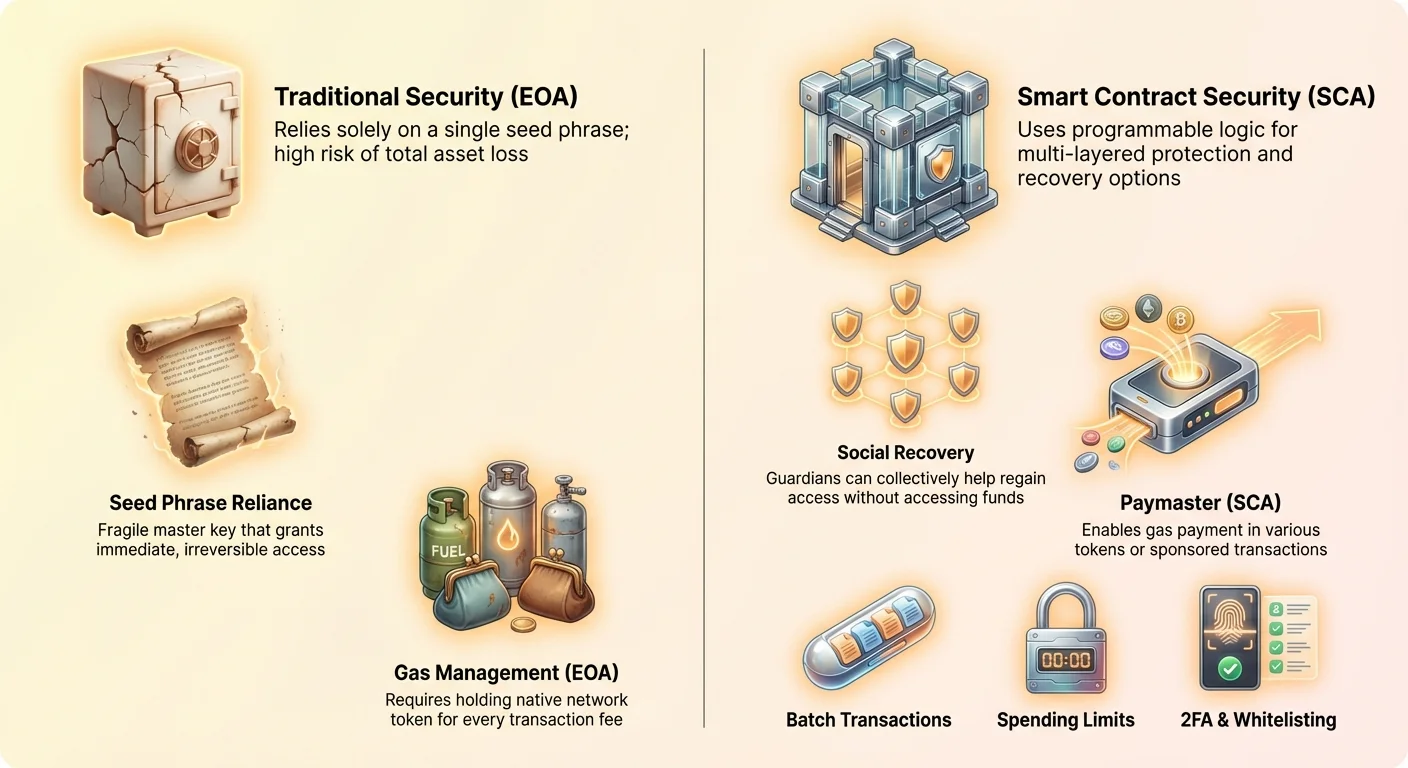
- Obvezni gas: Svaka transakcija pokrenuta od EOA mora se platiti u nativnoj valuti mreže (npr. ETH na Ethereumu). Ako EOA ostane bez ETH-a, sve aktivnosti se zaustave, bez obzira koliko USDT ili USDC drži.
- Nepovratan gubitak: Ako se izgubi privatni ključ ili seed fraza, ne postoji tehnički mehanizam za oporavak; sredstva su trajno zaključana.
Računi pametnih ugovora (SCA): Vlasništvo vođeno kodom
Račun pametnog ugovora (SCA) – temelj apstrakcije računa – nije definiran privatnim ključem, već nepromjenjivim kodom implementiranim na njegovoj adresi. SCA su računi kojima upravljaju programski pravila.
Ključne karakteristike SCA:
- Verifikacija temeljena na logici: Umjesto provjere jednostavnog potpisa (kao EOA), SCA pokreće kod za provjeru je li transakcija legitimna. Ova provjera može uključivati provjere višestrukih potpisa, vremenske brave, limite potrošnje ili protokole društvene provjere.
- Programabilna sigurnost: Budući da su SCA kod, sigurnosne značajke poput dnevnih limita potrošnje, automatske rotacije ključeva ili bijele liste primatelja transakcija mogu se izgraditi izravno u račun.
- Fleksibilnost računa: SCA omogućuju značajke koje su bile ranije nemoguće za jednostavne račune, vodeći izravno k naprednim UX značajkama koje se raspravljaju u nastavku.
Glavni izazov u implementaciji SCA na Ethereumu bila je standardizacija načina na koji bi podležeća mreža (decentralizirani validatori) komunicirala s ovim programabilnim računima. Ovaj izazov standardizacije rješava ERC-4337.
ERC-4337: The Key to True Account Abstraction
While smart contract wallets have existed for years (often referred to as "multisig" wallets), they required significant changes to the core Ethereum protocol to function seamlessly. ERC-4337 changes this by creating a parallel system that handles the logic without changing the core network rules. This proposal is the engine driving the current wave of AA innovation.
How ERC-4337 Decouples Verification from Execution
ERC-4337 introduces the concept of a "UserOperation" (UserOp).
Think of a standard EOA transaction as a single, direct instruction to the blockchain. A UserOp, conversely, is a special object that describes what the user wants to do. This object is then processed by specialized actors in the network.
- The UserOperation (UserOp): This is the intent. It specifies the recipient, the desired action, and importantly, the fee and verification method. Crucially, the UserOp is standard, regardless of the unique logic governing the specific smart contract wallet.
- Bundlers: These are nodes that gather multiple UserOps from various smart contract accounts. They package these UserOps into a single, valid EOA transaction and submit it to the standard Ethereum network. The Bundler essentially acts as the traffic controller that introduces the UserOp into the blockchain.
- The Entry Point Contract: This contract is the universal gateway on the blockchain. When a Bundler submits a transaction containing UserOps, the Entry Point contract verifies the signature (using the SCA’s logic) and ensures the fees are paid. If valid, the Entry Point executes the action.
By moving the complexity of account validation and fee payment off-chain and standardizing it through the UserOp format, ERC-4337 achieves Account Abstraction without needing a disruptive protocol upgrade.
Key Components: UserOperations and Paymasters
Two components introduced by ERC-4337 are critical for enhancing the user experience: the UserOp (as detailed above) and the Paymaster.
The Paymaster
The Paymaster is a smart contract that grants the ability for accounts to pay for gas in novel ways. The Paymaster can sponsor transactions or allow users to pay transaction fees in tokens other than the network's native currency (e.g., paying gas fees in USDC, DAI, or even an application-specific token).
Practical Applications of the Paymaster:
- Gas Sponsoring: A decentralized application (dApp) or a corporate entity can choose to pay the gas fees for its users entirely. This eliminates the "cold start" problem for new users who don't yet own the native token (ETH).
- Token Conversion: The Paymaster can automatically swap a small portion of the user's stablecoin holdings to cover the necessary ETH gas fee, making gas management invisible to the user.
This functionality is arguably the single most important step toward making blockchain transactions feel like standard web payments, eliminating the need for users to constantly manage a separate gas reserve.
Revolutionary User Experience (UX) Improvements
The technical abstraction provided by ERC-4337 translates into immediate, tangible benefits for users, fundamentally reshaping how we interact with DeFi and dApps. These features directly address the clunky, multi-step processes that currently deter mass adoption.
Simplified Gas Management (Paymasters and Gas Sponsoring)
As noted, the Paymaster function is a massive UX win. For newcomers, the requirement to always hold ETH for fees, even if they only transact in stablecoins, is confusing and cumbersome.
With a smart contract wallet utilizing a Paymaster, the experience becomes seamless:
- Fee Payment Flexibility: A user can hold only USDC and still execute a complex token swap, with the Paymaster handling the micro-conversion required for the ETH gas.
- Zero-Fee Experience: For loyalty programs or subsidized applications, the dApp itself can act as the Paymaster, absorbing the transaction costs for its users. This allows services to offer promotional free transactions, similar to how traditional apps absorb payment processing costs.
Batch Transactions and Single-Click Swaps
In a traditional EOA environment, interacting with decentralized finance (DeFi) often requires multiple sequential approvals. For example, depositing tokens into a yield farm usually requires:
- Transaction 1: Approving the DeFi protocol to spend your token.
- Transaction 2: Approving the stablecoin transfer (if swapping).
- Transaction 3: Depositing the funds into the protocol.
Smart Contract Wallets use Account Abstraction to combine these steps into a single, atomic UserOperation.
How Batching Works:
The smart contract account verifies one signature and, based on that verification, executes a sequence of pre-approved actions in a single blockchain block. This dramatically speeds up interactions, reduces the potential for user error, and minimizes total gas costs by bundling multiple actions into one transaction.
Account Abstraction and L2 Scaling
Layer 2 (L2) solutions like Arbitrum and Optimism have already made transactions faster and cheaper. Account Abstraction complements L2s perfectly, focusing on usability rather than just speed and cost.
For advanced users and developers, the standardized nature of ERC-4337 means that the complex logic (social recovery, multi-factor authentication, etc.) is consistent across different L2 networks. This significantly streamlines cross-chain application development and makes asset bridging more intuitive.
For example, a user could have a smart contract wallet that implements a specific spending limit ($500 per day) across all integrated L2 networks, managed by one central piece of logic, simplifying risk management significantly.
Poboljšana sigurnost: Snaga društvenog oporavka
Možda najveća korist novčanika pametnog ugovora eliminacija je apsolutne ovisnosti o seed frazi. Apstrakcija računa omogućuje visoko napredne, logikom vođene sigurnosne značajke koje daleko nadmašuju mogućnosti EOA.
Tradicionalni oporavak nasuprot društvenom oporavku objašnjeno
Tradicionalni EOA oporavak: Oporavak u potpunosti ovisi o seed frazi. Ako se izgubi, ukrade ili kompromitira, račun je izgubljen. To je jedinstvena točka katastrofalnog kvara.
Društveni oporavak (SCA): Ovaj sustav koristi mrežu pouzdanih osoba ili uređaja (nazvanih „Guardians“) da pomogne korisniku da povrati pristup računu ako izgubi primarni ključ (ili uređaj).
Umjesto pohrane glavnog privatnog ključa koji daje trenutni pristup, novčanik pametnog ugovora zahtijeva određeni konsenzusni prag od Guardiansa za izvršavanje akcije, poput promjene primarnog potpisnog ključa vlasnika.
Guardiansi i sigurnosni pragovi
Društveni oporavak visoko je prilagodljiv. Korisnik može postaviti sljedeću strukturu:
- Guardiansi: Pet pouzdanih osoba (npr. članovi obitelji, bliski prijatelji ili čak drugi uređaj u vlasništvu korisnika).
- Prag: Minimum od tri od pet Guardiansa mora odobriti transakciju oporavka.
Ako korisnik izgubi telefon (i time primarni potpisni ključ), jednostavno kontaktira tri Guardiansa. Ovi Guardiansi koriste svoje novčanike (koji još mogu biti EOA) da potpišu poruku koja omogućuje pametnom ugovoru zamijeniti stari izgubljeni ključ novim, svježim. Guardiansi nikad nemaju izravan pristup korisničkim sredstvima; imaju samo moć pomoći u resetiranju mehanizma pristupa.
Implementacija sigurnosnih značajki: Višefaktorska autentifikacija i limiti potrošnje
Budući da su SCA programabilni, mogu implementirati sofisticirane sigurnosne značajke koje oponašaju poznate web2 obrasce:
- Dvodnevna autentifikacija (2FA): Standardni EOA treba samo jedan potpis. SCA može zahtijevati dva: primarni potpis s korisničkog telefona i drugi potpis s posvećenog hardverskog uređaja ili čak vremenski bazirani kod generiran od poznate aplikacije.
- Bijela lista: Korisnici mogu programirati svoj SCA da dozvoljava interakciju samo s unaprijed odobrenim, sigurnim ugovorima ili adresama (poput adrese povlačenja njihove primarne centralizirane burze). Svaki pokušaj transakcije izvan ove bijele liste automatski bi odbio logika ugovora.
- Kapice potrošnje: Korisnici mogu postaviti dnevne ili tjedne limite potrošnje. Na primjer, transakcije ispod 1000 USD mogu se izvršiti odmah, dok transakcije iznad tog iznosa automatski pokreću 24-satni vremenski okvir ili zahtijevaju odobrenje od Guardiansa, dodajući vitalni sloj zaštite od krađe.
The EOA Migration Path: Moving to Account Abstraction
For the millions of existing users currently relying on traditional EOA wallets, the transition to Account Abstraction is not about destroying the old wallet, but rather using it as a bootstrap mechanism for the new, smarter account.
Why Migration is Necessary (The Limitations of EOA)
While EOAs are currently necessary to pay for gas and interact with basic infrastructure, they are static and unadaptable. They cannot incorporate features like social recovery or paymaster functionality because those features require executable code, which EOAs lack.
The migration path involves shifting the primary point of self-custody and daily activity from the simple EOA address to a more secure, feature-rich Smart Contract Account address.
Practical Steps for Transitioning Assets
The EOA migration process is typically straightforward and involves three main steps:
- Deployment: Using your existing EOA (e.g., MetaMask), you fund and deploy the code for your new Smart Contract Wallet. This is usually done through a dedicated wallet application interface (like Safe or Argent), which handles the technical deployment details.
- Initial Funding: Once the SCA is deployed, the user transfers the majority of their assets (tokens, NFTs, DeFi positions) from their old EOA address to the new SCA address.
- Bootstrap Maintenance: The old EOA is retained, but only in a minimal capacity. It often serves as the initial "owner" or key for the SCA, or simply remains available to fund the minimal gas required to initiate the occasional maintenance or emergency recovery process for the new SCA. The goal is to minimize the amount of value stored directly in the insecure, unrecoverable EOA.
Choosing the Right Smart Contract Wallet
As Account Abstraction matures, different wallet implementations are emerging, each offering varying levels of security and feature sets. When choosing a smart contract wallet, power users and developers should consider:
- Open Source Auditability: Is the underlying contract code open source and regularly audited? Since the funds are governed by code, trust in that code's security is paramount.
- Recovery Options: What specific recovery mechanisms are offered? Is it strictly social recovery, or is there an option for hardware key integration or multi-sig approval?
- Interoperability: How well does the wallet integrate with different dApps and Layer 2 ecosystems? Ensure it supports the networks and applications you use most often.
- Paymaster Integration: Does the wallet support paying gas in alternate tokens, and does it provide native gas sponsoring for certain transactions?
The migration represents a philosophical shift: moving from relying solely on secret words to relying on transparent, verified smart contract logic to protect assets.
Zaključak
Pomak od vanjski posjedovanih računa do računa pametnih ugovora pokretanih ERC-4337 nije samo nadogradnja; to je evolucija koja rješava najznačajnije barijere usvajanju kriptovaluta. Apstrakcija računa pomiče blockchain iskustvo iz rizičnog, tehničkog niša u robustan, programabilni financijski sloj.
Omogućavajući značajke poput besprijekornog društvenog oporavka, fleksibilnog plaćanja gasa i atomskih paketnih transakcija, novčanici pametnih ugovora obećavaju korisničko iskustvo koje je sigurnije, intuitivnije i visoko prilagodljivo. Za developere, ovaj standard pruža predvidiv okvir za izgradnju aplikacija koje apstrahiraju blockchain složenost. Za korisnike, nudi pravo samovlasništvo bez uporne, paralizirajuće strahe od gubitka seed fraze od 12 riječi – ključan korak prema ostvarenju obećanja decentralizirane financije za sve.