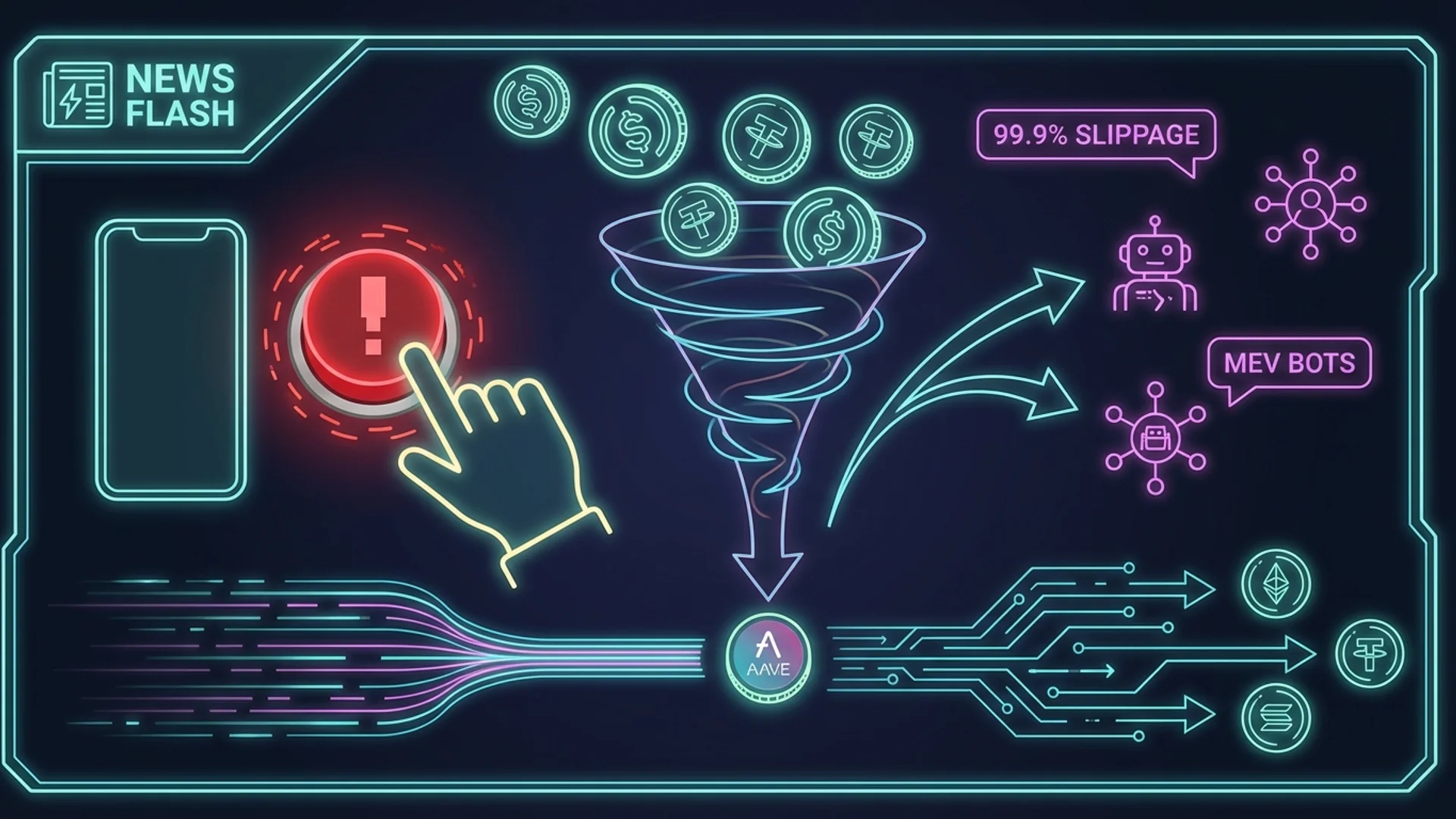
DeFi tarixidagi eng katta "kattaroq barmoq" xatolaridan biri sifatida tavsiflanayotgan vaziyatda, kripto-valyuta "whale" (yirik moliyaviy ishtirokchi) 12-mart, 2026-yilda yagona tranzaktsiya orqali deyarli $50 millionni yo'q qildi. Foydalanuvchi 50,4 million dollar qiymatidagi USDTni AAVE tokenlariga almashtirishga urindi, ammo likvidlikning jiddiy tanqisligi va e'tibordan chetda qoldirilgan xavfsizlik ogohlantirishlari tufayli, u o'sha paytda taxminan $50,000 turadigan atigi 324 AAVE oldi.
The trade, executed through the Aave interface via CoW Swap routing, highlighted the brutal reality of on-chain liquidity dynamics. In a typical liquid market, $50 million would purchase hundreds of thousands of AAVE tokens. However, by dumping such a massive order into a single on-chain path, the trader moved the price curve so aggressively that they paid an average price thousands of times higher than the actual market rate.
$50 Millionlik Slippage Anatomiyasi
The mechanics behind the loss are rooted in the Automated Market Maker (AMM) model used by most decentralized exchanges. Unlike centralized exchanges with order books, DEXs rely on liquidity pools. When a buy order is significantly larger than the available liquidity, the protocol must move further up the price curve to fill the request.
In this instance, the $50.4 million USDT swap exhausted the available AAVE at reasonable prices almost instantly. To fulfill the "signed" parameters of the trade, the routing protocol was forced to buy AAVE at astronomically inflated prices. This resulted in "slippage"—the difference between the expected price of a trade and the price at which the trade is actually executed—of nearly 99.9%.
E'tibordan Chetdagi Ogohlantirishlar va Mobil Ishga Tushirish
According to Aave Labs founder Stani Kulechov, the protocol’s interface functioned exactly as intended. The system identified the massive price impact and triggered a high-level alert. To proceed, the user had to manually acknowledge a warning about "extraordinary slippage" and confirm the risk by clicking a specific checkbox.
Data suggests the transaction was confirmed on a mobile device. Analysts speculate that the user may have been rushing or failed to grasp the magnitude of the warning displayed on a smaller screen. CoW Swap later confirmed that the transaction followed the exact parameters signed by the user, leaving no room for a technical "exploit" defense. This was a pure case of user error in a permissionless environment.
Yo'qotilgan $50 Million Qayerga Ketdi?
The most pressing question for the community is where the lost $50 million actually went. Unlike a hack where funds are moved to a single wallet, this capital was distributed across the Ethereum ecosystem through several channels:
- MEV Bots: Maksimal Jalb Qilinadigan Qiymat (MEV) botlari asosiy manfaatdor tomon bo'ldi. Ma'lumotlarga ko'ra, ETH MEV botlari ushbu katta narx farqini o'zlashtirish uchun tranzaktsiyani oldindan bajarish yoki uni sandwich qilish orqali taxminan $9.9 millionni o'zlashtirgan.
- Likvidlik Provayderlari: "Yo'qotilgan" USDTning sezilarli qismi almashinuv uchun ishlatilgan likvidlik havzalarida qolmoqda. Ushbu havzalarning boshqa tomonida AAVEga egalik qilgan arbitrajchilar va provayderlar o'z tokenlarini sezilarli darajada yuqori narxda sotishdi.
- Protokol Yig'imlari: Tranzaktsiya jalb qilingan protokollar uchun taxminan $600,000 miqdoridagi yig'imni hosil qildi. Noyob xayr-saxovat jesti sifatida Aave va CoW Swap ushbu aniq yig'im miqdorlarini ta'sirlangan foydalanuvchiga qaytarishga va'da berishdi.
Munozara: Foydalanuvchi Avtonomiyasi vs. Himoya Choralari
The incident has reignited a fierce debate within the DeFi sector regarding the balance between user protection and the "code is law" philosophy. CoW Protocol addressed the blunder on X, stating that while they are reviewing safeguards, "preventing users from making trades removes choice and can lead to terrible outcomes in some situations."
The platform noted that DeFi user experience (UX) is still not where it needs to be to protect users from themselves. While the Aave interface provided a checkbox, the fact that a user could even execute a trade with 99.9% slippage is seen by some as a design flaw that needs addressing through more rigid "hard stops" or mandatory cooling-off periods for trades above certain values.
Yuqori Stavkali Treyderslar Uchun Qattiq Saboqlar
For crypto traders and those moving large sums of capital, this blunder serves as a grim reminder of the risks associated with on-chain swaps. Experts recommend several "best practices" to avoid similar catastrophes:
- Slippage Toleransini Tekshiring: Har doim slippage chegaralarini 0,5% yoki 1% ga sozlang. Agar savdo ushbu chegaralar doirasida bajarilmasa, protokol uni avtomatik ravishda bekor qilishi kerak.
- Katta Buyurtmalarni Bo'laklash: $50 millionni bir vaqtning o'zida almashtirish kamdan-kam samarali bo'ladi. Katta savdolar likvidlikning tiklanishiga imkon berish uchun bir necha soat yoki kun davomida kichikroq "tranche"larga bo'linishi kerak.
- MEV Himoyasidan Foydalaning: "Maxfiy" RPC manzil nuqtalaridan yoki maxsus MEV himoyalangan agregatorlardan foydalanish yuqori ta'sirli savdolar paytida botlarning qiymatni o'zlashtirishini oldini oladi.
While Aave Labs has expressed sympathy and is attempting to contact the user, there is no "undo" button for the $50 million loss. In the world of DeFi, the freedom to be your own bank comes with the absolute responsibility of managing your own safety.