
ڈیجیٹل اثاثوں کی دنیا کو دریافت کرتے ہوئے، "self-custody"—اپنا اپنا بینک ہونے—کا تصور مرکزی ہے۔ تاہم، ایک ہی خفیہ جملے (آپ کے والیٹ کا private key) پر انحصار کرنے سے ایک بہت بڑا single point of failure پیدا ہوتا ہے۔ اگر وہ key گم ہو جائے، چوری ہو جائے، یا compromised ہو جائے، تو فنڈز ہمیشہ کے لیے غائب ہو جاتے ہیں۔
افراد کے لیے، یہ خطرہ محنتی سیکیورٹی پریکٹسز کے ذریعے منظم کیا جاتا ہے۔ لیکن کیا ہوتا ہے جب cryptocurrency ایک شخص کے بجائے، ایک کاروبار، فیملی ٹرسٹ، یا کمیونٹی آرگنائزیشن کے پاس رکھی جائے؟ ان صورتوں میں، بہتر سیکیورٹی کافی نہیں ہے؛ آپ کو enforced rules، checks، اور balances کی ضرورت ہے۔
یہی وہ جگہ ہے جہاں multi-signature (multi-sig) والیٹ ایک سیکیورٹی فیچر سے ایک طاقتور governance tool میں تبدیل ہو جاتا ہے۔ Multi-sig والیٹس single point of failure کا مسئلہ حل کرتے ہیں کیونکہ کسی بھی فنڈز کو منتقل کرنے سے پہلے multiple parties سے approval کی ضرورت ہوتی ہے۔ یہ گروپس کو مالی کنٹرول کے واضح rules قائم کرنے کی اجازت دیتے ہیں، shared accountability کو یقینی بناتے ہیں، unilateral actions کو روکتے ہیں، اور قابلِ قدرتی collective wealth کو منظم کرنے کے لیے sophisticated trust models کو structure کرتے ہیں۔
I. Foundations: Moving Beyond the Single-Key Wallet
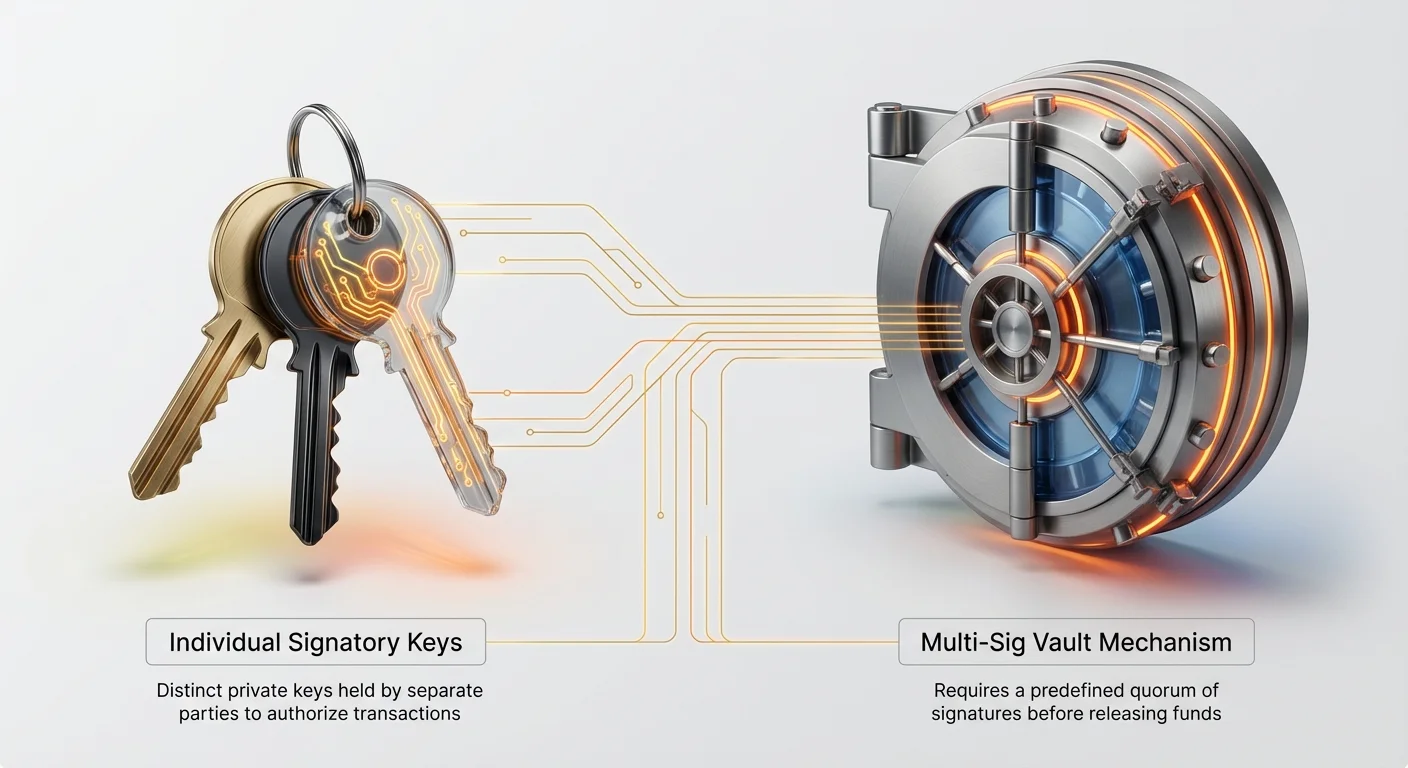
To understand the power of multi-sig, we must first recognize the structure of a standard crypto wallet. Most personal wallets are based on a single private key. This key acts as the master password, and anyone who possesses it can authorize any transaction instantly.
Multi-signature technology fundamentally changes this model. Instead of relying on one master key, a multi-sig wallet is defined by a specific set of rules written into the blockchain's smart contract.
The Mechanism of N-of-M Signature Schemes
A multi-signature scheme is often described using the formula "N-of-M."
- M (Maximum Keys): This represents the total number of private keys registered to control the wallet. These keys are held by separate individuals, devices, or entities (the custodians).
- N (Required Keys): This represents the minimum number of signatures (approvals) required from the M keys to authorize and execute a transaction.
For example, in a 3-of-5 multi-sig setup:
- M = 5 (There are five people/devices holding keys).
- N = 3 (Any three of those five people must sign the transaction for it to be valid and sent).
If only two people sign, the transaction remains unauthorized and pending. If four people sign, the transaction proceeds successfully, but only three signatures were necessary.
This architecture offers two immediate benefits: enhanced security (a hacker needs multiple keys, not just one) and enhanced governance (no single person can drain the funds).
Contrasting Security: Single-Key vs. Multi-Sig
| Feature | Single-Key Wallet (Standard) | Multi-Sig Wallet (N-of-M) |
|---|---|---|
| Control | Absolute control by one person/device. | Shared control distributed among several parties. |
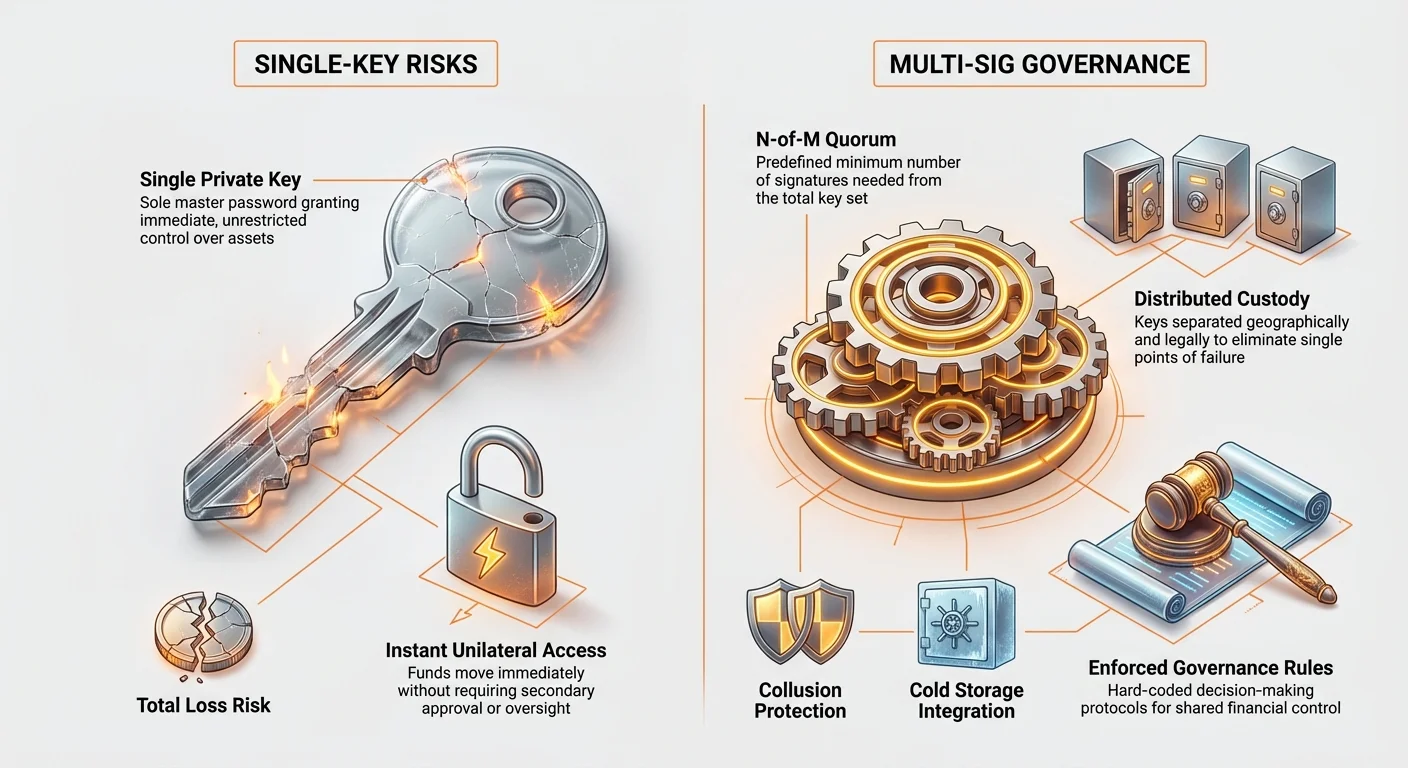
| Security Risk | Single Point of Failure (SPOF). Key loss = funds lost; Key compromise = funds stolen. | Eliminates SPOF. Requires collusion or multiple simultaneous compromises. |
| Governance | None (funds move instantly upon the owner's command). | Formal, predefined governance rules (quorum required for action). |
| Best Used For | Everyday spending, small amounts, high-frequency transactions. | Organizational treasuries, cold storage for large sums, inheritance planning. |
Advanced Security Layer: Cold-Storage Multisig
For organizations managing vast amounts of crypto, the multi-sig structure is often paired with cold storage (keys kept offline, typically on hardware wallets).
A common enterprise setup might involve a 4-of-7 scheme where:
- Keys 1, 2, and 3 are held by key executives or directors.
- Key 4 is held by a designated legal counsel.
- Key 5 is held in a corporate safety deposit box (as an offline backup).
- Keys 6 and 7 are held geographically separate in different locations.
To move funds, four parties must physically retrieve their keys, assemble, and sign the transaction. This high friction level makes moving funds difficult for unauthorized parties while still providing redundancy if one or two key holders are unavailable (e.g., Keys 6 and 7 are unavailable, but 1, 2, 3, and 4 are present).
II. حکمرانی کے فریم ورک کے طور پر ملٹی سگنیچر
روایتی فنانس میں، حکمرانی کارپوریٹ چارٹرز، بورڈ کی قراردادیں، اور قانونی معاہدوں پر انحصار کرتی ہے۔ ڈی سینٹرلائزڈ دنیا میں، ملٹی سگنیچر والیٹس ان قوانین کو اثاثہ کے اندر ہی ہارڈ کوڈ کرنے کی اجازت دیتے ہیں۔ یہ ملٹی سگنیچر والیٹ حکمرانی کی اصل ہے۔
اس سیاق میں حکمرانی کا مطلب مشترکہ مالی اثاثوں کے حوالے سے فیصلہ سازی کے لیے واضح قوانین قائم کرنا ہے۔
کوورم کی ضروریات اور اعتماد ماڈلز کی تعریف
این-آف-ایم اسکیم کے لیے منتخب کردہ تناسب آپ کے حکمرانی ماڈل کا مرکز ہے۔ یہ کسی بھی عمل کے لیے درکار اعتماد، رفتار اور ڈی سینٹرلائزیشن کی سطح کا تعین کرتا ہے۔
1. اکثریتی کوورم (اعلیٰ سیکیورٹی، متوازن اعتماد)
یہ سب سے عام ماڈل ہے، جو عام طور پر آدھے سے زیادہ کلیدوں پر دستخط کرنے کی ضرورت رکھتا ہے (مثلاً 3-آف-5 یا 5-آف-9)۔
- استعمال: یہ یقینی بناتا ہے کہ ایک چھوٹی، ناراض اقلیت تنظیم کے فنڈز کو منجمد نہ کر سکے، لیکن یہ کسی ایک شخص یا چھوٹے گروپ کو اکیلا عمل کرنے سے بھی روکتا ہے۔ یہ سب سے فعال ارکان کے درمیان اتفاق رائے کی ضرورت رکھتا ہے۔
- مثال: ایک کاروباری بورڈ جس میں 7 ارکان ہیں، 4-آف-7 ملٹی سگ استعمال کرتا ہے۔ اس کا مطلب ہے کہ رباعی تنخواہ کی ادائیگی یا بڑی سرمایہ کاری کی منظوری کے لیے چار ارکان (سادہ اکثریت) کا اتفاق ضروری ہے۔
2. فوق اکثریتی کوورم (اعلیٰ اصطکاک، زیادہ سے زیادہ اتفاق رائے)
یہ ماڈل بہت زیادہ فیصد کلیدوں کی ضرورت رکھتا ہے (مثلاً 5-آف-6 یا 9-آف-10)۔
- استعمال: انتہائی حساس فیصلوں کے لیے بہترین، جیسے تنظیم کو ختم کرنا، مکمل ملٹی سگ ڈھانچے کو تبدیل کرنا، یا ریزرو فنڈز کو منتقل کرنا۔ اعلیٰ اصطکاک روزمرہ کے آپریشنز کو سست کرتا ہے لیکن تیزی سے جذبات تغییرات سے بچاتا ہے۔
- مثال: ایک Decentralized Autonomous Organization (DAO) کے ذریعے منظم کمیونٹی خزانہ 9-آف-10 اسکیم استعمال کر سکتا ہے مرکزی سرمایہ ریزرو کو منتقل کرنے کے لیے، جو کور مینجمنٹ ٹیم سے تقریباً متفقہ اتفاق کو یقینی بناتا ہے۔
3. کم کوورم (اعلیٰ دستیابی، چند پر اعتماد)
یہ ماڈل کم تعداد میں کلیدوں کی ضرورت رکھتا ہے (مثلاً 2-آف-5 یا 3-آف-10)۔
- استعمال: آپریشنل کارکردگی اور تیز ردعمل کو ترجیح دیتا ہے۔ یہ کلید ہولڈرز کے درمیان اعلیٰ سطح کے اعتماد کا فرض کرتا ہے۔
- مثال: ایک غیر منافع بخش تنظیم اپنے آپریشنل فنڈز کے لیے 2-آف-5 سیٹ اپ استعمال کر سکتی ہے، جو خزانچی اور ایک دوسرے بورڈ ممبر کو ایمرجنسی امداد کی ادائیگی کی تیز منظوری دینے کی اجازت دیتا ہے بغیر مکمل بورڈ کے انتظار کے۔
کیس سٹڈی: کارپوریٹ خزانے کا انتظام
کاروباروں کے لیے جو کرپٹو رکھتے ہیں (بڑی عوامی کمپنیوں سے لے کر چھوٹے اسٹارٹ اپس تک)، ملٹی سگ فڈوشری ذمہ داری اور اندرونی کنٹرول کے لیے ضروری ہے۔
وضعیت: TechCorp Holdings (3-آف-5 اسکیم)
TechCorp اپنے کارپوریٹ ریزرو کا ایک حصہ Bitcoin میں رکھنے کا فیصلہ کرتا ہے، جو پانچ کلیدی اہلکاروں کے ذریعے منظم ہوتا ہے:
- کلید 1: CEO (اسٹریٹجک نگرانی)
- کلید 2: CFO (مالی اجازت)
- کلید 3: ہیڈ آف سیکیورٹی (ٹیکنیکل کسٹوڈین)
- کلید 4: ہیڈ آف لیگل (تعمیل اور حکمرانی)
- کلید 5: آزاد آڈیٹر (خارجی جانچ)
حکمرانی پالیسی: 3-آف-5 اسکیم نافذ کی جاتی ہے۔
- روایتی خرچ (مثلاً، وینڈر کو ادائیگی): CFO (کلید 2)، ہیڈ آف سیکیورٹی (کلید 3)، اور ایک دوسری پارٹی (کلید 1 یا کلید 4) کے دستخط درکار ہوتے ہیں۔ آڈیٹر (کلید 5) تنازعہ پیدا ہونے تک غیر فعال رہتا ہے۔
- بڑی سرمایہ کاریاں (مثلاً، مزید BTC خریدنا): CEO (کلید 1)، CFO (کلید 2)، اور ہیڈ آف لیگل (کلید 4) کے دستخط درکار ہوتے ہیں، جو اسٹریٹجک، مالی اور قانونی جائزہ کو یقینی بناتے ہیں۔
- کلید کا نقصان/تبدیلی: اگر ہیڈ آف سیکیورٹی اپنا ہارڈ ویئر والیٹ (کلید 3) کھو دیتا ہے، تو باقی چار پارٹیز (1، 2، 4، 5) 3-آف-4 ٹرانزیکشن انجام دے سکتی ہیں تاکہ فنڈز کو نئے 3-آف-5 والیٹ میں منتقل کیا جائے، کلید 3 کو نئے دستخط کنندہ یا ڈیوائس سے تبدیل کر دیا جائے۔
یہ ڈھانچہ فرائض کی علیحدگی کو نافذ کرتا ہے، یہ یقینی بناتا ہے کہ ٹیک کنٹرول کرنے والا شخص (کلید 3) اکیلا خرچ کی اجازت نہ دے سکے، اور خرچ کی اجازت دینے والا شخص (کلید 2) تکنیکی اور اسٹریٹجک منظوری کے بغیر فنڈز کو اکیلا منتقل نہ کر سکے۔
III. Practical Use Cases for Shared Crypto Wallet Utility
The governance flexibility provided by multi-sig makes it the superior choice for any scenario involving shared ownership, delayed access, or significant value that requires redundant protection.
1. Family Wealth and Inheritance Planning
Traditional inheritance planning for digital assets is notoriously difficult due to the fragility of seed phrases. If the account holder dies without providing the key, the funds may be inaccessible forever. Multi-sig creates a digital trust.
Scenario: The Digital Family Trust (2-of-3 Scheme)
A parent wants to ensure their children access the assets upon their passing, but also wants to maintain full control while alive.
- Key A: The Parent (Held on a primary device, typically the active key).
- Key B: The Child 1 (Held offline, securely stored, but known to the child).
- Key C: The Child 2 (Held offline, securely stored, but known to the child).
Governance Policy (2-of-3):
- While the Parent is Alive: The Parent uses Key A and Key B (or Key C) to move funds, maintaining full control.
- Upon the Parent's Death: Key A becomes permanently unavailable. The Parent's designated successor (often the executor or a lawyer) provides access to the secure physical locations of Key B and Key C. Since the two children possess the remaining necessary keys, they meet the 2-of-3 quorum requirement and can move the funds into a new, single-key wallet.
This method avoids relying on a single executor who must be trusted completely, ensuring shared access among heirs only when the primary key is permanently offline.
2. Safeguarding Personal Cold Storage
Even for individuals, multi-sig can dramatically increase security over a standard single-key hardware wallet. This shifts the security focus from protecting one secret phrase to managing the location and availability of several independent keys.
Scenario: The Distributed Personal Vault (2-of-3 Scheme)
A high-net-worth individual holds their long-term savings in a multi-sig vault.
- Key 1: Primary Hardware Wallet (Stored in the home safe).
- Key 2: Secondary Hardware Wallet (Stored in a geographically separate bank vault).
- Key 3: Mobile/Signing Key (A lightly protected key used primarily for confirming transactions, held on a mobile device or virtual server, used as the operational key).
To authorize a transaction, the user must combine Key 3 (for operational convenience) with either Key 1 or Key 2 (for security/verification). If Key 1 is lost in a fire, the user still has Key 2 and Key 3 to recover the funds. This provides powerful redundancy against physical disaster or theft.
3. Decentralized Autonomous Organizations (DAOs) and Community Funds
Multi-sig wallets are the foundational banking mechanism for most early DAOs and decentralized communities before they transition to more complex smart contract-based treasuries.
A DAO needs to pay developers, cover legal expenses, or distribute community grants. Multi-sig enables the elected or appointed council members to manage the treasury transparently.
Scenario: DAO Community Fund (5-of-9 Scheme)
Nine core contributors are elected to manage the fund. The 5-of-9 structure ensures that four members cannot unilaterally divert funds, and five members must actively participate to authorize spending. This forces debate and consensus for every outgoing transaction, reinforcing the decentralized nature of the community’s financial decisions.
IV. Designing Effective Multi-Sig Strategies
Implementing a multi-sig wallet requires thoughtful planning that balances security needs (high N) with operational reality (low M and reasonable N). The design process involves assessing organizational structure, risk appetite, and contingency plans.
Balancing Risk Tolerance vs. Operational Efficiency
The number of signatures required (N) directly correlates to operational friction. More required signatures mean greater security but slower transaction times.
| Scheme | Operational Profile | Trade-Off |
|---|---|---|
| 2-of-3 | High operational efficiency, quick transactions. | Low redundancy. If one key is compromised, or two key holders fall out of communication, the funds may be at risk or locked. |
| 3-of-5 | Balanced security and moderate efficiency. | Good redundancy (can lose two keys and still operate). Standard for small businesses and trusts. |
| 5-of-8 | High security, low operational speed. | Requires high coordination. Excellent for large, strategic reserve funds where transactions are infrequent. |
Actionable Tip: Always determine the quorum based on the velocity of the funds being managed. Use a high-friction scheme (e.g., 5-of-7) for long-term reserves and a lower-friction scheme (e.g., 2-of-3) for operational spending (if permissible by the organization's risk tolerance).
Strategic Separation of Keys
The resilience of a multi-sig setup depends entirely on the independence of the keys. If all keys are stored in the same physical location or controlled by parties subject to the same legal jurisdiction, the security benefit is diminished.
1. Geographic Separation
Keys should be stored in different cities, countries, or secure facilities (e.g., a bank vault, a remote office, a trusted attorney’s safe). This protects against single-location physical disasters (fire, flood, theft).
2. Legal Separation
If keys are held by individuals in different legal entities (e.g., CEO, independent counsel, corporate auditor), it complicates coercion. If a legal authority compels one key holder to sign, they still require cooperation from individuals under a different legal framework.
3. Technical Separation
Keys should be stored on different types of hardware and software. Avoid putting all M keys on the same brand of hardware wallet or managing all M keys from the same server architecture. Diversity mitigates against a potential software vulnerability in a single product line.
Incorporating Emergency Keys and Recovery Agents
For maximum resilience, some organizations designate specific keys that are only used in case of key loss or custodian unavailability.
- The Contingency Key (The M-key): In a 3-of-5 scheme, Key 5 might be designated the "contingency key." It is never used in routine operations. It is stored in the most secure location possible (e.g., encrypted on a stainless steel plate in a geographically separate vault). Its sole purpose is to sign a recovery transaction if one of the primary signers (Keys 1, 2, 3, or 4) loses access.
- The Recovery Agent: This is a trusted third party, often an attorney or a specialized escrow service, whose only duty is to safely store the key and confirm its release upon the verification of predetermined conditions (e.g., death certificates, notarized key loss declarations). The Recovery Agent should only hold a key, never the quorum majority.
V. خطرات کا سدباب: ملٹی-سگ ناکامی کی حالات کو سمجھنا
جبکہ ملٹی-سگ معیاری والٹس میں موجود سنگل پوائنٹ آف فیلیئر کو ختم کر دیتا ہے، یہ ہم آہنگی، سمارٹ کنٹریکٹ کی کمزوریوں، اور کی پالیٹکس سے متعلق نئے اور پیچیدہ خطرات متعارف کراتا ہے۔ ان ممکنہ ملٹی سیگ ناکامی کی حالات کو پہچاننا محفوظ نفاذ کے لیے انتہائی اہم ہے۔
1. ناقابل رسائی کا خطرہ (N ناکامی)
سب سے عام ناکامی کی حالت مطلوبہ N دستخطوں تک پہنچنے کی عدم صلاحیت ہے جو کی نقصان یا کسٹوڈین کی عدم دستیابی کی وجہ سے ہوتی ہے۔
- کی نقصان: اگر بہت سی کیز (M - N + 1) مستقل طور پر گم یا تباہ ہو جائیں تو والٹ ایک "crypto black hole" بن جاتا ہے۔ باقی ماندہ کیز کوورم پورا کرنے کے لیے ناکافی ہو جاتی ہیں، اور اثاثے مستقل طور پر لاک ہو جاتے ہیں اور ناقابل وصول ہو جاتے ہیں۔
- سدباب: اعلیٰ ریڈنڈنسی نافذ کریں (M اور N کے درمیان بڑا فرق، مثلاً 3-of-7، جو چار کیز کے نقصان کی اجازت دیتا ہے)۔ M کیز کے لیے سیڈ فریز کے انتہائی محفوظ بیک اپس ہمیشہ برقرار رکھیں، چاہے بنیادی آلہ تباہ ہو جائے۔
- کسٹوڈین کی عدم دستیابی: اگر کی ہولڈرز ناقابل رسائی ہو جائیں (بیماری، سفر، تنازع، قانونی پھنسی) تو لین دین رک سکتے ہیں۔ اگرچہ فنڈز کھوئے نہیں ہوتے، وہ غیر مائع ہو جاتے ہیں۔
- سدباب: تنظیم کے گورننس چارٹر میں واضح متبادل یا الٹرنیٹس کی تعریف کریں۔ دستخط کنندگان کو جغرافیائی اور زمانی طور پر تقسیم شدہ یقینی بنائیں (مثلاً، مختلف ٹائم زونز میں دستخط کنندگان 24/7 کوریج کے لیے)۔
2. ملی بھگت کا خطرہ (اعتماد کی ناکامی)
ملٹی-سگ سکیم میں اعتماد کی ضرورت ہوتی ہے، یعنی یہ اعتماد کہ مطلوبہ کی ہولڈرز کی تعداد (N) اقلیت کو دھوکہ دینے کے لیے ملی بھگت نہ کریں۔
اگر 3-of-5 سکیم میں تین افراد خفیہ طور پر ہم آہنگ ہو جائیں تو وہ دیگر دو کی ہولڈرز کی علم یا منظوری کے بغیر تمام فنڈز منتقل کر سکتے ہیں۔ یہ ایک ارادی ڈیزائن خصوصیت ہے—گورننس فرض کرتا ہے کہ ضروری کوورم (N) تنظیم کی جائز مرضی کی نمائندگی کرتا ہے۔
- سدباب: کی ہولڈرز کا انتخاب حقیقی تنظیمی فریضوں کی علیحدگی پر مبنی ہونا چاہیے۔ کبھی بھی کوورم (N) کو ایک ہی مینیجر کو براہ راست رپورٹ کرنے والے افراد یا متعلقہ فریقین کو نہ دیں جب تک کہ مقصد خاص طور پر وراثت یا مشترکہ ملکیت نہ ہو۔ دستخط کنندگان کے متضاد ترغیبات یقینی بنائیں (مثلاً، ایک اندرونی آڈیٹر ہے، ایک آپریشنل ڈائریکٹر ہے)۔
3. سمارٹ کنٹریکٹ اور پلیٹ فارم کا خطرہ
سنگل-کی والٹس کے برعکس، جو بنیادی طور پر بنیادی بلاک چین کریپٹوگرافی پر انحصار کرتے ہیں، ملٹی-سگ والٹس عام طور پر سمارٹ کنٹریکٹ کے ذریعے کنٹرول کیے جاتے ہیں (خاص طور پر Ethereum جیسے پلیٹ فارمز پر یا Bitcoin ملٹی-سگ حلز استعمال کرتے ہوئے)۔
اگر بنیادی سمارٹ کنٹریکٹ میں کوئی بگ ہو یا ملٹی-سگ والٹ بنانے کے لیے استعمال ہونے والا انٹرفیس پلیٹ فارم ناکام ہو جائے تو فنڈز露出 یا لاک ہو سکتے ہیں۔
- سدباب: صرف قائم اور مکمل طور پر آڈٹ شدہ ملٹی-سگ پلیٹ فارمز اور سمارٹ کنٹریکٹس استعمال کریں۔ اس بات کی تصدیق کریں کہ پلیٹ فارم میں اوپن سورس کوڈ موجود ہے جسے آزادانہ طور پر کاٹا جا سکتا ہے۔ اہم فنڈز کمٹ کرنے سے پہلے، چھوٹے ٹیسٹ ٹرانزیکشنز کریں اور تصدیق کریں کہ ملٹی-سگ پیرامیٹرز (N اور M) بلاک چین پر درست تعینات ہیں۔
4. کی انتظامی ڈیٹا کا نقصان
ملٹی-سگ سیٹ اپ صرف کیز تک محدود نہیں؛ یہ والٹ سے انٹرایکٹ کرنے کے لیے درکار انتظامی ڈیٹا کو بھی شامل کرتا ہے (مثلاً، والٹ ایڈریس، والٹ کنفیگریشن فائل، اور پبلک کیز M کی فہرست)۔ اگر تنظیم یہ معلومات کھو دے تو باقی پرائیویٹ کیز لین دین پر دستخط کرنے کے لیے والٹ انٹرفیس کو درست طریقے سے دوبارہ تعمیر کرنے کے لیے کافی نہ ہوں۔
- سدباب: والٹ کنفیگریشن ڈیٹا (جو پبلک کیز M اور مطلوبہ N کی فہرست بناتا ہے) کو ایک اہم، بیک اپ شدہ دستاویز سمجھیں جو پرائیویٹ سیڈ فریز سے الگ ہو۔ یہ ڈیٹا بنیادی آپریشنل ٹول کی ناکامی کی صورت میں نیا انٹرفیس قائم کرنے کی اجازت دیتا ہے۔
نتیجہ: ملٹی-سگ - مشترکہ تحویل کا مستقبل
متعدد دستخط والی ٹیکنالوجی اثاثوں کی ذخیرہ کو ایک تکنیکی مسئلے سے ایک اعلیٰ درجے کی تنظیمی حل تک بلند کر دیتی ہے۔ یہ سادہ انفرادی کنٹرول کے تصور سے آگے بڑھ جاتی ہے اور غیر مرکزی دنیا میں سخت، خودکار حکمرانی متعارف کراتی ہے۔
کریپٹو نئے آنے والوں کے لیے جو بڑی رقمیں منظم کرتے ہیں، ملٹی-سگ ذاتی خطرے کو کم کرنے کا ایک لازمی آلہ ہے۔ کاروباروں، برادریوں، اور خاندانوں کے لیے، یہ اندرونی کنٹرول قائم کرنے، امانت کی ذمہ داری نافذ کرنے، اور مشترکہ مالی استعمال کی ضمانت دینے کا بنیادی طریقہ کار ہے۔ کسی بھی عمل کے لیے متعدد کلیدوں کی ضرورت کے ذریعے، ملٹی-سگ اسکیم اتفاق رائے کو مجبور کرتی ہیں، ناکامی کے خلاف اہم اضافی حفاظت فراہم کرتی ہیں، اور اجتماعی ڈیجیٹل دولت کو محفوظ اور پائیدار طور پر منظم کرنے کے لیے درکار اعتماد کے ماڈلز کو رسمی طور پر منظم کرتی ہیں۔
ملٹی-سگ حل ڈیزائن کرتے وقت، کلید یہ ہے کہ سلامتی کو صرف کریپٹوگرافی کے اعتبار سے سوچنا چھوڑ دیں، اور لوگوں، طریقہ کاروں، اور سیاست کے اعتبار سے سوچنا شروع کریں۔ N-of-M اسکیم صرف ایک ریاضیاتی فارمولا نہیں ہے؛ یہ آپ کی تنظیم کا مشترکہ مالی خودمختاری کے لیے آئین ہے۔