
Bitcoin، پہلی اور سب سے قیمتی cryptocurrency، بنیادی طور پر peer-to-peer الیکٹرانک کیش سسٹم اور ویلیو اسٹور کے طور پر ڈیزائن کی گئی تھی۔ اس کی scripting language جان بوجھ کر محدود رکھی گئی ہے تاکہ سیکیورٹی اور استحکام کو ترجیح دی جائے، جو اس کی complex smart contracts کو natively سپورٹ کرنے کی صلاحیت کو محدود کرتی ہے۔
تاہم، Ethereum جیسی platforms پر decentralized finance (DeFi) کا عروج Bitcoin کی بھاری liquidity کو lending، borrowing، اور trading applications میں استعمال کرنے کی طلب پیدا کر گیا۔ اس ضرورت نے "wrapped" assets اور bridging solutions کی تخلیق کا باعث بنا۔
یہ mechanisms Bitcoin کو دوسری blockchains پر represent کرنے کی اجازت دیتے ہیں، effectively اس کی ویلیو کو incompatible networks کے درمیان منتقل کرتے ہیں۔ main chain پر bitcoin کو lock کر کے اور destination chain پر representative token جاری کر کے، صارفین اپنے holdings بیچے بغیر وسیع crypto ecosystem سے engage کر سکتے ہیں۔
اگرچہ یہ innovation capital efficiency کو unlock کرتی ہے، یہ significant complexity اور risk بھی introduce کرتی ہے۔ ان assets کی سیکیورٹی اب صرف Bitcoin network پر منحصر نہیں بلکہ bridging architecture، custody models، اور secondary layer کے smart contracts پر rely کرتی ہے۔ ان bridges کے mechanics کو سمجھنا multi-chain economy میں کسی بھی participant کے لیے ضروری ہے۔
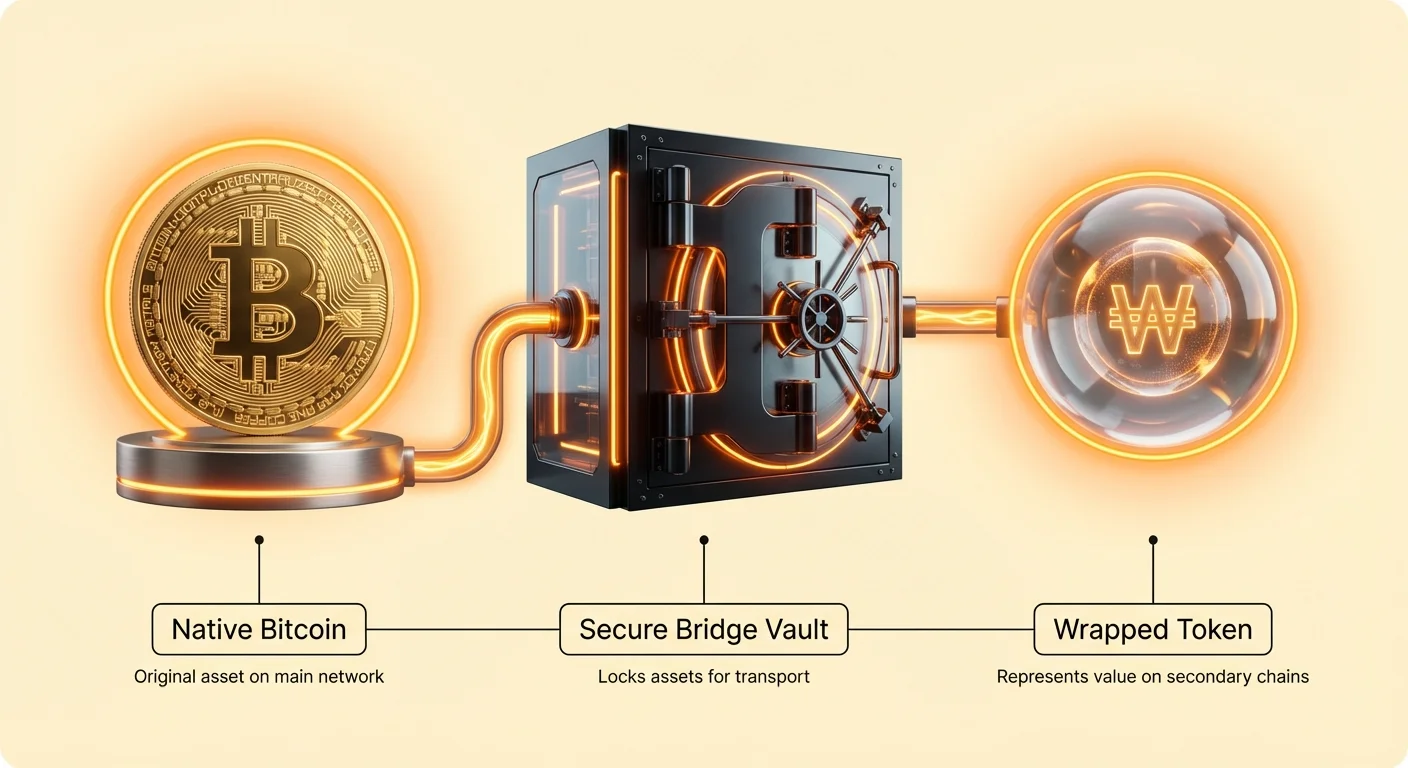
Asset Wrapping کے Mechanics
Two-Way Peg System
blockchains کے درمیان assets کی منتقلی کو enable کرنے والی fundamental technology کو two-way peg کہا جاتا ہے۔ چونکہ blockchains الگ الگ ledgers ہیں جو ایک دوسرے کو directly پڑھ یا لکھ نہیں سکتے، asset literally ایک chain سے دوسری میں منتقل نہیں ہوتا۔ اس کے بجائے، asset کو source chain پر immobilized کر دیا جاتا ہے، اور destination chain پر proxy token جاری کیا جاتا ہے۔
ایک transfer شروع کرنے کے لیے، ایک user Bitcoin network پر designated address کو bitcoin بھیجتا ہے۔ یہ address digital lockbox کا کام کرتا ہے۔ جب transaction confirm ہو جاتی ہے اور funds secure ہو جاتے ہیں، bridge protocol deposit کی verification کرتا ہے۔ verification کے بعد، protocol secondary chain پر equivalent tokens mint کرتا ہے۔
یہ نئے tokens legally یا algorithmically original asset کی ویلیو سے pegged ہوتے ہیں۔ original bitcoin واپس حاصل کرنے کے لیے، process کو صرف reverse کر دیا جاتا ہے۔ user wrapped tokens کو secondary chain پر burn یا return کر دیتا ہے۔ protocol اس action کو detect کرتا ہے اور locked bitcoin کو user کے main network address پر release کر دیتا ہے۔
Locking اور Minting Protocols
ایک wrapped asset کی integrity مکمل طور پر locking mechanism کی سیکیورٹی پر منحصر ہے۔ اگر Bitcoin network پر lockbox compromise ہو جائے اور backing funds چوری ہو جائیں، تو secondary chain پر wrapped tokens بے قیمت ہو جاتے ہیں۔ یہ native bitcoin رکھنے میں موجود نہ ہونے والا critical point of failure پیدا کرتا ہے۔
مختلف protocols اس locking اور minting process کو مختلف طریقوں سے handle کرتے ہیں۔ کچھ ایک single trusted entity پر rely کرتے ہیں lockbox manage کرنے کے لیے، جبکہ دوسرے federation of signers یا decentralized algorithms استعمال کرتے ہیں۔ منتخب method user کی طرف سے required trust کی سطح اور asset کی overall censorship resistance کا تعین کرتا ہے۔
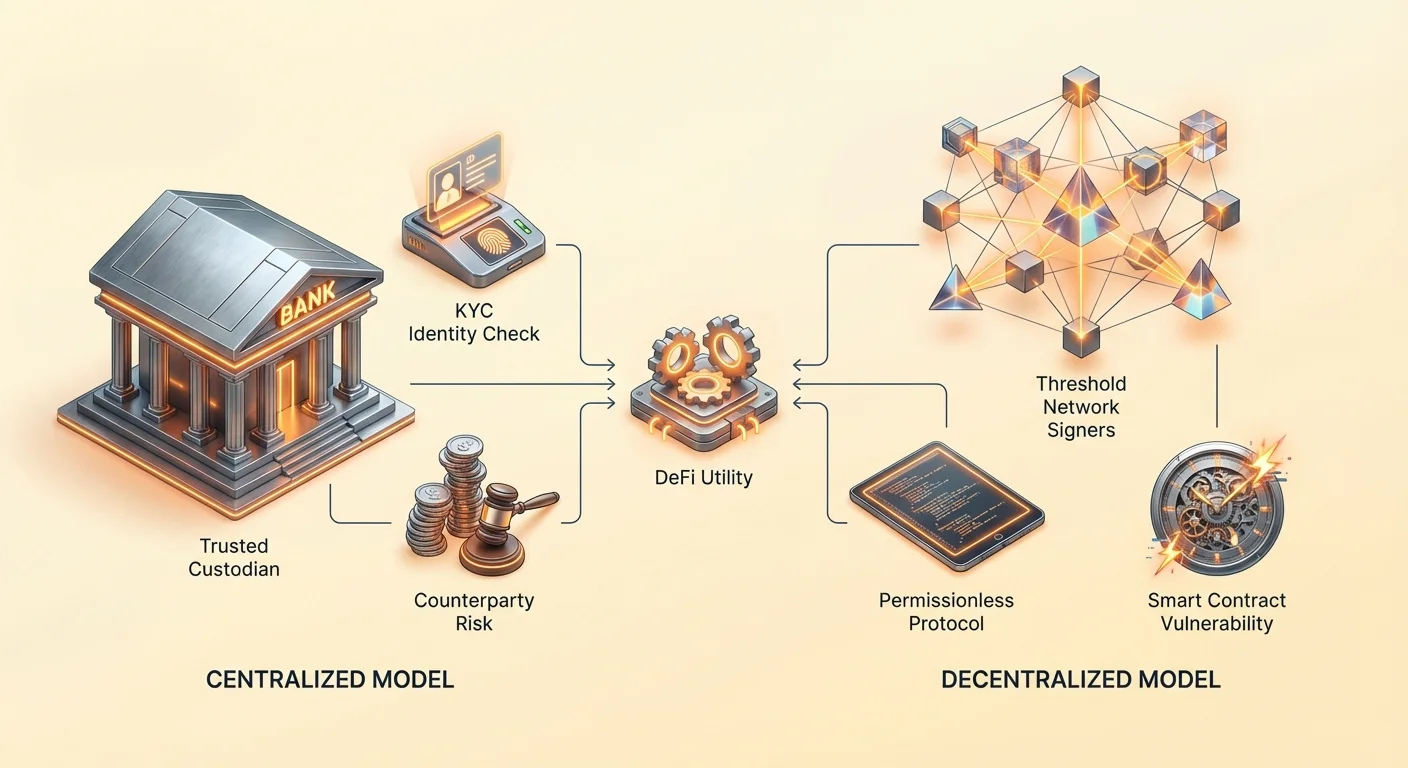
ایک centralized model میں، user کو trust کرنا پڑتا ہے کہ custodian funds کے ساتھ بھاگ نہ جائے یا regulatory pressure کی وجہ سے assets freeze نہ کر دے۔ decentralized models میں، risk code vulnerability اور network of signers میں consensus failure کی طرف shift ہو جاتی ہے۔
Centralized Custody: WBTC Model
Wrapped Bitcoin کی Architecture
Wrapped Bitcoin (WBTC) Bitcoin کو Ethereum network پر لانے کا سب سے زیادہ adopted solution ہے۔ یہ ERC-20 token کے طور پر کام کرتا ہے جو 1:1 physical bitcoin سے backed ہے جو reserve میں رکھا جاتا ہے۔ یہ system DeFi protocols کو liquidity لانے کے لیے ڈیزائن کیا گیا ہے جن کو stable اور valuable collateral کی ضرورت ہوتی ہے۔
WBTC کی architecture distinctly centralized ہے اور permissioned group of entities پر rely کرتی ہے۔ یہ trustless protocol نہیں ہے جہاں کوئی بھی user directly smart contracts سے interact کر کے tokens mint کر سکے۔ اس کے بجائے، یہ trusted partners کا consortium قائم کرتا ہے جو underlying assets کی supply اور custody manage کرتے ہیں۔
یہ model decentralization پر efficiency اور regulatory compliance کو ترجیح دیتا ہے۔ known entities استعمال کر کے، WBTC institutional investors کو assets کی legal status کے بارے میں security کا احساس دیتا ہے۔ تاہم، یہ Bitcoin کے originally eliminate کرنے والے counterparty risk کو reintroduce کرتا ہے۔
Merchant اور Custodian کا Split
WBTC operational roles کو دو distinct categories میں الگ کرتا ہے: merchants اور custodians۔ یہ separation of duties centralized system میں checks and balances پیدا کرنے کے لیے ہے۔ Merchants user-facing entities ہیں جو tokens کی distribution اور collection handle کرتے ہیں۔
WBTC mint کرنے کے لیے، user کو merchant کے ذریعے جانا پڑتا ہے۔ merchant user پر Know Your Customer (KYC) اور Anti-Money Laundering (AML) checks کرتا ہے۔ جب user کی identity verify ہو جاتی ہے، وہ bitcoin کو merchant کو transfer کرتا ہے۔ merchant پھر custodian کے ساتھ transaction initiate کرتا ہے۔
Custodian وہ entity ہے جو actually Bitcoin wallets کی keys رکھتی ہے۔ merchant سے bitcoin وصول کرنے پر، custodian Ethereum پر equivalent WBTC mint کرتا ہے اور اسے merchant کو بھیجتا ہے۔ merchant پھر WBTC کو user کو transfer کر دیتا ہے۔
یہ structure اس مطلب کی ہے کہ users کبھی directly custodian یا smart contracts سے interact نہیں کرتے۔ وہ merchant پر dependent ہوتے ہیں swap facilitate کرنے کے لیے۔ مزید برآں، custodian backing assets پر ultimate power رکھتا ہے، جو single point of failure پیدا کرتا ہے اگر custodian کی keys compromise ہوں یا وہ maliciously کام کرے۔
Decentralized Bridging: tBTC Protocol
Code کے ذریعے Trust Minimize کرنا
centralized model کے مقابلے میں، tBTC (Threshold Bitcoin) permissionless اور decentralized alternative فراہم کرنے کا ہدف رکھتا ہے۔ یہ premise پر بنایا گیا ہے کہ users کو اپنے funds تک رسائی کے لیے company یا legal entity پر trust نہ کرنا پڑے۔ اس کے بجائے، tBTC bridge کو secure کرنے کے لیے mathematics اور game theory پر rely کرتا ہے۔
tBTC کسی کو بھی KYC checks یا middleman پر rely کیے بغیر Ethereum پر tokenized bitcoin mint کرنے کی اجازت دیتا ہے۔ protocol centralized custodian کو dynamic network of node operators سے replace کرتا ہے۔ یہ operators deposited bitcoin کو secure کرنے کے لیے threshold cryptography استعمال کرتے ہوئے مل کر کام کرتے ہیں۔
یہ approach blockchain industry کے ethos سے زیادہ قریب ہے۔ یہ Bitcoin کی censorship resistance کو DeFi ecosystem میں extend کرنے کی کوشش کرتا ہے۔ permission کی ضرورت ہٹا کر، tBTC bridge کو تمام users کے لیے open رکھتا ہے، ان کی geographic location یا identity کی پروا کیے بغیر۔
Threshold Signatures اور Signer Groups
tBTC کے پیچھے core technology threshold signatures کا استعمال ہے۔ single private key کی بجائے جو Bitcoin wallet control کرے، key mathematically multiple shares میں split کی جاتی ہے۔ یہ shares Threshold Network پر node operators کے group میں distribute کیے جاتے ہیں۔
locked bitcoin move کرنے کے لیے، ان operators کا specific subset یا "threshold" transaction sign کرنے پر agree کرنا پڑتا ہے۔ کوئی single operator full private key تک رسائی نہیں رکھتا، یعنی کوئی single person funds چوری نہیں کر سکتا۔ signers کو large pool of stakers سے randomly select کیا جاتا ہے جنہوں نے network میں participate کرنے کے لیے collateral provide کیا ہے۔
signer selection کی randomness critical ہے۔ یہ malicious actors کو specific wallet control لینے کے لیے coordinate ہونے سے روکتی ہے۔ مزید برآں، system signers اور wallets کو periodically rotate کرتا ہے، جسے sweeping کہا جاتا ہے۔ یہ کسی single group of signers کی exposure کو limit کرتا ہے اور funds کی security کو constantly refresh کرتا ہے۔
Trust اور Security Models کا موازنہ
| خصوصیت | Centralized Model (مثال کے طور پر، WBTC) | Decentralized Model (مثال کے طور پر، tBTC) |
|---|---|---|
| کسٹوڈی | Single entity یا small federation | Distributed network of nodes |
| رسائی | Permissioned (KYC required) | Permissionless (No KYC) |
| بیکنگ | 1:1 Physical Bitcoin | 1:1 Bitcoin + Node Collateral |
| شفافیت | Proof of Reserves (Trust based) | On-chain verifiable |
| رسک کی قسم | Counterparty/Regulatory | Smart Contract/Technical |
| Minting Speed | Slower (Manual processing) | Faster (Automated) |
Counterparty Risk کا جائزہ
bridging solutions کے درمیان انتخاب کرتے ہوئے، primary consideration اکثر user قبول کرنے والے risk کی نوعیت ہوتی ہے۔ centralized models میں، primary risk counterparty failure ہے۔ یہ اس possibility کو کہتا ہے کہ custodian bankrupt ہو جائے، hack ہو جائے، یا government assets ضبط کر لے۔
اگر major custodian fail ہو جائے، legal recourse سست اور غیر یقینی ہو سکتی ہے۔ users ایک token رکھتے ہیں جو asset پر claim ہے، لیکن وہ asset خود نہیں رکھتے۔ اگر backing bitcoin گم ہو جائے، secondary chain پر token اپنا peg کھو دیتا ہے اور بے قیمت ہو جاتا ہے۔
Decentralized models اس specific risk کو mitigate کرتے ہیں single counterparty ہٹا کر۔ کوئی CEO گرفتار کرنے کے لیے نہیں اور کوئی headquarters raid کرنے کے لیے نہیں۔ تاہم، یہ risk کو مکمل eliminate نہیں کرتا؛ یہ صرف مختلف domain میں shift کر دیتا ہے۔
Technical Vulnerabilities کا جائزہ
decentralized systems میں risks primarily technical ہیں۔ یہ protocols complex smart contracts اور cryptographic primitives پر rely کرتے ہیں۔ اگر code میں bug ہو یا economic incentives میں flaw، system fail ہو سکتا ہے۔
Smart contract exploits DeFi sector میں historically common attack vector رہے ہیں۔ اگر hacker minting logic یا signature scheme میں vulnerability ڈھونڈ لے، وہ potentially funds drain کر سکتا ہے بغیر physical location یا person compromise کیے۔
Additionally، decentralized systems network nodes کی majority کی honesty پر rely کرتے ہیں۔ over-collateralization اور slashing جیسے mechanisms bad behavior punish کرنے کے لیے ہیں، لیکن extreme market volatility theoretically ان economic security guarantees کو undermine کر سکتی ہے۔
Sidechains اور Federated Pegs
Liquid Network Approach
Sidechains Bitcoin کو scale کرنے اور complex functionality enable کرنے کا ایک اور طریقہ پیش کرتے ہیں۔ Sidechain main Bitcoin network کے متوازی independent blockchain ہے۔ اس کا اپنا consensus mechanism اور rules ہوتے ہیں لیکن main chain سے bridge maintain کرتا ہے assets transfer کی اجازت دینے کے لیے۔
Liquid Network Bitcoin sidechain کا prominent example ہے۔ یہ federated two-way peg استعمال کرتا ہے۔ اس system میں، federation of functionaries—typically cryptocurrency exchanges اور trading desks—funds کی locking اور unlocking manage کرتی ہے۔
یہ federation multisignature wallet کی طرح کام کرتی ہے۔ main chain سے sidechain پر funds move کرنے والی transaction کے لیے federation members کی majority کی approval درکار ہوتی ہے۔ یہ model faster transaction speeds اور confidential transactions پیش کرتا ہے، جو Bitcoin پر natively available نہیں ہیں۔
Federated Security میں Trade-offs
Sidechain کی security Bitcoin کے proof-of-work سے directly derive نہیں ہوتی۔ اس کے بجائے، sidechain کے validators یا federation کی consensus پر rely کرتی ہے۔ اگر federation collude کرے، وہ transactions censor کر سکتے ہیں یا funds چوری کر سکتے ہیں۔
یہ مطلب ہے کہ sidechains experimentation اور scalability allow کرتے ہیں، لیکن main Bitcoin network کی طرح security level نہیں دیتے۔ users کو federation members پر trust کرنا پڑتا ہے کہ وہ honestly کام کریں۔
تاہم، traders اور institutions جو exchanges کے درمیان large capital quickly move کرنے کی ضرورت رکھتے ہیں، Liquid کی speed اور privacy benefits اکثر mainnet Bitcoin کے مقابلے reduced security guarantees پر بھاری پڑتی ہیں۔
Tokenized Bitcoin کی Emerging Variations
Exchange-Issued Assets
Major centralized exchanges نے اپنے ecosystems میں liquidity رکھنے کے لیے wrapped Bitcoin کی اپنی versions introduce کی ہیں۔ مثال کے طور پر، cbBTC جیسے tokens users کو decentralized finance applications میں bitcoin holdings استعمال کرنے کی اجازت دیتے ہیں specific networks پر جو exchange support کرتا ہے۔
یہ assets WBTC کی طرح کام کرتے ہیں لیکن typically single exchange entity manage کرتی ہے۔ custody internally handle کی جاتی ہے، اور minting اور burning processes exchange کے user interface میں integrated ہوتے ہیں۔ یہ exchange ecosystem میں پہلے سے users کے لیے seamless experience پیش کرتا ہے۔
یہاں risk profile specific exchange کی solvency اور operational security سے directly tied ہے۔ اگر exchange insolvency یا security breach کا سامنا کرے، تو اس کے issued wrapped assets خطرے میں پڑ سکتے ہیں۔ یہ "walled garden" effect پیدا کرتا ہے جہاں asset کی utility ecosystem میں high ہے لیکن specific issuer risk carry کرتا ہے۔
Synthetic Bitcoin Implementations
Synthetic assets Bitcoin exposure دوسری chains پر لانے کا مختلف approach represent کرتے ہیں۔ vault میں physical bitcoin سے backed ہونے کی بجائے، synthetic bitcoin دوسرے assets سے backed ہوتا ہے—اغلب host chain کا native token یا stablecoins۔
Synthetix جیسے protocols users کو price oracles استعمال کر کے Bitcoin کی price track کرنے والے tokens mint کرنے دیتے ہیں۔ sBTC جیسے یہ tokens، direct redeemability for BTC کی بجائے over-collateralization اور liquidation mechanisms سے اپنا peg maintain کرتے ہیں۔
یہ model Bitcoin bridge کی ضرورت مکمل eliminate کر دیتا ہے، کیونکہ actual bitcoin lock کرنے کی ضرورت نہیں۔ تاہم، یہ oracle failures اور collateral volatility سے متعلق distinct risks introduce کرتا ہے۔ اگر collateral کی ویلیو rapidly crash ہو جائے، synthetic asset اپنا peg کھو سکتا ہے۔
کسٹوڈی رسک کا وسیع سپیکٹرم
Cross-Chain Bridges میں Vulnerabilities
Cross-chain bridges historically crypto infrastructure کے سب سے vulnerable components میں سے ایک رہے ہیں۔ دو مختلف blockchains کے درمیان state manage کرنے کی complexity hackers کے لیے large attack surface پیدا کرتی ہے۔
بہت سے high-profile exploits نے source chain پر lockbox manage کرنے والے smart contracts یا destination chain پر minting rights کو target کیا ہے۔ اگر attacker contract کو deposit ہو گیا ہونے کا یقین دلا سکے، وہ unbacked tokens mint کر سکتا ہے۔ Conversely، اگر وہ wrapped tokens burn کیے بغیر real assets unlock کر سکے، وہ bridge کے reserves drain کر دیتا ہے۔
یہ incidents bridge code کی rigorous auditing اور formal verification کی اہمیت کو highlight کرتے ہیں۔ users کو new یا untested bridge protocols سے ہوشیار رہنا چاہیے اور team کا track record اور performed security audits consider کرنا چاہیے۔
Regulatory اور Censorship Concerns
crypto industry mature ہونے کے ساتھ، bridging assets پر regulatory scrutiny بڑھ گئی ہے۔ wrapped tokens کے centralized issuers ان jurisdictions کے laws کے تابع ہوتے ہیں جہاں وہ operate کرتے ہیں۔ اس کا مطلب ہے کہ وہ illicit activity سے associated assets freeze کرنے پر مجبور کیے جا سکتے ہیں۔
wrapped token رکھنے والے user کے لیے، یہ possibility introduce کرتا ہے کہ ان کے funds unusable ہو جائیں اگر underlying address blacklist ہو جائے۔ یہ native Bitcoin کی censorship resistance سے fundamental departure ہے۔
Decentralized protocols privacy technologies اور distributed governance سے اسے mitigate کرنے کی کوشش کرتے ہیں، لیکن وہ بھی potential regulatory challenges کا سامنا کرتے ہیں۔ compliance اور permissionless access کے درمیان tension bridging infrastructure کی evolution میں central theme ہے۔
Interoperability میں Future Trends
Layer 2 Integration
Bitcoin کی evolution میں Layer 2 solutions کی development شامل ہے جو network کو scale کرنے کا ہدف رکھتے ہیں جبکہ اس کی security properties preserve کرتے ہیں۔ Lightning Network جیسے networks state channels استعمال کرتے ہیں instant، low-cost payments enable کرنے کے لیے بغیر separate token یا custodial bridge کی ضرورت کے۔
اگرچہ Lightning primarily payments کے لیے ہے، دوسرے Layer 2 projects Bitcoin کے اوپر directly smart contract functionality introduce کرنے کے طریقے explore کر رہے ہیں۔ یہ eventually bitcoin کو Ethereum جیسے entirely different blockchains پر wrapping کی ضرورت کم کر سکتا ہے۔
Bitcoin پر directly settle کرنے والے execution environments بنوائے بجائے، developers DeFi کو Bitcoin ecosystem میں natively لانا چاہتے ہیں۔ یہ users کو lend، borrow، اور trade کرنے کی اجازت دے گا بغیر کبھی اپنے coins کو third-party bridge یا custodian سونپے۔
Native Opcode Proposals
Bitcoin کی scripting language upgrade کرنے والی proposals، جیسے OP_CAT، network کی external events verify کرنے اور complex covenants manage کرنے کی صلاحیت کو enhance کر سکتی ہیں۔ یہ technical improvements future میں زیادہ secure اور trust-minimized bridging designs enable کر سکتے ہیں۔
اگر Bitcoin natively دوسری chains سے proofs verify کر سکے یا complex spending conditions enforce کر سکے، federations اور multisig wallets پر reliance کم ہو سکتی ہے۔ یہ "trustless" bridges کا راستہ ہموار کرے گا جہاں security Bitcoin protocol خود guarantee کرے بجائے external validators کے۔
جیسے جیسے یہ technologies develop ہوئیں گی، Bitcoin bridging کا landscape بہتر security guarantees اور end user کے لیے کم friction والی solutions کی طرف shift ہوگا۔
نتیجہ
Bitcoin کو دوسری blockchain networks پر bridge کرنے کی صلاحیت دنیا کی سب سے بڑی cryptocurrency کی utility کو fundamentally expand کر دی ہے۔ passive store of value کو active collateral asset میں تبدیل کر کے، WBTC اور tBTC جیسے wrapped tokens نے Bitcoin کو decentralized finance کے vibrant ecosystem میں integrate کر دیا ہے۔ یہ integration capital کو freely flow کرنے دیتی ہے، entire crypto landscape میں liquidity اور yield generation کے مواقع بڑھاتی ہے۔
تاہم، یہ functionality increased risk اور complexity کی قیمت پر آتی ہے۔ centralized custodian کی regulatory certainty یا decentralized protocol کی permissionless innovation منتخب کرتے ہوئے، users کو Bitcoin mainnet کی absolute security کو secondary chain کی utility کے بدلے trade کرنا پڑتا ہے۔ custody models، smart contract security، اور peg mechanisms کی nuances کو سمجھنا اس interconnected environment میں navigate کرنے والے کسی بھی شخص کے لیے vital ہے۔
Bitcoin کی بریجنگ idle capital کو active liquidity میں تبدیل کرتی ہے، لیکن users کو involved security trade-offs کا احتیاط سے جائزہ لینا پڑتا ہے۔