
بٹ کوائن (BTC) نے sound، decentralized digital money متعارف کروا کر مالیات میں انقلاب برپا کیا۔ تاہم، security اور immutability کو اولین ترجیح دینے والی اس کی بنیادی ڈیزائن کی وجہ سے، بٹ کوائن کا مرکزی blockchain نسبتاً سست ہے اور اس میں native smart contract کی صلاحیتیں نہیں ہیں جو modern decentralized finance (DeFi) protocols میں مکمل شرکت کے لیے ضروری ہیں، جو اکثر Ethereum یا Solana جیسے نیٹ ورکس پر موجود ہوتے ہیں۔
یہ technological separation ایک اہم چیلنج پیش کرتی ہے: ہم بٹ کوائن کی massive liquidity اور trustworthiness کو کیسے unlock کریں اور اسے high-speed، programmable DeFi کی دنیا میں seamlessly integrate کریں؟
اس کا حل scaling اور bridging technologies میں ہے۔ یہ گائیڈ Lightning Network کو small، fast payments کے لیے استعمال کرنے کے basic concept سے آگے بڑھتی ہے اور اس کی advanced application میں جھانکتی ہے: complex DeFi ecosystems میں BTC liquidity inject کرنے کے لیے crucial high-speed conduit کے طور پر کام کرنا۔ ہم mechanisms کا جائزہ لیں گے—trusted wrapping services سے لے کر trustless cross-chain atomic swaps اور novel federated custody solutions تک—جو بٹ کوائن کو cross-chain yield generation اور advanced decentralized strategies کے لیے foundational asset بننے کی اجازت دیتے ہیں۔
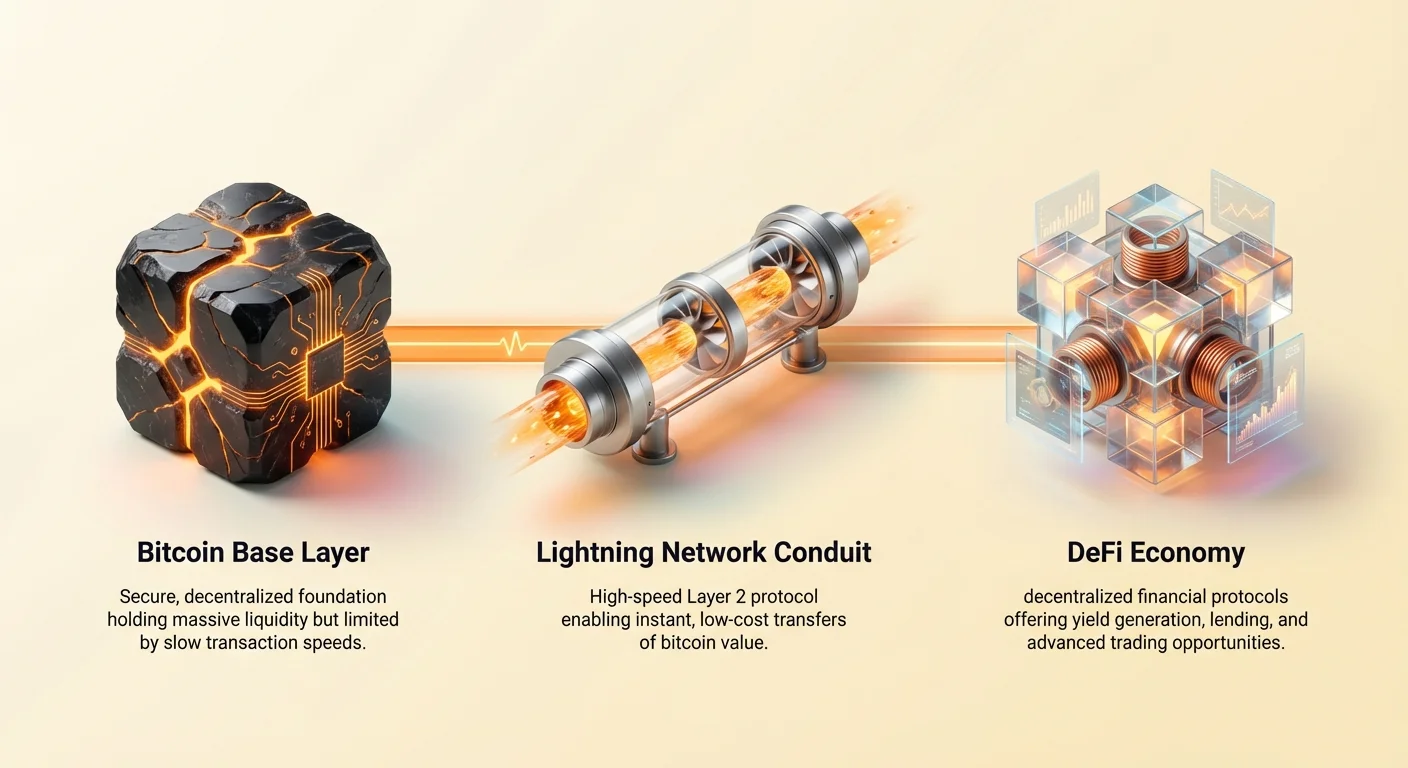
مرکزی مسئلہ: بٹ کوائن liquidity کو unlock کرنا
Lightning کی advanced applications کو سمجھنے کے لیے، ہمیں پہلے fundamental barrier کو recognize کرنا ہوگا جو بٹ کوائن کو DeFi کی باقی دنیا سے الگ کرتی ہے۔
بٹ کوائن کی طاقت اور حدود
بٹ کوائن کو اکثر digital gold کہا جاتا ہے کیونکہ اس کی architecture maximum security اور change کے خلاف resistance کے لیے ڈیزائن کی گئی ہے۔ لین دین slowly validate ہوتے ہیں (تقریباً ہر 10 منٹ میں) اور نیٹ ورک intentionally scripts کی complexity کو محدود کرتا ہے جو یہ execute کر سکتا ہے۔ یہ design choice اسے exceptionally secure بناتی ہے، لیکن rapid، complex transactions والے environments میں اس کی utility کو inherently محدود کر دیتی ہے، جیسے yield farming، decentralized lending، یا complex derivatives trading۔
اگر بٹ کوائن liquidity—crypto economy میں سب سے بڑا value pool—original slow chain پر locked رہتی ہے، تو broader DeFi ecosystem کی potential محدود رہتی ہے۔
Scaling Solutions کا کردار
Scaling solutions base layer (Layer 1، یا L1) کی throughput limits کو حل کرتی ہیں۔
The Lightning Network (L2): Lightning بٹ کوائن L1 پر بنایا گیا Layer 2 (L2) protocol ہے۔ یہ established payment channels کے ذریعے off-chain لین دین کروا کر nearly instant، near-zero-fee transactions ممکن بناتا ہے۔ یہ speed bridging کے لیے critical ہے، کیونکہ یہ BTC کو initial conversion point تک پہنچانے کے وقت اور cost کو کم کرتا ہے، جو DeFi integration میں اکثر key bottleneck ہوتا ہے۔
DeFi L2s (Ethereum، etc.): Ethereum جیسے نیٹ ورکس بھی L2 solutions (Optimism، Arbitrum) استعمال کرتے ہیں scale کرنے کے لیے۔ جب ہم bridging کی بات کرتے ہیں، تو اکثر Lightning کو استعمال کر کے BTC کو quickly move کرنے اور پھر اسے wrapped BTC جیسے format میں convert کرنے کی بات ہوتی ہے جو Ethereum جیسے L1/L2 smart contract environment کے ساتھ interact کر سکے۔
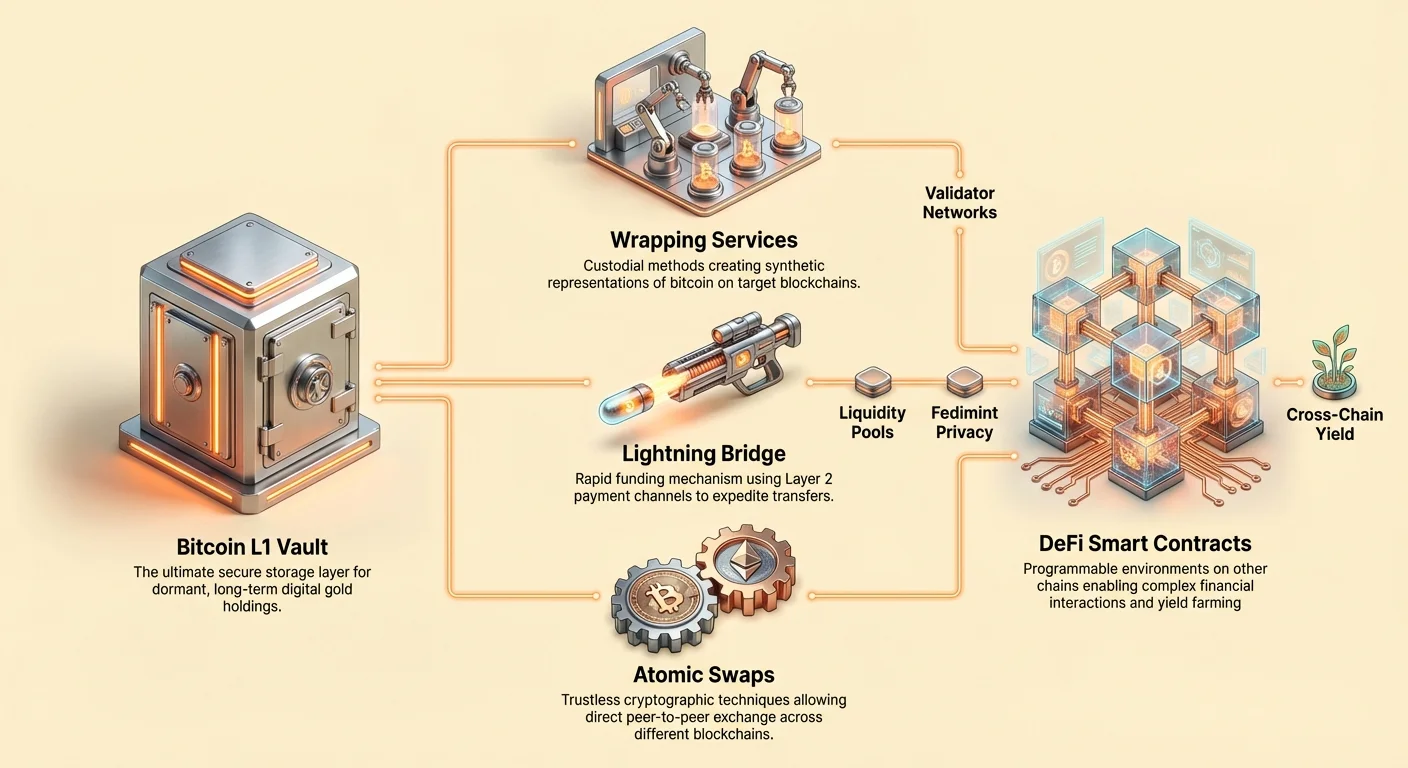
Mechanism 1: Wrapping کے ذریعے BTC کو DeFi تک Bridging
Bitcoin value کو separate smart contract ecosystem میں لانے کا سب سے common اور currently most liquid method "wrapping" ہے۔ یہ process effectively آپ کے underlying BTC کی digital receipt بناتی ہے، جسے پھر دوسرے blockchains پر استعمال کیا جا سکتا ہے۔
Wrapped Bitcoin (wBTC) کو سمجھنا
Wrapped Bitcoin (wBTC) ایک ERC-20 token ہے جو real Bitcoin سے 1:1 collateralized ہے جو custody میں رکھا جاتا ہے۔ اسے physical gold کو secure vault میں لے جانے اور paper certificate (wBTC token) وصول کرنے کی طرح سمجھیں جو ownership ثابت کرتا ہے۔ یہ certificate Ethereum-based DeFi protocols پر instantly traded، lent، یا staked کیا جا سکتا ہے۔
The Wrapping Process:
- صارف BTC کو custodian (یا decentralized custodians/merchants کے network) کو بھیجتا ہے۔
- Custodian BTC کو secure vault میں lock کرتا ہے۔
- Custodian Ethereum network پر corresponding wBTC mint کرتا ہے اور اسے صارف کے DeFi wallet address پر بھیجتا ہے۔
- صارف اب اس wBTC کو کسی بھی دوسرے Ethereum token کی طرح استعمال کر سکتا ہے۔
Custodial بمقابلہ Non-Custodial Debate
اگرچہ wrapping effective ہے، یہ trust کی layer متعارف کراتی ہے۔
- Custodial Models (e.g., wBTC): یہ model regulated institutions (custodians) کے consortium پر rely کرتا ہے 1:1 backing یقینی بنانے کے لیے۔ یہاں risk counterparty risk ہے: custodian کے fail ہونے، hack ہونے، یا fraudulently عمل کرنے کی possibility، جس سے wBTC unbacked رہ جائے۔
- Non-Custodial/Decentralized Models (e.g., renBTC، tBTC): یہ protocols trust کو minimize کرنے کی کوشش کرتے ہیں decentralized networks، cryptography، یا staking mechanisms استعمال کر کے collateralization guarantee کرنے کے لیے۔ اگرچہ theoretically mathematically more secure، یہ اکثر different complexities متعارف کرتے ہیں، جیسے external validator networks پر reliance یا potentially complex smart contract interactions۔
Strategic Tip: ہمیشہ specific wrapping mechanism (the ‘bridge’) کا research کریں جو آپ استعمال کر رہے ہیں۔ Asset کے market cap، audit history، اور locked BTC secure کرنے والے institutions یا decentralized networks کی reputation دیکھیں۔
Practical Use Case: Ethereum پر Yield Generation
جب BTC wrap ہو جائے، تو اس کی possibilities exponentially بڑھ جاتی ہیں۔
Self-custody adopter اپنا BTC لے سکتا ہے، اسے wBTC میں wrap کر سکتا ہے، اور پھر DeFi lending protocols میں participate کر سکتا ہے۔ مثال کے طور پر، وہ wBTC کو Aave یا Compound جیسے platform میں deposit کر کے passive interest کما سکتے ہیں۔ یہ user کو Bitcoin کی value exposure برقرار رکھنے کی اجازت دیتا ہے جبکہ simultaneously yield generate کرتا ہے—capital efficiency manage کرنے کا powerful tool۔
Mechanism 2: True Cross-Chain Swaps (Atomic Swaps)
جبکہ wrapping new derivative asset (wBTC) بنانے کی ضرورت رکھتی ہے، atomic swaps users کو ایک native cryptocurrency کو دوسرے blockchain پر دوسری native cryptocurrency کے بدلے without centralized intermediary یا custodial risk کی ضرورت کے exchange کرنے کا method دیتے ہیں۔
یہ ideal trustless integration method کی نمائندگی کرتا ہے۔
Hashed Timelock Contracts (HTLCs) کیسے کام کرتے ہیں
Atomic swaps cryptographic primitive پر مبنی ہیں جسے Hashed Timelock Contract (HTLC) کہتے ہیں۔ یہ technology یقینی بناتی ہے کہ trade یا تو completely (atomically) ہو جائے یا بالکل نہ ہو۔
تصور کریں Alice کے پاس 1 BTC ہے اور وہ Bob سے 10 LTC چاہتی ہے۔
- Alice's Action: Alice secret key (preimage) بناتی ہے اور اسے hash کرتی ہے۔ وہ اس hash اور deadline (timelock) استعمال کر کے اپنا BTC Bitcoin blockchain پر contract میں lock کرتی ہے۔
- Bob’s Action: Bob Alice کے locked contract کو دیکھتا ہے اور same hash استعمال کر کے اپنے 10 LTC کو Litecoin blockchain پر lock کرتا ہے، slightly shorter deadline کے ساتھ۔
- The Swap: Alice کو Bob کے LTC claim کرنے کے لیے original secret key reveal کرنا ہوگا اس کے timelock expire ہونے سے پہلے۔ جب وہ ایسا کرتی ہے، secret key Litecoin network پر public ہو جاتا ہے۔
- Completion: Bob، Litecoin network monitor کرتے ہوئے، instantly public key grab کرتا ہے اور اسے Alice کے BTC claim کرنے کے لیے Bitcoin network پر استعمال کرتا ہے اس کے shorter timelock expire ہونے سے پہلے۔
اگر کوئی party اپنا side complete نہ کرے یا وقت ختم ہو جائے، تو funds automatically original owners کو واپس آ جاتے ہیں، zero counterparty risk guarantee کرتے ہوئے۔
The LTC to BTC Swap Example
Litecoin (LTC) کو atomic swap examples میں اکثر cite کیا جاتا ہے کیونکہ اس کا codebase Bitcoin سے بہت ملتا جلتا ہے، HTLCs کی implementation نسبتاً straightforward بناتا ہے۔
LTC اور BTC کے درمیان direct، trustless، native swap facilitate کر کے، atomic swaps true cross-chain exchange کی technical feasibility ثابت کرتے ہیں۔ یہ complex DeFi integrations کی طرف foundational step ہے۔
Limitations اور Advanced Atomic Swap Protocols
Classic atomic swaps کی primary limitation یہ ہے کہ انہیں both blockchains سے specific cryptographic operations (جیسے HTLCs) support کی ضرورت ہوتی ہے اور high-frequency trading کے لیے cumbersome ہیں۔ وہ direct P2P trades تک محدود ہیں، centralized exchanges یا deep DeFi liquidity pools کی efficiency کی کمی۔
Newer، advanced protocols اس complexity کو abstract کرنے کی کوشش کرتے ہیں، potentially BTC اور Ethereum یا Solana جیسے chains پر assets کے درمیان atomic swaps allow کرتے ہوئے specialized relayers یا decentralized networks کے ذریعے timelock process manage کرتے ہوئے۔
بہتر DeFi Access میں Lightning Network کا کردار
جبکہ wrapping asset conversion handle کرتی ہے اور atomic swaps trustless exchange، Lightning Network ان processes کو economical اور frequent use کے لیے practical بنانے کی necessary speed اور low cost فراہم کرتا ہے۔
Rapid Wrapped BTC Acquisition کے لیے Lightning استعمال کرنا
جب user اپنا BTC wrap کرنے کا فیصلہ کرتا ہے، تو وہ typically اپنا L1 BTC custodian کے address پر بھیجتا ہے۔ یہ transaction ایک گھنٹے تک لگ سکتی ہے اور significant network fees incur کر سکتی ہے۔
Lightning اس dynamic کو change کر دیتا ہے:
L1 BTC بھیجنے کی بجائے، user L1 BTC کو Lightning wallet میں deposit کر سکتا ہے اور پھر service (often dedicated broker یا exchange Lightning node کے ساتھ) استعمال کر سکتا ہے جو Lightning payments accept کرتی ہے اور target DeFi chain (e.g., Ethereum) پر wrapped assets instantly واپس بھیجتی ہے۔
Example: user fleeting yield opportunity capitalize کرنے کے لیے $1,000 worth of wBTC quickly acquire کرنا چاہتا ہے۔ وہ Lightning invoice کے ذریعے $1,000 equivalent pay کر سکتا ہے، اور service، wrapper کے طور پر، wBTC mint کر کے ان کے Ethereum address پر almost instantaneously بھیج دیتی ہے، initial funding کے لیے slow، expensive L1 confirmation time bypass کرتے ہوئے۔
یہ integration Bitcoin کو slow-moving reserve asset سے high-velocity capital asset میں transform کر دیتی ہے جو DeFi strategies میں immediate deployment کے لیے ready ہے۔
Lightning Liquidity Pools کا تعارف
Lightning Network "channels" پر rely کرتا ہے جو sufficiently funded ہوں۔ اگر channel کی ایک side پر enough liquidity نہ ہو، تو payments fail ہو سکتے ہیں۔ اسے حل کرنے کے لیے، specialized protocols ابھر رہے ہیں جو users کو اپنا BTC pool کرنے کی اجازت دیتے ہیں payment channels کے لیے liquidity provide کرنے کے لیے۔
How Liquidity Pools Facilitate Scaling:
- Efficient Channel Balancing: Users BTC کو Lightning liquidity pool میں deposit کرتے ہیں۔ یہ pool dynamically channels open اور balance کرتا ہے، network بھر sufficient incoming اور outgoing capacity یقینی بناتا ہے۔
- Yield Generation for L2: جو users اپنا BTC liquidity pools میں contribute کرتے ہیں وہ routing payments سے fees کماتے ہیں۔ اس کا مطلب ہے کہ L2 liquidity providers (LPs) Lightning Network efficient رکھنے سے yield کماتے ہیں۔
- Cross-Chain Benefit: یہ highly liquid، efficient Lightning channels rapid conversion اور bridging process (اوپر بیان کردہ) کو cheaper اور more reliable بناتے ہیں، BTC value کو other ecosystems میں move کرنے کے overall experience کو enhance کرتے ہوئے۔
ابھرتی ہوئی Solutions: Federated Custody اور Layer 3 Integration (Fedimints)
Basic L2 scaling اور bridging سے آگے، next-generation concepts ابھر رہے ہیں Bitcoin کی privacy enhance کرنے اور L3 (Layer 3) environments میں اس کے استعمال manage کرنے کے لیے۔ Fedimint اس advanced trend کا prime example ہے۔
Fedimint کیا ہے اور یہ کیسے کام کرتا ہے
Fedimint (Federated Mint) ایک protocol ہے جو groups of people کو federated Chaumian Ecash system استعمال کر کے Bitcoin کو collectively custody کرنے کی اجازت دیتا ہے۔ تصور کریں ایک small digital credit union یا co-op۔
Key Components:
- Federation: Trusted individuals (guardians) کا group جو federation کے shared Bitcoin multisig wallet کو collectively manage کرتے ہیں۔ کوئی single guardian funds steal نہیں کر سکتا۔
- Ecash: جب users BTC federation میں deposit کرتے ہیں، تو انہیں "Ecash tokens" (often blind signatures کہلاتے ہیں) ملتے ہیں جو ان کے deposit کی نمائندگی کرتے ہیں۔ یہ Ecash highly private ہے؛ federation total amount جانتا ہے لیکن یہ نہیں کہتا کہ کون سا individual کس specific Ecash token کا owner ہے۔
- Lightning Integration: Fedimints اکثر Lightning Network سے directly connect ہوتے ہیں، members کو private Ecash tokens استعمال کر کے rapidly payments send اور receive کرنے کی اجازت دیتے ہوئے بغیر federation یا public Bitcoin blockchain کو identity یا transaction history reveal کیے۔
Private، High-Frequency Trading کے لیے Fedimint کی Potential
Fedimint structures کا introduction BTC-DeFi integration کے approach کو fundamentally change کر دیتا ہے، particularly privacy پر focused advanced strategies کے لیے:
- Enhanced Privacy for DeFi: User اپنا BTC Fedimint کے ذریعے move کر سکتا ہے، highly private Ecash tokens استعمال کر کے specialized، privacy-focused DeFi bridge کے ساتھ interact کر سکتا ہے، اور پھر cross-chain lending یا yield farming میں added obfuscation کے ساتھ participate کر سکتا ہے۔
- Micro-Transaction Scaling: کیونکہ Ecash tokens federation کے اندر internal credits کی طرح operate کرتے ہیں، انہیں complex trading strategies کے لیے extremely high-frequency micro-transactions کے لیے استعمال کیا جا سکتا ہے، بغیر Bitcoin L1 کو hit کیے۔
- Community-Driven Custody: یہ model single wBTC custodian کے مقابلے custody risk کو decentralize کرتا ہے، trust کو smaller، community-selected guardians کے group میں distribute کرتے ہوئے۔ یہ advanced crypto adopters کے self-sovereignty goals سے align ہوتا ہے۔
BTC-DeFi Integration کے لیے Strategic Considerations
Chains کے across value move کرنا risks اور complexities متعارف کرتا ہے جو careful planning طلب کرتے ہیں، particularly self-custody adopters اور finance professionals کے لیے۔
Wrapped Assets میں Counterparty Risk Manage کرنا
BTC کو DeFi تک bridge کرنے کا سب سے بڑا risk locked collateral کی security ہے۔
- Audit Protocols: صرف wrapped assets یا bridges استعمال کریں جو reputable third-party firms کی rigorous security audits سے گزرے ہوں۔ Bridge کی documentation review کریں "unwrapping" (redeeming) کے mechanism کو سمجھنے کے لیے آپ کے original BTC واپس لانے کا۔
- Decentralization Score: Evaluate کریں wrapping mechanism کتنا decentralized ہے۔ کیا یہ 3 out of 5 multisig signers پر rely کرتا ہے، یا 15 out of 20؟ جتنا زیادہ decentralized control، اتنا کم single point of failure risk۔
- Liquidity Risk: Ensure کریں کہ آپ کے پاس wrapped asset (e.g., wBTC) target chain پر high liquidity رکھتا ہے۔ اگر liquidity low ہو، تو stablecoins واپس swap کرنے یا native BTC میں unwrap کرنے میں difficulties یا high slippage کا سامنا ہو سکتا ہے۔
Transaction Cost Analysis (Gas بمقابلہ Lightning Fees)
Initial transfer کے لیے Lightning استعمال کرنے کا فیصلہ بمقابلہ L1 Bitcoin chain purely economic ہے، current network congestion پر مبنی۔
| ٹرانسفر کا طریقہ | لاگت کا عنصر | speed | استعمال کا کیس |
|---|---|---|---|
| Bitcoin L1 | Miner Fees (block space پر منحصر) | سست (10 منٹ+) | بڑے، infrequent transfers؛ cold storage۔ |
| Lightning Network | Routing Fees (near zero) | فوری | Wrappers کی rapid funding؛ small، frequent transactions۔ |
| Ethereum L1/L2 (wBTC استعمال کے لیے) | Gas Fees (network congestion پر منحصر) | متغیر | Smart contracts کے ساتھ interact (lending، swapping)۔ |
Actionable Tip: DeFi protocol میں immediate deployment کے لیے $5,000 سے کم کسی بھی transfer کے لیے Lightning استعمال کریں۔ L1 transfers صرف institutional-scale movements یا hardware wallets میں long-term storage کے لیے reserve کریں۔
Bridged Assets Secure کرنے کی Best Practices
Cross-chain strategy fund کرنے کے لیے Lightning استعمال کرتے ہوئے، آپ ایک security model (Bitcoin کا UTXO) سے دوسرے (Ethereum کا account model) کی طرف move کر رہے ہیں۔
- Dedicated Wallets استعمال کریں: rapid Lightning transfers کے لیے wallet (جو mobile hot wallet ہو سکتا ہے) کو long-term DeFi collateral رکھنے والے wallet (جو hardware wallet ہونا چاہیے) کے ساتھ mix نہ کریں۔
- Bridge Addresses Verify کریں: کسی بھی wrap یا swap initiate کرنے سے پہلے، recipient address اور wrapping service کے specific smart contract address کو triple-check کریں۔ Phishing اور scam sites جو funds کو malicious contract addresses پر redirect کرتے ہیں bridging میں common risks ہیں۔
- Small Amounts Test کریں: ہمیشہ entire process test کریں—Lightning channel fund کرنا، wrap initiate کرنا، wrapped asset استعمال کرنا، اور L1 BTC میں unwrap—پہلے small، disposable amount سے۔ یہ significant capital commit کرنے سے پہلے functional pathway confirm کرتا ہے۔
نتیجہ
Lightning Network کا DeFi اور cross-chain swaps کے ساتھ integration crypto adoption کا critical next phase کی نمائندگی کرتا ہے۔ یہ Bitcoin کو purely static store of value سے dynamically scalable asset میں transform کر دیتا ہے جو high-throughput، programmable financial systems power کرنے کے قابل ہے۔
Underlying mechanisms کو سمجھ کر—wrapping سے متعارف trust، atomic swaps سے pure trustlessness، اور Lightning Network اور Fedimint جیسے novel structures سے speed اور efficiency—users confidently BTC liquidity unlock کر سکتے ہیں۔ یہ advanced self-custody strategies کا راستہ ہموار کرتا ہے، جہاں Bitcoin صرف dormant digital gold نہیں، بلکہ global decentralized economy میں active، yield-generating collateral ہے۔